Genre
austropop
Top Austropop Artists
Showing 25 of 38 artists















About Austropop
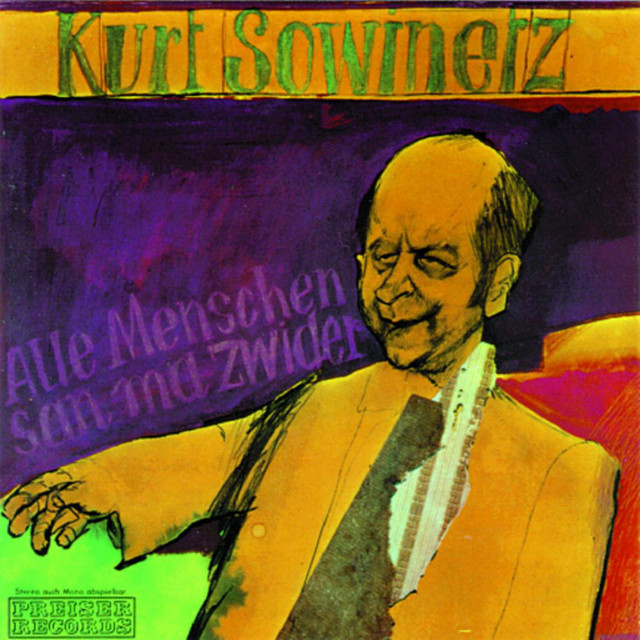
Austropop is the Austrian strand of pop music sung in German, distinguished by a distinctly Austrian voice, mood, and wit. It crystallized in the late 1960s and came fully into its own during the 1970s, when a generation of musicians began writing in the local language rather than always chasing English-language trends. Born in Vienna and spreading to other Austrian cities, the movement emerged as a cultural counterpoint to international pop currents, blending accessibility with a sense of place—the everyday lives, attitudes, and humor of Austrians. The result was a genre that could be melodic and radio-friendly, but also sharp-edged, self-deprecating, and socially aware.
Musically, Austropop blends pop with folk, rock, chanson, and hints of Schlager, all filtered through Austrian sensibilities. Lyrics range from intimate love songs to streetwise observations of urban life, often flavored by Austrian slang or Viennese dialect. Early Austropop favored acoustic guitars and warm arrangements, but as the decades progressed the sound diversified: synth-pop and new wave textures in the 1980s, more polished pop rock in the 1990s, and indie-tinged or alternative approaches in later years. A key feature is the emphasis on authentic German-language storytelling—songs that feel personal and rooted in local culture, rather than merely translated hits from abroad.
Several figures became central to Austropop’s identity. In the 1970s and 1980s, Georg Danzer, Wolfgang Ambros, and Rainhard Fendrich emerged as its most influential voices, writing songs that balanced social commentary with catchy, sing-along melodies. Their work helped establish German-language pop as a credible and vital art form in Austria. By the mid-1980s, Falco—the most internationally famous Austropop ambassador—broke through with a bold, cross-cultural approach, fusing pop, rock, and rap influences with witty, cosmopolitan lyrics. Falco’s breakthrough single and album brought Austrian pop into global view and opened doors for other German-language acts to reach wider audiences.
The scene didn’t stop there. In the 1980s and 1990s, bands like Opus contributed to Austria’s pop-rock credibility, while later artists kept the conversation alive with varied sounds and degrees of irony, nostalgia, or experimentation. In recent years, a new wave of acts—such as Wanda in the 2010s—reinvigorated Austropop with a modern, guitar-driven energy that still leans on unmistakable Austrian storytelling and a knack for memorable hooks. This continuity—from the dialect-rich early songs to contemporary melodious anthems—illustrates how Austropop has evolved while maintaining a strong sense of national and linguistic identity.
Geographically, Austropop remains strongest in Austria, where it originated and continues to resonate with local audiences. It also enjoys a dedicated following in the German-speaking world—Germany and Switzerland—where German-language pop fans appreciate the genre’s local flavor and lyrical sophistication. Beyond borders, Austropop influences can be heard in broader German-language pop scenes, where artists draw on its legacy of authentic language-based storytelling. For music enthusiasts, Austropop offers a rich history of language, humor, and melody that captures a unique Austrian sonic heartbeat.
Musically, Austropop blends pop with folk, rock, chanson, and hints of Schlager, all filtered through Austrian sensibilities. Lyrics range from intimate love songs to streetwise observations of urban life, often flavored by Austrian slang or Viennese dialect. Early Austropop favored acoustic guitars and warm arrangements, but as the decades progressed the sound diversified: synth-pop and new wave textures in the 1980s, more polished pop rock in the 1990s, and indie-tinged or alternative approaches in later years. A key feature is the emphasis on authentic German-language storytelling—songs that feel personal and rooted in local culture, rather than merely translated hits from abroad.
Several figures became central to Austropop’s identity. In the 1970s and 1980s, Georg Danzer, Wolfgang Ambros, and Rainhard Fendrich emerged as its most influential voices, writing songs that balanced social commentary with catchy, sing-along melodies. Their work helped establish German-language pop as a credible and vital art form in Austria. By the mid-1980s, Falco—the most internationally famous Austropop ambassador—broke through with a bold, cross-cultural approach, fusing pop, rock, and rap influences with witty, cosmopolitan lyrics. Falco’s breakthrough single and album brought Austrian pop into global view and opened doors for other German-language acts to reach wider audiences.
The scene didn’t stop there. In the 1980s and 1990s, bands like Opus contributed to Austria’s pop-rock credibility, while later artists kept the conversation alive with varied sounds and degrees of irony, nostalgia, or experimentation. In recent years, a new wave of acts—such as Wanda in the 2010s—reinvigorated Austropop with a modern, guitar-driven energy that still leans on unmistakable Austrian storytelling and a knack for memorable hooks. This continuity—from the dialect-rich early songs to contemporary melodious anthems—illustrates how Austropop has evolved while maintaining a strong sense of national and linguistic identity.
Geographically, Austropop remains strongest in Austria, where it originated and continues to resonate with local audiences. It also enjoys a dedicated following in the German-speaking world—Germany and Switzerland—where German-language pop fans appreciate the genre’s local flavor and lyrical sophistication. Beyond borders, Austropop influences can be heard in broader German-language pop scenes, where artists draw on its legacy of authentic language-based storytelling. For music enthusiasts, Austropop offers a rich history of language, humor, and melody that captures a unique Austrian sonic heartbeat.