Genre
azeri traditional
Top Azeri traditional Artists
Showing 25 of 37 artists





About Azeri traditional
Azeri traditional music, most often heard today under the umbrella of mugham, is a living art that sits at the heart of Azerbaijan’s cultural identity. It is a sophisticated, improvisational vocal-and-instrumental practice built on a system of melodic modes (maqams) and a deep sense of spiritual and emotional expression. Its birth stretches back to medieval gatherings in the Caucasus and Iranian plateau, where poets, singers, and instrumentalists improvised within shared modal frameworks. By the 19th and early 20th centuries, mugham had grown into a refined concert art, especially around the cities of Baku and Shusha, where local lineages and schools began to codify its rules while preserving sacred spontaneity. The turn of the century brought modernization: Uzeyir Hajibeyov famously fused mugham with Western operatic storytelling in Leyli and Majnun (1908), helping to establish a national concert tradition that could speak to both intimate performance spaces and public stages.
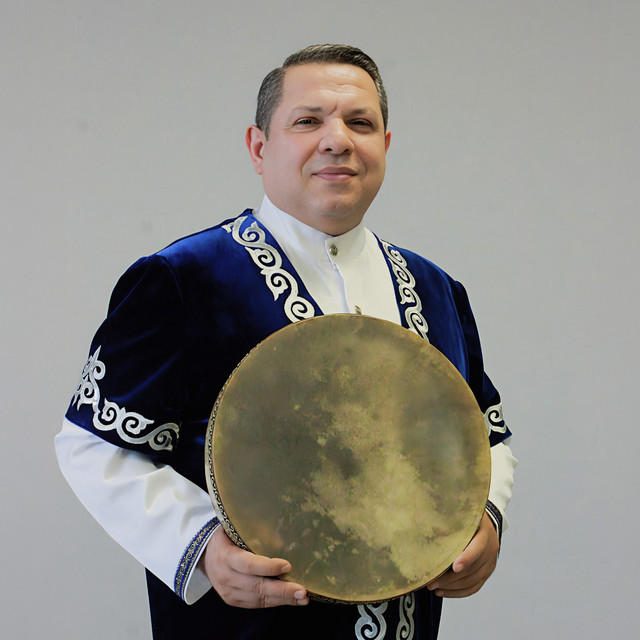
A typical mugham performance centers a vocalist (the lead interpreter) who engages in intricate, breath-driven melismatic singing, weaving small microtonal steps into intense lines of emotion. The singer is supported by traditional instruments such as the tar (a long-necked lute with a rich, singing tone) and the kamancha (a bowed, sympathetic-strings fiddle). In many ensembles you’ll also hear frame drums like the daf or other percussion, adding pulse without overwhelming the modal logic. The music unfolds within a chosen maqam, one of several named melodic regimes (such as Rast, Segah, Shur, Bayati); the performer improvises within the mood, trading phrases with the instrumentalists and often inviting a shared spiritual conversation with the audience. The result is a listening experience that is at once intimate and expansive, capturing longing, joy, lament, and uplift in the span of a single performance.
Key ambassadors have kept this tradition vibrant on the world stage. In modern times, Alim Qasimov and his ensemble have become synonymous with mugham’s extraordinary depth and daring improvisation; his voice—driving, lyrical, and fearless in exploration—has introduced countless listeners to the genre’s visionary potential. His daughter, Farghana Qasimova, frequently collaborates with him, continuing the lineage with luminous phrasing and refined sensitivity. Historically, mugham’s strongest centers were Shusha and Baku, cities whose dynasties of performers and teachers cultivated a robust oral tradition that could endure political turmoil and still flourish in concert halls and festivals.
Today, mugham enjoys robust appreciation in Azerbaijan and among Azerbaijani communities abroad. It finds audiences in Turkey, Iran, Georgia, and Russia where shared cultural bonds make it a familiar, resonant sound world, and—in the broader world—among serious world-music audiences and academic circles. UNESCO’s recognition of mugham as an intangible cultural heritage highlights its global significance: a quintessential example of how regional modal systems, virtuoso improvisation, and a deep sense of communal memory can travel beyond borders while preserving a distinctly local soul.
For enthusiasts, delving into Azeri traditional music offers a passport to a highly developed modal language, a history of masterful vocal technique, and a living art that continues to reinvent itself. Start with a master vocal such as Alim Qasimov’s recordings, listen for the conversation between voice and tar, and trace how the maqams open like doors into different emotional landscapes. It is, in short, a genre that invites long, attentive listening and rewards it with new discoveries at every performance.
A typical mugham performance centers a vocalist (the lead interpreter) who engages in intricate, breath-driven melismatic singing, weaving small microtonal steps into intense lines of emotion. The singer is supported by traditional instruments such as the tar (a long-necked lute with a rich, singing tone) and the kamancha (a bowed, sympathetic-strings fiddle). In many ensembles you’ll also hear frame drums like the daf or other percussion, adding pulse without overwhelming the modal logic. The music unfolds within a chosen maqam, one of several named melodic regimes (such as Rast, Segah, Shur, Bayati); the performer improvises within the mood, trading phrases with the instrumentalists and often inviting a shared spiritual conversation with the audience. The result is a listening experience that is at once intimate and expansive, capturing longing, joy, lament, and uplift in the span of a single performance.
Key ambassadors have kept this tradition vibrant on the world stage. In modern times, Alim Qasimov and his ensemble have become synonymous with mugham’s extraordinary depth and daring improvisation; his voice—driving, lyrical, and fearless in exploration—has introduced countless listeners to the genre’s visionary potential. His daughter, Farghana Qasimova, frequently collaborates with him, continuing the lineage with luminous phrasing and refined sensitivity. Historically, mugham’s strongest centers were Shusha and Baku, cities whose dynasties of performers and teachers cultivated a robust oral tradition that could endure political turmoil and still flourish in concert halls and festivals.
Today, mugham enjoys robust appreciation in Azerbaijan and among Azerbaijani communities abroad. It finds audiences in Turkey, Iran, Georgia, and Russia where shared cultural bonds make it a familiar, resonant sound world, and—in the broader world—among serious world-music audiences and academic circles. UNESCO’s recognition of mugham as an intangible cultural heritage highlights its global significance: a quintessential example of how regional modal systems, virtuoso improvisation, and a deep sense of communal memory can travel beyond borders while preserving a distinctly local soul.
For enthusiasts, delving into Azeri traditional music offers a passport to a highly developed modal language, a history of masterful vocal technique, and a living art that continues to reinvent itself. Start with a master vocal such as Alim Qasimov’s recordings, listen for the conversation between voice and tar, and trace how the maqams open like doors into different emotional landscapes. It is, in short, a genre that invites long, attentive listening and rewards it with new discoveries at every performance.