Genre
balochi pop
Top Balochi pop Artists
Showing 14 of 14 artists



About Balochi pop
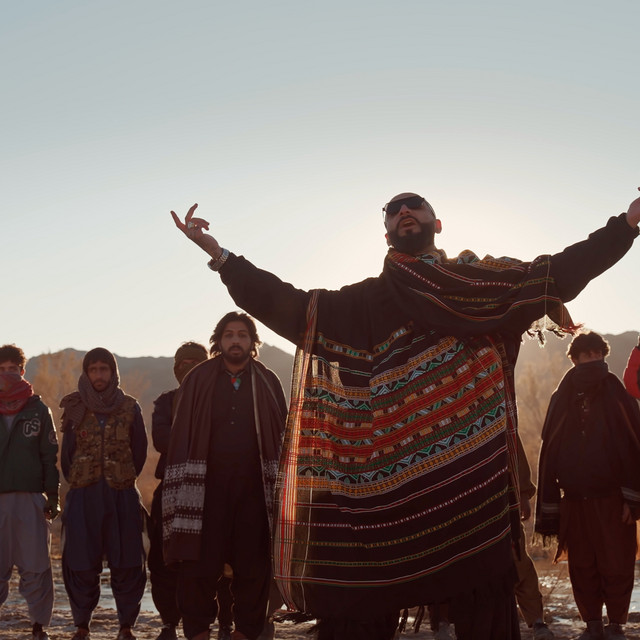
Balochi pop is a vibrant fusion genre that blends the old-soul textures of Balochi folk with the bright edge of contemporary pop music. It treats the Balochi language as a living, flexible vessel for melodic storytelling, pairing traditional melodic shapes with modern song structures, hooks, and polished production. The result is music that feels both rooted in desert landscapes and fluent in today’s club, radio, and streaming environments. Though it draws on a long Balochi musical heritage, Balochi pop as a modern movement emphasizes accessible, hook-driven songs, often sung in Western Balochi dialects, while carrying the regional identity in its rhythm, tempo, and sonic textures.
Origins of the sound lie in the late 20th century, when Balochi-speaking communities in Pakistan’s Balochistan region, as well as in Iran and the diaspora, began to fuse traditional forms with electric guitars, drum machines, and studio production. In places like Turbat, Quetta, and Gwadar, local singers started releasing tracks that kept Balochi prosody and scales but embraced contemporary pop arrangements. The spread of satellite TV, radio, and later the internet allowed these fusions to reach broader audiences, giving rise to a recognizable modern Balochi voice while still honoring ancestral melodies and storytelling practices.
Musically, Balochi pop often sits at the crossroads of folk modal colors and Western pop phrasing. You’ll hear guitar-led verses, punchy choruses, and electronic textures alongside the cultural touchstones of Balochi music—droning strings, rubab-inspired lines, or dambura-like phrasing reimagined for a pop context. Production can range from spare and intimate to fully synthesized anthems, but the core remains a strong melodic line in Balochi, a clear vocal delivery, and a connection to regional musical idioms such as maqam-like scales and call-and-response motifs. Lyrically, the songs frequently explore love and longing, homeland pride, nomadic or village life, and themes of migration and resilience—topics that resonate widely with Balochi-speaking audiences and the broader world music curious about the region.
Geographically, the genre is most popular in Pakistan’s Balochistan province and among Balochi communities in Karachi, but it also circulates in Iran’s Sistan and Baluchestan, Afghanistan’s Baloch zones, and among the global Balochi diaspora in Oman, the UAE, Sweden, Norway, the UK, and Australia. The appeal of Balochi pop in these places comes not only from its catchy, contemporary sound but also from its ability to carry language, stories, and identity across borders. In concert settings and online, it often acts as a banner for cultural pride and cross-cultural curiosity—a soft power of regional sound turning into a globally accessible pop voice.
Ambassadors and key figures of the genre include Akhtar Chanal Zahri, widely regarded as one of the most influential voices who helped establish the modern Balochi pop aesthetic. He, along with other pioneering artists from Balochistan’s cities, laid down a template for how traditional Balochi mood and lyricism could ride contemporary production. Today, a new generation of singers and bands—across Pakistan, Iran, and the diaspora—continues to push the sound forward, experimenting with fusion subgenres, collaborative crossovers, and digital releases, ensuring Balochi pop remains a living, evolving chapter of regional and world music.
Origins of the sound lie in the late 20th century, when Balochi-speaking communities in Pakistan’s Balochistan region, as well as in Iran and the diaspora, began to fuse traditional forms with electric guitars, drum machines, and studio production. In places like Turbat, Quetta, and Gwadar, local singers started releasing tracks that kept Balochi prosody and scales but embraced contemporary pop arrangements. The spread of satellite TV, radio, and later the internet allowed these fusions to reach broader audiences, giving rise to a recognizable modern Balochi voice while still honoring ancestral melodies and storytelling practices.
Musically, Balochi pop often sits at the crossroads of folk modal colors and Western pop phrasing. You’ll hear guitar-led verses, punchy choruses, and electronic textures alongside the cultural touchstones of Balochi music—droning strings, rubab-inspired lines, or dambura-like phrasing reimagined for a pop context. Production can range from spare and intimate to fully synthesized anthems, but the core remains a strong melodic line in Balochi, a clear vocal delivery, and a connection to regional musical idioms such as maqam-like scales and call-and-response motifs. Lyrically, the songs frequently explore love and longing, homeland pride, nomadic or village life, and themes of migration and resilience—topics that resonate widely with Balochi-speaking audiences and the broader world music curious about the region.
Geographically, the genre is most popular in Pakistan’s Balochistan province and among Balochi communities in Karachi, but it also circulates in Iran’s Sistan and Baluchestan, Afghanistan’s Baloch zones, and among the global Balochi diaspora in Oman, the UAE, Sweden, Norway, the UK, and Australia. The appeal of Balochi pop in these places comes not only from its catchy, contemporary sound but also from its ability to carry language, stories, and identity across borders. In concert settings and online, it often acts as a banner for cultural pride and cross-cultural curiosity—a soft power of regional sound turning into a globally accessible pop voice.
Ambassadors and key figures of the genre include Akhtar Chanal Zahri, widely regarded as one of the most influential voices who helped establish the modern Balochi pop aesthetic. He, along with other pioneering artists from Balochistan’s cities, laid down a template for how traditional Balochi mood and lyricism could ride contemporary production. Today, a new generation of singers and bands—across Pakistan, Iran, and the diaspora—continues to push the sound forward, experimenting with fusion subgenres, collaborative crossovers, and digital releases, ensuring Balochi pop remains a living, evolving chapter of regional and world music.