Genre
british orchestra
Top British orchestra Artists
Showing 16 of 16 artists




About British orchestra
British orchestra is less a rigid genre and more a living tradition: the distinct, melody-rich tapestry of symphonic music produced by the United Kingdom’s orchestras, conductors, and composers. It emerges from a late-R Romantic and early-20th‑century desire to articulate a national voice within the orchestra, then blossoms through a century of innovation, festival culture, and international touring. Its identity is built as much by composers’ languages as by the institutions that perform their music.
Origins and birth
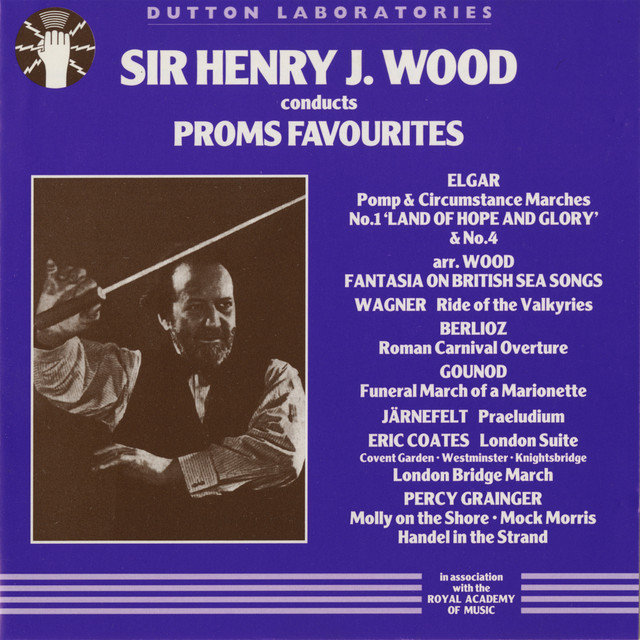
The English orchestral tradition coalesced in the late 19th century, when London and the provinces began funding professional ensembles and presenting large-scale works to a growing public. A key milestone was the rise of the Proms, established in 1895 by impresario Robert Newman and conductor Henry Wood, turning the concert hall into a festival of bold programming and accessible, often nationalistic music. Composers such as Edward Elgar, Ralph Vaughan Williams, and Gustav Holst helped define a distinctly English voice for the orchestra: expansive melodies, panoramic orchestration, and a keen sense of place—whether pastoral calm, martial vigor, or mythic energy. By the early 20th century, works like Elgar’s Enigma Variations and Vaughan Williams’s symphonies, along with Holst’s The Planets, had already become markers of a British orchestral sensibility.
Key figures and ambassadors
British orchestral culture has been carried forward by a lineage of composers, performers, and conductors who have acted as ambassadors to the world. Benjamin Britten is one of the most important: his War Requiem, Peter Grimes, and orchestral works helped redefine contemporary English music for audiences abroad. Conductors such as Sir Colin Davis and Sir Simon Rattle became associated with a transparent, urgent British sound—clear textures, radiant strings, and a nuanced, sometimes austere beauty. The orchestras themselves—names like the London Symphony Orchestra, BBC Symphony Orchestra, and City of Birmingham Symphony Orchestra—have toured globally, bringing the English orchestral idiom to concert halls from Osaka to Philadelphia. Modern ambassadors also include composers like Thomas Adès, who continues to expand the language of British orchestral music with a distinctly contemporary voice rooted in the tradition.
Repertoire and sound
The British orchestral repertoire spans both timeless classics and modern explorations. It embraces Elgar’s noble, expansive soundscapes; Holst’s cosmic colors; Vaughan Williams’s environmental and spiritual sensibilities; Britten’s dramatic, human scale; and a newer generation that blends wit, invention, and technical mastery. The orchestral sound often prioritizes clarity of line and a particular transparency of texture, allowing a wide dynamic range to tell stories—from intimate songful moments to large-scale, immersive climaxes.
Geography and reception
The British orchestra is most popular in the United Kingdom, of course, but its influence is global. The United States, Japan, Germany, Canada, and Australia host enthusiastic audiences for British orchestral music, often propelled by touring ensembles and international festivals. The Proms remain a cornerstone of international exposure, broadcasting across continents and inviting listeners to hear a modern England’s orchestral imagination.
In short, the British orchestra is a dynamic fusion of national heritage and international dialogue—an ever-evolving conversation between tradition and innovation, performed by some of the world’s finest ensembles and conducted by a lineage of notable maestros. For enthusiasts, it offers a rich landscape of color, form, and emotion—both comforting and daring.
Origins and birth
The English orchestral tradition coalesced in the late 19th century, when London and the provinces began funding professional ensembles and presenting large-scale works to a growing public. A key milestone was the rise of the Proms, established in 1895 by impresario Robert Newman and conductor Henry Wood, turning the concert hall into a festival of bold programming and accessible, often nationalistic music. Composers such as Edward Elgar, Ralph Vaughan Williams, and Gustav Holst helped define a distinctly English voice for the orchestra: expansive melodies, panoramic orchestration, and a keen sense of place—whether pastoral calm, martial vigor, or mythic energy. By the early 20th century, works like Elgar’s Enigma Variations and Vaughan Williams’s symphonies, along with Holst’s The Planets, had already become markers of a British orchestral sensibility.
Key figures and ambassadors
British orchestral culture has been carried forward by a lineage of composers, performers, and conductors who have acted as ambassadors to the world. Benjamin Britten is one of the most important: his War Requiem, Peter Grimes, and orchestral works helped redefine contemporary English music for audiences abroad. Conductors such as Sir Colin Davis and Sir Simon Rattle became associated with a transparent, urgent British sound—clear textures, radiant strings, and a nuanced, sometimes austere beauty. The orchestras themselves—names like the London Symphony Orchestra, BBC Symphony Orchestra, and City of Birmingham Symphony Orchestra—have toured globally, bringing the English orchestral idiom to concert halls from Osaka to Philadelphia. Modern ambassadors also include composers like Thomas Adès, who continues to expand the language of British orchestral music with a distinctly contemporary voice rooted in the tradition.
Repertoire and sound
The British orchestral repertoire spans both timeless classics and modern explorations. It embraces Elgar’s noble, expansive soundscapes; Holst’s cosmic colors; Vaughan Williams’s environmental and spiritual sensibilities; Britten’s dramatic, human scale; and a newer generation that blends wit, invention, and technical mastery. The orchestral sound often prioritizes clarity of line and a particular transparency of texture, allowing a wide dynamic range to tell stories—from intimate songful moments to large-scale, immersive climaxes.
Geography and reception
The British orchestra is most popular in the United Kingdom, of course, but its influence is global. The United States, Japan, Germany, Canada, and Australia host enthusiastic audiences for British orchestral music, often propelled by touring ensembles and international festivals. The Proms remain a cornerstone of international exposure, broadcasting across continents and inviting listeners to hear a modern England’s orchestral imagination.
In short, the British orchestra is a dynamic fusion of national heritage and international dialogue—an ever-evolving conversation between tradition and innovation, performed by some of the world’s finest ensembles and conducted by a lineage of notable maestros. For enthusiasts, it offers a rich landscape of color, form, and emotion—both comforting and daring.