Genre
belgian edm
Top Belgian edm Artists
Showing 23 of 23 artists










About Belgian edm
Belgian EDM is not a single, monolithic sound but a national vignette woven into the global story of electronic dance music. It sits at the crossroads between the late-1980s Belgian new beat rebellion and the festival-scale anthems that define the 2010s and beyond. If you listen for it, you hear the Belgian touch: a sense of drama, a melodic openness, and a knack for turning a crowd-wide moment into a shared memory. The birth of the idea rests with the country’s pioneering clubs and producers who pushed the boundaries of tempo and texture. In the late 1980s, Belgian acts in the new beat scene fused hip-shake basslines with industrial textures, creating a groove that could be both menacing and dance-floor ready.
From there, the country contributed to the broader evolution of European electronic music: techno, trance, and progressive house found home in Belgian studios, while international acts courted Belgium as a rehearsing ground and a launchpad. In the 2000s, songwriters and DJs like Soulwax (aka 2manydjs) blurred lines between remixes, rock energy, and club culture, helping reframe what EDM could sound like in a European context. The real modern Belgian EDM identity, though, coalesced around a new generation of festival-ready producers who could deliver both enormity and humanity in a single drop.
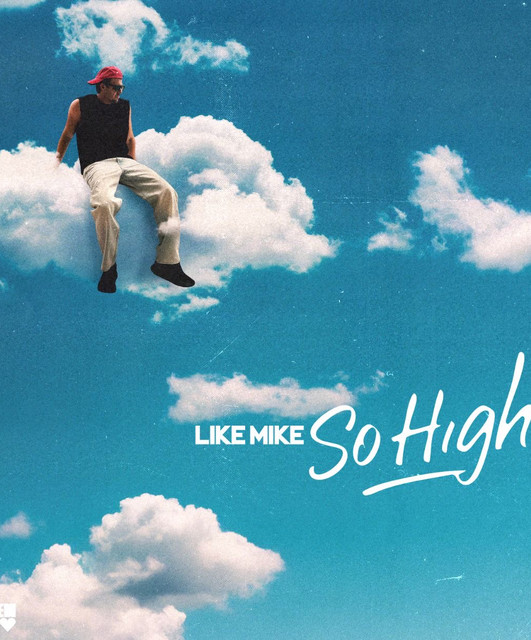
Ambassadors of this sound include Dimitri Vegas & Like Mike, the Vilvoorde-born duo who climbed to global festival headliner status in the early 2010s and helped popularize the Belgian big-room approach. Their high-energy collaborations and the Smash The House label became a model for how to translate local craft into global hits. Another banner name is Lost Frequencies, the Leuven-based producer whose melodic deep house anthem Are You with Me gave Belgian EDM a soulful, radio-friendly passport across Europe and beyond. Together with a wave of contemporary Belgian acts—ranging from melodic house to crossover techno—this generation cultivated a distinctly European, stadium-friendly voice.
Tomorrowland, Belgium’s flagship festival, has long been a proving ground and showcase for Belgian talent, turning the country into a magnet for revelers from the Netherlands, France, Germany, and the UK, and helping export the sound to North America and Asia. The genre’s appeal is not just power; it’s the sense of communal euphoria, the way a well-produced build can lift a room and a city. Today, Belgian EDM covers multiple subgenres—from uplifting big room and melodic house to deep house and hybrid techno—while maintaining a shared thread: a knack for crafting moments that feel both intimate and monumental. If you want the current pulse of it, listen to the way a Belgian track can ride a crowd from an intimate club to a festival main stage, then turn that moment into a memory you want to relive. Beyond the club, Belgian EDM thrives on collaboration: producers work across borders, remix for international labels, and perform in Asia and North America, feeding a global fanbase that treats Belgian acts as a mark of quality. The result is music that travels light but lands hard.
From there, the country contributed to the broader evolution of European electronic music: techno, trance, and progressive house found home in Belgian studios, while international acts courted Belgium as a rehearsing ground and a launchpad. In the 2000s, songwriters and DJs like Soulwax (aka 2manydjs) blurred lines between remixes, rock energy, and club culture, helping reframe what EDM could sound like in a European context. The real modern Belgian EDM identity, though, coalesced around a new generation of festival-ready producers who could deliver both enormity and humanity in a single drop.
Ambassadors of this sound include Dimitri Vegas & Like Mike, the Vilvoorde-born duo who climbed to global festival headliner status in the early 2010s and helped popularize the Belgian big-room approach. Their high-energy collaborations and the Smash The House label became a model for how to translate local craft into global hits. Another banner name is Lost Frequencies, the Leuven-based producer whose melodic deep house anthem Are You with Me gave Belgian EDM a soulful, radio-friendly passport across Europe and beyond. Together with a wave of contemporary Belgian acts—ranging from melodic house to crossover techno—this generation cultivated a distinctly European, stadium-friendly voice.
Tomorrowland, Belgium’s flagship festival, has long been a proving ground and showcase for Belgian talent, turning the country into a magnet for revelers from the Netherlands, France, Germany, and the UK, and helping export the sound to North America and Asia. The genre’s appeal is not just power; it’s the sense of communal euphoria, the way a well-produced build can lift a room and a city. Today, Belgian EDM covers multiple subgenres—from uplifting big room and melodic house to deep house and hybrid techno—while maintaining a shared thread: a knack for crafting moments that feel both intimate and monumental. If you want the current pulse of it, listen to the way a Belgian track can ride a crowd from an intimate club to a festival main stage, then turn that moment into a memory you want to relive. Beyond the club, Belgian EDM thrives on collaboration: producers work across borders, remix for international labels, and perform in Asia and North America, feeding a global fanbase that treats Belgian acts as a mark of quality. The result is music that travels light but lands hard.