Genre
cantautores italianos
Top Cantautores italianos Artists
Showing 25 of 38 artists








About Cantautores italianos
Cantautori italiani is not a strict genre in the sense of a single sound, but a enduring tradition: the art of writing, composing and performing one’s own songs with a strong emphasis on poetry, storytelling and social or personal reflection. Born from the Italian folk and literary-rooted song culture of the 1950s and 1960s, it matured into a distinctive movement—the “canzone d’autore”—that treated lyrics as the heartbeat of the music and the instrument of cultural memory.
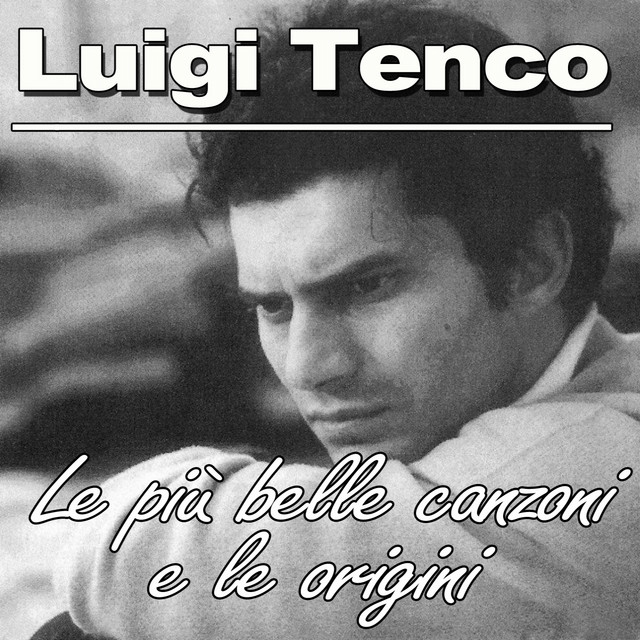
The cradle of the cantautorato lies in postwar Italy’s urban centers and university scenes, where poets and musicians began to question old pop formulas. In the early 1960s, figures such as Gino Paoli, Luigi Tenco and Fabrizio De André set the template: songs that spoke plainly about love, loss, politics and the everyday, yet did so with literary finesse and a musician’s craft. Paoli’s Il cielo in una stanza (1960) and De André’s later concept works showed that a song could be both intimate and expansive, personal and universal. Tenco’s brief, intense life underscored the era’s vulnerability and political awakening.
A crucial development came from collaborations that blurred lines between songwriter and composer. Lucio Battisti and lyricist Mogol (Giulio Rapetti) wrote some of the era’s most lasting hits, shaping a mainstream strand of cantautorato with melodic sophistication and sharp, contemporary English- and French-inflected sensibilities. Songs like Mi ritorni in mente, Il nostro caro angelo, and Il mio canto libero became touchstones for a generation that valued both craft and introspection.
The movement expanded in the 1970s with a constellation of towering voices. Fabrizio De André continued to push boundaries with La buona novella (a biblical retelling refracted through folk and Mediterranean textures) and Crêuza de mä (a pioneering cross-cultural work sung in Ligurian and other languages). Francesco Guccini and Francesco De Gregori offered epic, narrative albums—Rimmel and Rossomora, respectively—where storytelling was as important as melody. Lucio Dalla fused lyric poetry with theatrical drama; Paolo Conte wove jazzy, literate textures into chanson-like songs. The decade consolidated the sense that the cantautore could be a serious literary artist as well as a popular entertainer.
In the decades that followed, the cantautore italiano continued to evolve: Ivano Fossati’s refined, kaleidoscopic arrangements; the more intimate, diary-like work of artists such as Niccolò Fabi and Dimartino in later years; and a plethora of newer voices that keep the tradition alive in concert halls, festivals and intimate clubs. The music ranges from stark acoustic ballads to complex, orchestral or jazz-inflected productions, but the core remains constant: a composer-lyricist guiding the song from concept to performance, with an emphasis on words as the primary vehicle of meaning.
Today, cantautori italiani enjoys a robust following primarily in Italy and among Italian-speaking communities worldwide. It also has a loyal audience in parts of Western Europe and Latin America where lyric-driven singer-songwriting resonates with listeners who crave depth, poetry and storytelling in song. It is a living tradition, continually renewing itself while staying faithful to its belief that a song should tell a true, carefully crafted story.
The cradle of the cantautorato lies in postwar Italy’s urban centers and university scenes, where poets and musicians began to question old pop formulas. In the early 1960s, figures such as Gino Paoli, Luigi Tenco and Fabrizio De André set the template: songs that spoke plainly about love, loss, politics and the everyday, yet did so with literary finesse and a musician’s craft. Paoli’s Il cielo in una stanza (1960) and De André’s later concept works showed that a song could be both intimate and expansive, personal and universal. Tenco’s brief, intense life underscored the era’s vulnerability and political awakening.
A crucial development came from collaborations that blurred lines between songwriter and composer. Lucio Battisti and lyricist Mogol (Giulio Rapetti) wrote some of the era’s most lasting hits, shaping a mainstream strand of cantautorato with melodic sophistication and sharp, contemporary English- and French-inflected sensibilities. Songs like Mi ritorni in mente, Il nostro caro angelo, and Il mio canto libero became touchstones for a generation that valued both craft and introspection.
The movement expanded in the 1970s with a constellation of towering voices. Fabrizio De André continued to push boundaries with La buona novella (a biblical retelling refracted through folk and Mediterranean textures) and Crêuza de mä (a pioneering cross-cultural work sung in Ligurian and other languages). Francesco Guccini and Francesco De Gregori offered epic, narrative albums—Rimmel and Rossomora, respectively—where storytelling was as important as melody. Lucio Dalla fused lyric poetry with theatrical drama; Paolo Conte wove jazzy, literate textures into chanson-like songs. The decade consolidated the sense that the cantautore could be a serious literary artist as well as a popular entertainer.
In the decades that followed, the cantautore italiano continued to evolve: Ivano Fossati’s refined, kaleidoscopic arrangements; the more intimate, diary-like work of artists such as Niccolò Fabi and Dimartino in later years; and a plethora of newer voices that keep the tradition alive in concert halls, festivals and intimate clubs. The music ranges from stark acoustic ballads to complex, orchestral or jazz-inflected productions, but the core remains constant: a composer-lyricist guiding the song from concept to performance, with an emphasis on words as the primary vehicle of meaning.
Today, cantautori italiani enjoys a robust following primarily in Italy and among Italian-speaking communities worldwide. It also has a loyal audience in parts of Western Europe and Latin America where lyric-driven singer-songwriting resonates with listeners who crave depth, poetry and storytelling in song. It is a living tradition, continually renewing itself while staying faithful to its belief that a song should tell a true, carefully crafted story.