Genre
cantonese traditional
Top Cantonese traditional Artists
Showing 25 of 34 artists


About Cantonese traditional
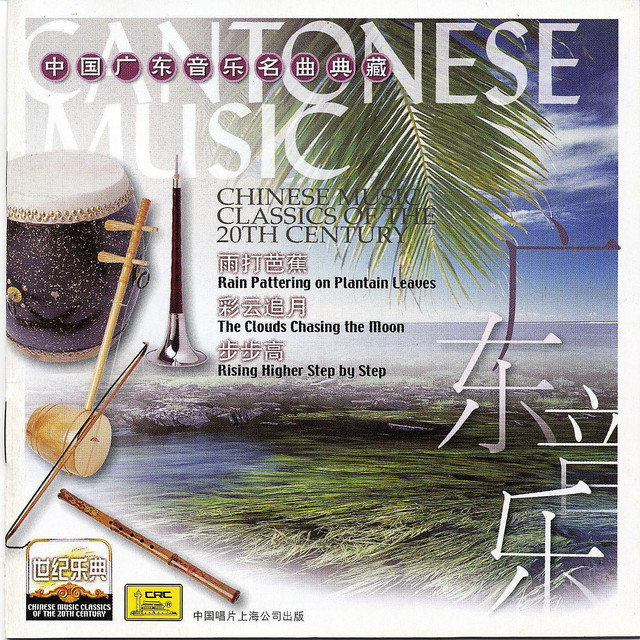
Cantonese traditional music is the soundscape of the Guangdong region and its diasporas, anchored by Cantonese opera (Yuet Juk) but spanning a broader spectrum of vocal and instrumental repertoire. Its lineage grows out of local folk songs, temple and ceremonial music, and itinerant theatrical traditions that gathered around Guangzhou, Hong Kong, and nearby cities. Over the centuries these strands braided into a mature performance practice, with Cantonese opera becoming the flagship form by the 18th–19th centuries and continuing to evolve into the present day. The genre thrives wherever Cantonese-speaking communities maintain theatres, tea houses, temples, and festivals, and it has carried far beyond China’s borders through diaspora networks.
Cantonese opera is perhaps the best-known vehicle of Cantonese traditional music. A typical production blends singing, spoken dialogue, acting, martial arts, and acrobatics, set to a live musical ensemble. The sound is built on the silvery timbres of the erhu family (including gaohu and zhonghu), the plucked warmth of the pipa and zhongruan, the percussive drive of traditional drums, clappers, and cymbals, and the keyboard-like shimmer of the yangqin in some configurations. Vocal style is ornate and expressive, with a blend of lyrical, high-lying passages and more earthy, dramatic declamation. Performances are organized around a caste of roles—sheng (male leads), dan (female leads), jing (painted-face characters), and chou (clowns)—each with its own vocal delivery, gesture language, and movement vocabulary. The interaction between music and stagecraft in Cantonese opera, including stylized facial expressions and body language, is a defining feature of the tradition.
Historically, Cantonese traditional music has also included ceremonial pieces, courtly tunes, and instrumental ensembles that accompany ritual or festival occasions. While Cantonese opera remains the most widely recognized expression, ensembles and solo instrumental works retain a vital place in preserving a broader Cantonese sound world, from intimate recitals to large-scale concert projects. The repertoire often features pentatonic melodies, rich ornamentation, and a preference for locomotion between lyric song and more declarative, speech-inflected passages.
In terms of ambassadors and key figures, the genre’s profile rose through both stage and screen. Classical Cantonese opera stars and their film and television successors helped disseminate the sound far beyond Guangdong. Notable names include Kwan Tak-hing, a towering figure in Cantonese cinema who became a cultural ambassador for the tradition through his Wong Fei-hung films and stage performances; and Adam Cheng, a celebrated singer-actor who carried the operatic vocal aesthetic into modern media. Together with other legendary performers and the dedicated troupes that sustained them, these artists helped anchor Cantonese traditional music in the cultural imagination of Hong Kong, the Pearl River Delta, and the global Cantonese-speaking world.
Today, Cantonese traditional music remains especially vibrant in Hong Kong, Guangdong, and Macau, where living heritage performances, schools, and revival projects keep the art form in circulation. Elsewhere, in Singapore, Malaysia, and diaspora centers such as Vancouver, Toronto, Sydney, Melbourne, and San Francisco, it survives through dedicated venues, recorded anthologies, and cross-cultural collaborations that invite new listeners. For enthusiasts, the genre offers a rich blend of vocal serpentine lines, teeming with microtonal expressivity, paired with instrumental textures that reveal a centuries-long dialogue between region, identity, and communal memory.
Cantonese opera is perhaps the best-known vehicle of Cantonese traditional music. A typical production blends singing, spoken dialogue, acting, martial arts, and acrobatics, set to a live musical ensemble. The sound is built on the silvery timbres of the erhu family (including gaohu and zhonghu), the plucked warmth of the pipa and zhongruan, the percussive drive of traditional drums, clappers, and cymbals, and the keyboard-like shimmer of the yangqin in some configurations. Vocal style is ornate and expressive, with a blend of lyrical, high-lying passages and more earthy, dramatic declamation. Performances are organized around a caste of roles—sheng (male leads), dan (female leads), jing (painted-face characters), and chou (clowns)—each with its own vocal delivery, gesture language, and movement vocabulary. The interaction between music and stagecraft in Cantonese opera, including stylized facial expressions and body language, is a defining feature of the tradition.
Historically, Cantonese traditional music has also included ceremonial pieces, courtly tunes, and instrumental ensembles that accompany ritual or festival occasions. While Cantonese opera remains the most widely recognized expression, ensembles and solo instrumental works retain a vital place in preserving a broader Cantonese sound world, from intimate recitals to large-scale concert projects. The repertoire often features pentatonic melodies, rich ornamentation, and a preference for locomotion between lyric song and more declarative, speech-inflected passages.
In terms of ambassadors and key figures, the genre’s profile rose through both stage and screen. Classical Cantonese opera stars and their film and television successors helped disseminate the sound far beyond Guangdong. Notable names include Kwan Tak-hing, a towering figure in Cantonese cinema who became a cultural ambassador for the tradition through his Wong Fei-hung films and stage performances; and Adam Cheng, a celebrated singer-actor who carried the operatic vocal aesthetic into modern media. Together with other legendary performers and the dedicated troupes that sustained them, these artists helped anchor Cantonese traditional music in the cultural imagination of Hong Kong, the Pearl River Delta, and the global Cantonese-speaking world.
Today, Cantonese traditional music remains especially vibrant in Hong Kong, Guangdong, and Macau, where living heritage performances, schools, and revival projects keep the art form in circulation. Elsewhere, in Singapore, Malaysia, and diaspora centers such as Vancouver, Toronto, Sydney, Melbourne, and San Francisco, it survives through dedicated venues, recorded anthologies, and cross-cultural collaborations that invite new listeners. For enthusiasts, the genre offers a rich blend of vocal serpentine lines, teeming with microtonal expressivity, paired with instrumental textures that reveal a centuries-long dialogue between region, identity, and communal memory.