Genre
chamber orchestra
Top Chamber orchestra Artists
Showing 20 of 20 artists






About Chamber orchestra
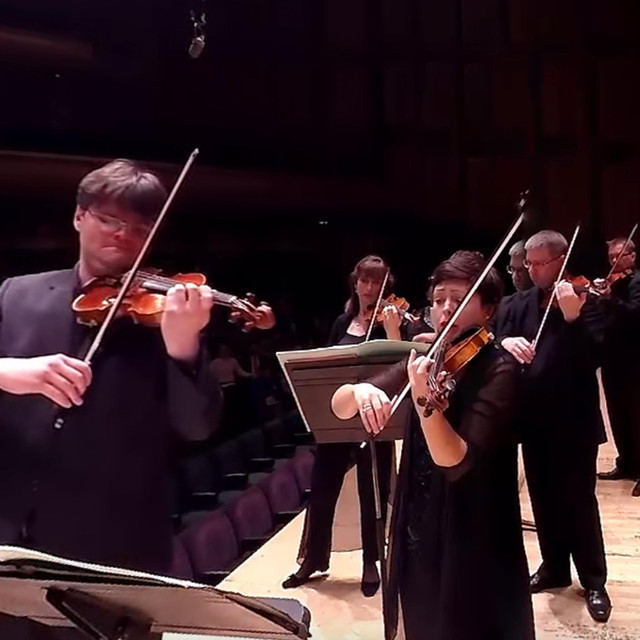
Chamber orchestra is the intimate, nimble version of the symphonic orchestra. Typically sized from about 12 to 40 players, it blends a string-dominated core—violins, violas, cellos, and sometimes double basses—with a lean wind and brass section. The hallmark of the format is texture and clarity: lighter, more transparent sonorities that let inner lines sing and musical conversations unfold with the precision of chamber music, while still delivering the dynamically varied sweep of orchestral writing.
Origins trace back to late 18th-century Europe, when salon and court culture demanded music that could be performed in smaller rooms and in more flexible settings. Composers such as Haydn and Mozart wrote extensively for reduced forces: divertimenti, serenades, and “little” symphonies that sit between the string quartet and the full orchestra. Mozart’s Gran Partita, a celebrated wind serenade for 13 players, and Beethoven’s wind- and string-focused works, helped standardize the idea that orchestral color could thrive at a chamber scale. As the orchestral repertoire widened, the chamber orchestra evolved into a distinct format, prized for its transparency, flexibility, and capacity to balance lyricism with drama.
In the modern era, chamber orchestras have become international ambassadors of a versatile, accessible approach to orchestral music. Europe remains a core heartland, with thriving scenes across the United Kingdom, Germany, Austria, France, and the Nordic countries, where many ensembles specialize in both classical repertoire and contemporary commissions. North America has also been pivotal, with ensembles such as the English Chamber Orchestra, the Chamber Orchestra of Europe, and the Los Angeles Chamber Orchestra shaping a global standard for repertoire, collaboration, and touring. These groups frequently pair with leading soloists and conductors, helping audiences connect with symphonic music in a more intimate, immediate way.
Key artists and ambassadors of the genre span generations. Renowned soloists who regularly appear with chamber orchestras include violinist Pinchas Zukerman, Gidon Kremer, Itzhak Perlman, Julian Rachlin, and cellist Yo-Yo Ma. Conductors who champion the format—ensembles’ artistic directors and guest leaders alike—include figures such as Esa-Pekka Salonen, Riccardo Chailly, and Iván Fischer, who emphasize balance, clarity, and the expressive dialogue that is central to chamber performance. Contemporary groups—ranging from the English Chamber Orchestra to European chamber ensembles and national orchestras—also serve as living laboratories, commissioning new works and creating programs that bridge canonical masterworks with today’s composers.
Repertoire runs the gamut: classic works by Mozart, Haydn, and early Beethoven arranged or written for smaller forces; wind serenades and divertimenti that exploit chromatic color and conversational textures; and contemporary compositions crafted specifically for chamber-sized orchestras. The result is music that rewards precise ensemble playing and nuanced dynamics, inviting listeners into a conversation where orchestral power and intimate refinement coexist.
Popularity by country tracks a broad, transcontinental appreciation. While Europe remains deeply engaged with the genre’s heritage, North America, Japan, and parts of Asia maintain vibrant chamber-orchestra scenes as well, buoyed by adaptable programming, educational outreach, and touring culture. For enthusiasts, the chamber orchestra offers a doorway to the refined discipline of orchestral music delivered with the immediacy of chamber performance.
Origins trace back to late 18th-century Europe, when salon and court culture demanded music that could be performed in smaller rooms and in more flexible settings. Composers such as Haydn and Mozart wrote extensively for reduced forces: divertimenti, serenades, and “little” symphonies that sit between the string quartet and the full orchestra. Mozart’s Gran Partita, a celebrated wind serenade for 13 players, and Beethoven’s wind- and string-focused works, helped standardize the idea that orchestral color could thrive at a chamber scale. As the orchestral repertoire widened, the chamber orchestra evolved into a distinct format, prized for its transparency, flexibility, and capacity to balance lyricism with drama.
In the modern era, chamber orchestras have become international ambassadors of a versatile, accessible approach to orchestral music. Europe remains a core heartland, with thriving scenes across the United Kingdom, Germany, Austria, France, and the Nordic countries, where many ensembles specialize in both classical repertoire and contemporary commissions. North America has also been pivotal, with ensembles such as the English Chamber Orchestra, the Chamber Orchestra of Europe, and the Los Angeles Chamber Orchestra shaping a global standard for repertoire, collaboration, and touring. These groups frequently pair with leading soloists and conductors, helping audiences connect with symphonic music in a more intimate, immediate way.
Key artists and ambassadors of the genre span generations. Renowned soloists who regularly appear with chamber orchestras include violinist Pinchas Zukerman, Gidon Kremer, Itzhak Perlman, Julian Rachlin, and cellist Yo-Yo Ma. Conductors who champion the format—ensembles’ artistic directors and guest leaders alike—include figures such as Esa-Pekka Salonen, Riccardo Chailly, and Iván Fischer, who emphasize balance, clarity, and the expressive dialogue that is central to chamber performance. Contemporary groups—ranging from the English Chamber Orchestra to European chamber ensembles and national orchestras—also serve as living laboratories, commissioning new works and creating programs that bridge canonical masterworks with today’s composers.
Repertoire runs the gamut: classic works by Mozart, Haydn, and early Beethoven arranged or written for smaller forces; wind serenades and divertimenti that exploit chromatic color and conversational textures; and contemporary compositions crafted specifically for chamber-sized orchestras. The result is music that rewards precise ensemble playing and nuanced dynamics, inviting listeners into a conversation where orchestral power and intimate refinement coexist.
Popularity by country tracks a broad, transcontinental appreciation. While Europe remains deeply engaged with the genre’s heritage, North America, Japan, and parts of Asia maintain vibrant chamber-orchestra scenes as well, buoyed by adaptable programming, educational outreach, and touring culture. For enthusiasts, the chamber orchestra offers a doorway to the refined discipline of orchestral music delivered with the immediacy of chamber performance.