Genre
nightcore
Top Nightcore Artists
Showing 25 of 495 artists









About Nightcore
Nightcore is a bright, high-energy microgenre of electronic music defined by one simple technique: speed and pitch. A pre-existing track—often from pop, Eurobeat, trance, J-pop, or anime-related music—is sped up and pitched upward, producing a raised vocal timbre, a brisker tempo, and a gleaming, almost bubbly overall sound. The result is a listening experience that feels lighter, more urgent, and relentlessly catchy. In practice, nightcore tracks typically sit well above standard pop tempo, giving fans a rush of momentum that lends itself to dancing, gaming, and late-night anime marathons.
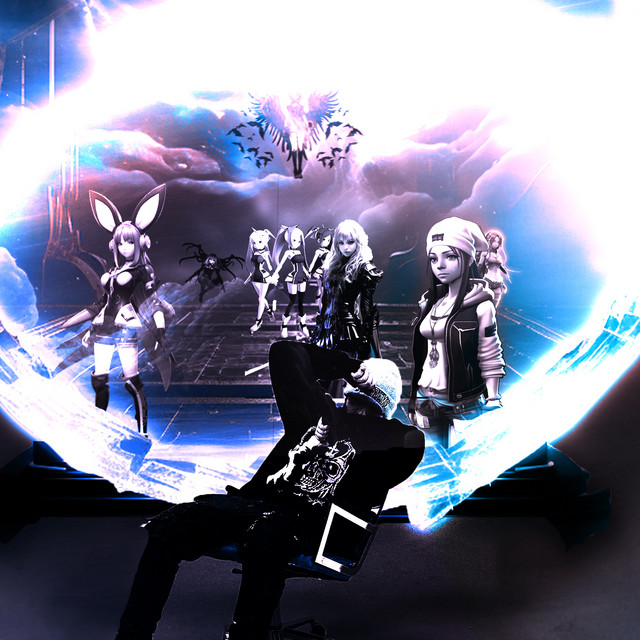
The birth of nightcore is commonly placed in the early 2000s, within online music communities that experimented with remixing and speed-shifting techniques. The movement drew its name from an early Norwegian project that released sped-up trance remixes, which helped give the genre its identity. From there, the practice exploded across online platforms—primarily YouTube and, later, SoundCloud and streaming services—where thousands of fan remixes and original nightcore versions proliferated. The visual side of nightcore culture soon followed, with neon, anime-inspired artwork and characters anchoring many uploads, turning the genre into a recognizable subculture as much as a sound.
Ambassadors and key voices in nightcore are less about a single canon of “leaders” and more about the culture of remix and accessibility. The original Nightcore project that popularized the term remains a touchstone for many fans, serving as a reference point for how the style can transform familiar tunes. Over time, individual producers and channels—often musicians who released a steady stream of nightcore edits—became well known within communities: the name PelleK, for instance, is frequently cited in connection with nightcore remixes and their spread into metal and pop circles. Beyond named artists, the genre thrives on a sprawling ecosystem of YouTube channels, SoundCloud pages, and collaborative streams where hobbyists and semi-professional producers alike contribute
tracks, atmospheres, and subgenre experiments. In short, nightcore is less about a fixed roster of “ambassadors” and more about a global, participatory remix culture where anyone can join and shape the sound.
Geographically, nightcore has found its strongest uptake in regions with large online and anime-oriented fan communities. It has a substantial following in the Philippines, Japan, and parts of Southeast Asia, where anime, Vocaloid, and J-pop aesthetics intersect with digital music culture. Europe and North America host sizable audiences as well, with fans spanning countries like Spain, Germany, the United Kingdom, Italy, the United States, and Brazil. The genre’s accessibility—anyone can create a nightcore track with a simple tempo-shift tool—means it remains a living, evolving scene rather than a fixed, studio-bound trend.
For enthusiasts, nightcore offers a sonic shorthand for speed, optimism, and nostalgia. It’s a musical space where familiar melodies are refracted through a pop-enthused, cybernetic lens, inviting listeners to rediscover their favorite songs in a new, gleaming light. As a living genre, it continues to blend electronic textures with pop sensibilities, anime aesthetics, and the enduring thrill of a high-energy remix.
The birth of nightcore is commonly placed in the early 2000s, within online music communities that experimented with remixing and speed-shifting techniques. The movement drew its name from an early Norwegian project that released sped-up trance remixes, which helped give the genre its identity. From there, the practice exploded across online platforms—primarily YouTube and, later, SoundCloud and streaming services—where thousands of fan remixes and original nightcore versions proliferated. The visual side of nightcore culture soon followed, with neon, anime-inspired artwork and characters anchoring many uploads, turning the genre into a recognizable subculture as much as a sound.
Ambassadors and key voices in nightcore are less about a single canon of “leaders” and more about the culture of remix and accessibility. The original Nightcore project that popularized the term remains a touchstone for many fans, serving as a reference point for how the style can transform familiar tunes. Over time, individual producers and channels—often musicians who released a steady stream of nightcore edits—became well known within communities: the name PelleK, for instance, is frequently cited in connection with nightcore remixes and their spread into metal and pop circles. Beyond named artists, the genre thrives on a sprawling ecosystem of YouTube channels, SoundCloud pages, and collaborative streams where hobbyists and semi-professional producers alike contribute
tracks, atmospheres, and subgenre experiments. In short, nightcore is less about a fixed roster of “ambassadors” and more about a global, participatory remix culture where anyone can join and shape the sound.
Geographically, nightcore has found its strongest uptake in regions with large online and anime-oriented fan communities. It has a substantial following in the Philippines, Japan, and parts of Southeast Asia, where anime, Vocaloid, and J-pop aesthetics intersect with digital music culture. Europe and North America host sizable audiences as well, with fans spanning countries like Spain, Germany, the United Kingdom, Italy, the United States, and Brazil. The genre’s accessibility—anyone can create a nightcore track with a simple tempo-shift tool—means it remains a living, evolving scene rather than a fixed, studio-bound trend.
For enthusiasts, nightcore offers a sonic shorthand for speed, optimism, and nostalgia. It’s a musical space where familiar melodies are refracted through a pop-enthused, cybernetic lens, inviting listeners to rediscover their favorite songs in a new, gleaming light. As a living genre, it continues to blend electronic textures with pop sensibilities, anime aesthetics, and the enduring thrill of a high-energy remix.