Genre
chinese classical
Top Chinese classical Artists
Showing 23 of 23 artists






About Chinese classical
Chinese classical, often called guoyue (guóyuè), is the traditional backbone of Chinese musical culture. It is a living, evolving art that blends ancient court rituals with regional folk idioms and modern concert practice. Its sound world is built on melodic lines, refined timbres, and a preference for subtle ornamentation and expressive microtones, yielding music that can feel both intimate and expansive.
Its roots reach back to ritual and court music in antiquity. Yayue, the ancient ceremonial music of the Zhou dynasty, laid down a framework of scales, modes, and timbres that would influence centuries of Chinese composition. Over the Tang and especially the Song dynasties, musicians and scholars developed repertories for solo instruments like the qin (guqin) and guzheng as well as for ensembles. By the Ming and Qing periods, ensembles featuring erhu, pipa, dizi, and sheng became staples of court and provincial performances, evolving a repertoire that could express poetry, nature, and philosophical feeling in a distinctly Chinese voice. In the 20th century, modern composers and performers began to present this heritage in concert settings alongside Western instruments and forms, giving rise to what many scholars and musicians call guoyue—the national, or Chinese classical, style.
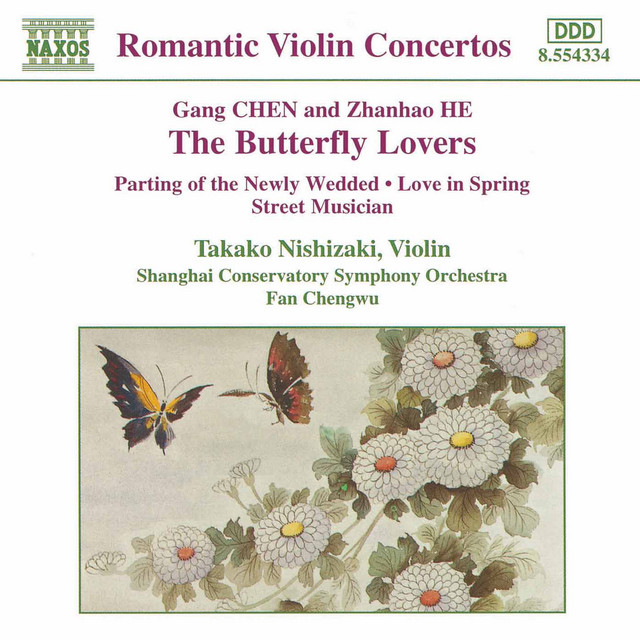
Among the most iconic emblems of the tradition are the qin and its virtuosic repertoire, the lush sounds of the guzheng, the soulful depth of the erhu, and the bright, literate textures of the pipa and dizi. The Jiangnan sizhu silk-and-bamboo tradition—soft, refined ensembles from the Yangtze delta—also remains a touchstone for China’s classical soundscape. A number of Chinese works and composers have become touchstones for the genre. The Butterfly Lovers (Liang Zhu), a 1959 violin concerto by He Zhanhao and Chen Gang, is one of the best-known pieces in mainstream concert halls and remains a staple for illustrating how Chinese melodic and timbral sensibilities can sit alongside Western orchestration. Xian Xinghai’s Yellow River Cantata, and its later piano- and chamber-scale arrangements, are celebrated for translating Chinese patriotic sentiment into large-scale form.
Ambassadors who broadened Chinese classical’s reach include modern composers Tan Dun, Bright Sheng, and Chen Yi, who fuse traditional Chinese timbres and aesthetics with Western orchestration and form. On the performing side, Wu Man—the world‑famous pipa virtuoso—has been instrumental in introducing guzheng and pipa repertories to global audiences, often through collaborations with Yo-Yo Ma and the Silk Road Ensemble. Lucrative cross-cultural collaborations have also spotlighted the genre in concert halls outside China, helping many Western listeners discover a sound world rooted in nature, poetry, and disciplined craftsmanship.
Geographically, Chinese classical has its strongest audiences in China, Taiwan, Hong Kong, and Singapore, with deep, enduring interest in Malaysia and other Southeast Asian Chinese communities. It also resonates with global audiences in North America and Europe, where universities, festivals, and orchestras program guoyue works and feature Chinese virtuosi. For enthusiasts, the genre offers a long arc of history, a refined artistic language, and a bridge between ancient aesthetics and contemporary sensibilities.
Its roots reach back to ritual and court music in antiquity. Yayue, the ancient ceremonial music of the Zhou dynasty, laid down a framework of scales, modes, and timbres that would influence centuries of Chinese composition. Over the Tang and especially the Song dynasties, musicians and scholars developed repertories for solo instruments like the qin (guqin) and guzheng as well as for ensembles. By the Ming and Qing periods, ensembles featuring erhu, pipa, dizi, and sheng became staples of court and provincial performances, evolving a repertoire that could express poetry, nature, and philosophical feeling in a distinctly Chinese voice. In the 20th century, modern composers and performers began to present this heritage in concert settings alongside Western instruments and forms, giving rise to what many scholars and musicians call guoyue—the national, or Chinese classical, style.
Among the most iconic emblems of the tradition are the qin and its virtuosic repertoire, the lush sounds of the guzheng, the soulful depth of the erhu, and the bright, literate textures of the pipa and dizi. The Jiangnan sizhu silk-and-bamboo tradition—soft, refined ensembles from the Yangtze delta—also remains a touchstone for China’s classical soundscape. A number of Chinese works and composers have become touchstones for the genre. The Butterfly Lovers (Liang Zhu), a 1959 violin concerto by He Zhanhao and Chen Gang, is one of the best-known pieces in mainstream concert halls and remains a staple for illustrating how Chinese melodic and timbral sensibilities can sit alongside Western orchestration. Xian Xinghai’s Yellow River Cantata, and its later piano- and chamber-scale arrangements, are celebrated for translating Chinese patriotic sentiment into large-scale form.
Ambassadors who broadened Chinese classical’s reach include modern composers Tan Dun, Bright Sheng, and Chen Yi, who fuse traditional Chinese timbres and aesthetics with Western orchestration and form. On the performing side, Wu Man—the world‑famous pipa virtuoso—has been instrumental in introducing guzheng and pipa repertories to global audiences, often through collaborations with Yo-Yo Ma and the Silk Road Ensemble. Lucrative cross-cultural collaborations have also spotlighted the genre in concert halls outside China, helping many Western listeners discover a sound world rooted in nature, poetry, and disciplined craftsmanship.
Geographically, Chinese classical has its strongest audiences in China, Taiwan, Hong Kong, and Singapore, with deep, enduring interest in Malaysia and other Southeast Asian Chinese communities. It also resonates with global audiences in North America and Europe, where universities, festivals, and orchestras program guoyue works and feature Chinese virtuosi. For enthusiasts, the genre offers a long arc of history, a refined artistic language, and a bridge between ancient aesthetics and contemporary sensibilities.