Genre
classic garage rock
Top Classic garage rock Artists
Showing 9 of 9 artists
About Classic garage rock
Classic garage rock is the raw, unpolished heartbeat of 1960s rock, a movement born in garages, basements, and rehearsal spaces where teenage bands played loud, simple songs with limited budgets and limitless energy. The sound crystallized between 1963 and 1967, a wild convergence of early rock and roll, R&B, and the garage-band urge to play reckless, live-on-the-edge rock. It thrived on spontaneity, three-chord riffs, buzzing guitar fuzz, pounding drums, and a vocal delivery that could swing from sneer to shout in a single chorus. The production was often lo-fi by design—warm echo, crude mixing, and a quick-to-tape approach that preserved the immediacy of a garage show.
The era’s climate helped this DIY ethic take hold. Post‑Beatles, adolescent rosters across the United States grabbed onto a staple of American popular music—short, punchy, high-energy songs—and translated it into a sound that felt both rebellious and approachable. Many bands wrote their own material or offered fearless covers of contemporary blues and R&B standards, creating a catalog of tracks that sounded like they were performed for a roomful of friends rather than a polished studio audience. The term garage rock itself was popularized and analyzed later by critics and historians; the influential Nuggets compilation, curated by Lenny Kaye in 1972, helped give shape and a name to the scene by collecting the era’s most energetic and rough-edged tracks.
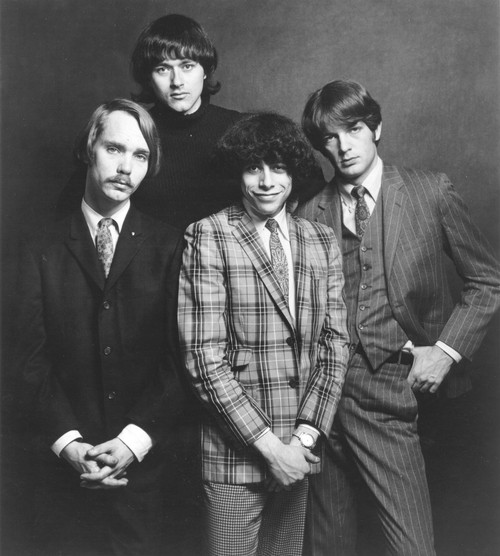
Ambassador bands and emblematic records demonstrate the genre’s scope. The Sonics from Tacoma, Washington, became famous for sonic brutality on tracks like Psycho and Have Love Will Travel, turning distortion into a musical weapon. The Seeds from Los Angeles captured a similar raw bite with Pushin’ Too Hard. The Standells, also L.A.-based, offered the anthemic Dirty Water, a garage-rock pocket anthem still played at stadiums and bars alike. Other key acts include The Kingsmen from Portland, whose Louie Louie became one of the era’s most recognizable garage boogies; The Remains from Boston, whose Don't Look Back captured the era’s vitality; and The Shadows of Knight from Chicago with their explosive Gloria. On the more psychedelic edge, The 13th Floor Elevators of Austin pushed toward a louder, more hypnotic dimension with You're Gonna Miss Me. The Velvet Underground, New York’s rumbling art-rock unit, brought a lyric and sonic menace that broadened how far garage could bend, foreshadowing punk’s DIY spirit.
Geographically, the movement was most intense in the United States, with seaside and inland scenes in the West (LA, Seattle, Portland) and the Midwest (Chicago, Detroit) driving the core sound. It reached Europe—especially the United Kingdom—where British groups absorbed the energy and re-exported it through a louder, grittier lens. Canada and other parts of the world also caught the fever through touring, radio, and later reissues, but the U.S. remained the cradle.
Legacy endures in the way it bridged to later styles. Classic garage rock laid the groundwork for punk’s stripped-down ethos and the 1990s garage-rock revival, where bands like the White Stripes and their peers borrowed that same spirit of immediacy, rebellion, and respect for the simple, loud equation of guitar, bass, and drums. It remains a reference point for enthusiasts who prize music that sounds like a live, sweaty, imperfect burst of energy captured on tape.
The era’s climate helped this DIY ethic take hold. Post‑Beatles, adolescent rosters across the United States grabbed onto a staple of American popular music—short, punchy, high-energy songs—and translated it into a sound that felt both rebellious and approachable. Many bands wrote their own material or offered fearless covers of contemporary blues and R&B standards, creating a catalog of tracks that sounded like they were performed for a roomful of friends rather than a polished studio audience. The term garage rock itself was popularized and analyzed later by critics and historians; the influential Nuggets compilation, curated by Lenny Kaye in 1972, helped give shape and a name to the scene by collecting the era’s most energetic and rough-edged tracks.
Ambassador bands and emblematic records demonstrate the genre’s scope. The Sonics from Tacoma, Washington, became famous for sonic brutality on tracks like Psycho and Have Love Will Travel, turning distortion into a musical weapon. The Seeds from Los Angeles captured a similar raw bite with Pushin’ Too Hard. The Standells, also L.A.-based, offered the anthemic Dirty Water, a garage-rock pocket anthem still played at stadiums and bars alike. Other key acts include The Kingsmen from Portland, whose Louie Louie became one of the era’s most recognizable garage boogies; The Remains from Boston, whose Don't Look Back captured the era’s vitality; and The Shadows of Knight from Chicago with their explosive Gloria. On the more psychedelic edge, The 13th Floor Elevators of Austin pushed toward a louder, more hypnotic dimension with You're Gonna Miss Me. The Velvet Underground, New York’s rumbling art-rock unit, brought a lyric and sonic menace that broadened how far garage could bend, foreshadowing punk’s DIY spirit.
Geographically, the movement was most intense in the United States, with seaside and inland scenes in the West (LA, Seattle, Portland) and the Midwest (Chicago, Detroit) driving the core sound. It reached Europe—especially the United Kingdom—where British groups absorbed the energy and re-exported it through a louder, grittier lens. Canada and other parts of the world also caught the fever through touring, radio, and later reissues, but the U.S. remained the cradle.
Legacy endures in the way it bridged to later styles. Classic garage rock laid the groundwork for punk’s stripped-down ethos and the 1990s garage-rock revival, where bands like the White Stripes and their peers borrowed that same spirit of immediacy, rebellion, and respect for the simple, loud equation of guitar, bass, and drums. It remains a reference point for enthusiasts who prize music that sounds like a live, sweaty, imperfect burst of energy captured on tape.