Genre
college marching band
Top College marching band Artists
Showing 25 of 30 artists



About College marching band
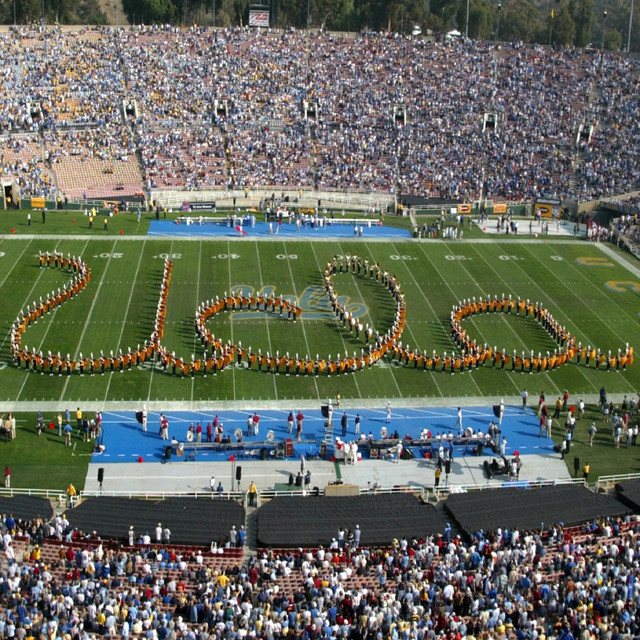
College marching band is a performance ensemble found on many university campuses, blending wind and percussion with choreographed drill, flag and color-guard work, and high-energy visual storytelling. The sound is practical for outdoor settings—bleacher acoustics, football arenas, and parade routes—yet the repertoire often pushes into sophisticated arrangements, from bold pop medleys to classic marches and cinematic transcriptions. The result is a hybrid art form: musical precision fused with civic pageantry and athletic spectacle.
Origins and evolution
College marching bands grew out of military bands and cadet corps in the 19th and early 20th centuries. American colleges adopted this model to accompany football games, campus parades, and ceremonial events, evolving from simple horn-and-drum ensembles into full-fledged drill and music units. By the mid-20th century, field formations, complex drill, and showmanship became central to the collegiate experience, aided by advances in marching techniques, uniform aesthetics, and sound amplification. The postwar era and the rise of televised sports helped cement marching bands as icons of campus culture, with halftime performances becoming a main stage for musical variety and visual design.
Performance language and craft
A typical college marching band features brass, woodwinds, percussion, and a color-guard contingent, all synchronized to intricate drill patterns. Drum majors, marching formations, and timing cues drive the show, while the repertoire swings between school fight songs, traditional marches, pop and rock medleys, Broadway tunes, and cinematic themes. The live atmosphere—crowd energy, stadium acoustics, and the visual rhythm of the drill—often makes the performance feel as much like choreography and theater as a concert. In recent decades, bands have incorporated electronic elements, more elaborate props, and multimedia to amplify storytelling while preserving the core live, outdoor experience.
Ambassadors and key programs
Several college bands have become ambassadors for the genre, known well beyond their campuses for innovation, tradition, and showmanship:
- Ohio State University Marching Band (The Best Damn Band in the Land) — renowned for its large size, precision drill, and signature Script Ohio formation.
- University of Michigan Marching Band — celebrated for precise technique, musicality, and high-visibility stadium performances.
- USC Trojan Marching Band (Spirit of Troy) — a Hollywood-facing ensemble famous for cinematic arrangements and high-energy field shows.
- Florida A&M University Marching 100 — a powerhouse among Historically Black Colleges and Universities (HBCUs), famous for rhythm, coordination, and influential drumline work.
- Grambling State University World Famed Tiger Marching Band — historic HBCU staple famed for its energy, discipline, and distinctive sound.
- LSU Golden Band from Tigerland, Alabama’s Million Dollar Band, and other major programs around the U.S. also carry strong reputations for tradition and innovation.
Global reach
Although the genre is rooted in the United States, college marching bands have inspired programs abroad and are active at international associations, exchanges, and universities around the world. Yet the United States remains the epicenter—where football culture, large-campus traditions, and school spirit fuel a thriving ecosystem of marching bands, BOA-style competitions, and award-winning halftime shows. Outside North America, the influence is visible in university ensembles that adopt the form and aesthetics, even as local tastes and funding models shape their own identities.
For enthusiasts, college marching bands offer a living archive of American musical spectacle: a blend of precision, spectacle, and communal pride that turns a stadium into a collaborative work of art.
Origins and evolution
College marching bands grew out of military bands and cadet corps in the 19th and early 20th centuries. American colleges adopted this model to accompany football games, campus parades, and ceremonial events, evolving from simple horn-and-drum ensembles into full-fledged drill and music units. By the mid-20th century, field formations, complex drill, and showmanship became central to the collegiate experience, aided by advances in marching techniques, uniform aesthetics, and sound amplification. The postwar era and the rise of televised sports helped cement marching bands as icons of campus culture, with halftime performances becoming a main stage for musical variety and visual design.
Performance language and craft
A typical college marching band features brass, woodwinds, percussion, and a color-guard contingent, all synchronized to intricate drill patterns. Drum majors, marching formations, and timing cues drive the show, while the repertoire swings between school fight songs, traditional marches, pop and rock medleys, Broadway tunes, and cinematic themes. The live atmosphere—crowd energy, stadium acoustics, and the visual rhythm of the drill—often makes the performance feel as much like choreography and theater as a concert. In recent decades, bands have incorporated electronic elements, more elaborate props, and multimedia to amplify storytelling while preserving the core live, outdoor experience.
Ambassadors and key programs
Several college bands have become ambassadors for the genre, known well beyond their campuses for innovation, tradition, and showmanship:
- Ohio State University Marching Band (The Best Damn Band in the Land) — renowned for its large size, precision drill, and signature Script Ohio formation.
- University of Michigan Marching Band — celebrated for precise technique, musicality, and high-visibility stadium performances.
- USC Trojan Marching Band (Spirit of Troy) — a Hollywood-facing ensemble famous for cinematic arrangements and high-energy field shows.
- Florida A&M University Marching 100 — a powerhouse among Historically Black Colleges and Universities (HBCUs), famous for rhythm, coordination, and influential drumline work.
- Grambling State University World Famed Tiger Marching Band — historic HBCU staple famed for its energy, discipline, and distinctive sound.
- LSU Golden Band from Tigerland, Alabama’s Million Dollar Band, and other major programs around the U.S. also carry strong reputations for tradition and innovation.
Global reach
Although the genre is rooted in the United States, college marching bands have inspired programs abroad and are active at international associations, exchanges, and universities around the world. Yet the United States remains the epicenter—where football culture, large-campus traditions, and school spirit fuel a thriving ecosystem of marching bands, BOA-style competitions, and award-winning halftime shows. Outside North America, the influence is visible in university ensembles that adopt the form and aesthetics, even as local tastes and funding models shape their own identities.
For enthusiasts, college marching bands offer a living archive of American musical spectacle: a blend of precision, spectacle, and communal pride that turns a stadium into a collaborative work of art.