Genre
concert band
Top Concert band Artists
Showing 25 of 38 artists









About Concert band
Concert band is a wind-centered ensemble designed for bright, focused sound and flexible balance. Standard instrumentation includes woodwinds, brass, and percussion; strings are not typically part of the core lineup, though some ensembles may include piano or aux percussion. Repertoire ranges from original band literature to ambitious transcriptions of orchestral works and contemporary scores, performed in concert halls, schools, and festival stages. The ensemble’s color comes from the mix of timbres—the flute’s silk, the clarinet’s capricious line, the brass’s punch, and the percussion’s rhythmic drive—creating a living tapestry that can be intimate or monumentally broad.
Birth and evolution: Wind bands have roots in court, militia, and civic bands of Europe and North America, marching in the fields, parade routes, and ceremonial spaces since at least the 18th century. The modern concert band as a concert-going entity crystallized in the early 20th century, when community and school ensembles expanded, and composers began writing specifically for wind instruments. In the United States, the Sousa era (late 19th to early 20th century) helped elevate the wind band to a principal vehicle for concert programming, with demanding marches, overtures, and fantasies, toured to reach bigger audiences. In Europe, composers like Gustav Holst began writing substantial wind-band works that treated the ensemble as capable of symphonic breadth; Holst’s First Suite in E-flat and, later, his Second Suite in F became touchstones for the repertoire. The format also evolved regionally into the “wind ensemble” or “symphonic band” nomenclature, signaling a growing seriousness about original compositions rather than only transcriptions.
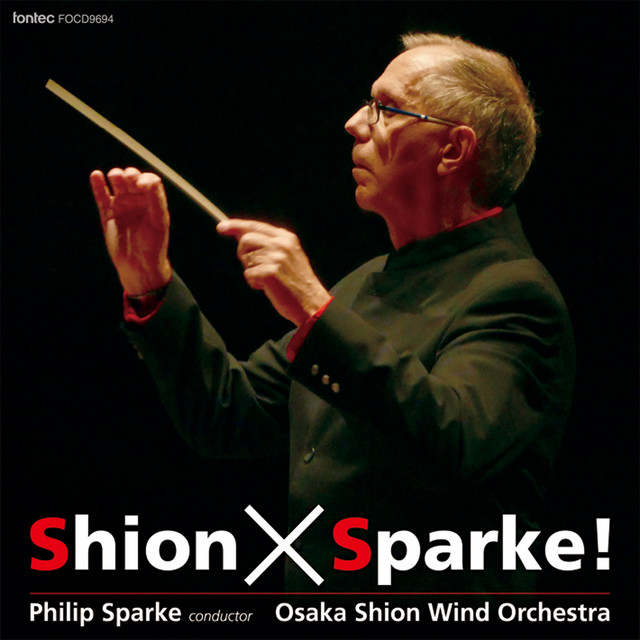
Repertoire and landmarks: The literature matured with dates that became anchors for students and professionals alike. Lincolnshire Posy by Percy Grainger (1937) is often cited as one of the defining cycles for wind-band color and storytelling. Malcolm Arnold’s postwar scores broaden idioms beyond marches and overture-style works. The late 20th century produced a flowering of new works by living composers such as Johan de Meij (Symphony No. 1 for Band) and Philip Sparke, who wrote extensively for the medium. These composers helped establish a repertoire that spans classical forms, world music influences, and contemporary idioms, keeping the concert band relevant in the modern concert hall.
Global ambassadors and popularity: Today, concert bands are most prominent in the United States, the United Kingdom, the Netherlands, Germany, and Japan, where school, community, and professional ensembles thrive. WASBE, the World Association for Symphonic Bands and Ensembles, coordinates conferences, commissioning, and repertoire promotion, helping bands connect worldwide. For music enthusiasts, the genre offers a blend of discipline, color, and communal drama: a communal sonic canvas in which each player contributes to a larger, shimmering orchestra of winds.
Ensemble sizes vary widely—from small community groups of two dozen players to large university bands of 60 or more—and rehearsals emphasize blend, articulation, and disciplined balance. In an age of cross-genre collaborations and multimedia concerts, the concert band remains a versatile, inclusive voice for new music and shared musical experiences. Its spirit strengthens listeners and players.
Birth and evolution: Wind bands have roots in court, militia, and civic bands of Europe and North America, marching in the fields, parade routes, and ceremonial spaces since at least the 18th century. The modern concert band as a concert-going entity crystallized in the early 20th century, when community and school ensembles expanded, and composers began writing specifically for wind instruments. In the United States, the Sousa era (late 19th to early 20th century) helped elevate the wind band to a principal vehicle for concert programming, with demanding marches, overtures, and fantasies, toured to reach bigger audiences. In Europe, composers like Gustav Holst began writing substantial wind-band works that treated the ensemble as capable of symphonic breadth; Holst’s First Suite in E-flat and, later, his Second Suite in F became touchstones for the repertoire. The format also evolved regionally into the “wind ensemble” or “symphonic band” nomenclature, signaling a growing seriousness about original compositions rather than only transcriptions.
Repertoire and landmarks: The literature matured with dates that became anchors for students and professionals alike. Lincolnshire Posy by Percy Grainger (1937) is often cited as one of the defining cycles for wind-band color and storytelling. Malcolm Arnold’s postwar scores broaden idioms beyond marches and overture-style works. The late 20th century produced a flowering of new works by living composers such as Johan de Meij (Symphony No. 1 for Band) and Philip Sparke, who wrote extensively for the medium. These composers helped establish a repertoire that spans classical forms, world music influences, and contemporary idioms, keeping the concert band relevant in the modern concert hall.
Global ambassadors and popularity: Today, concert bands are most prominent in the United States, the United Kingdom, the Netherlands, Germany, and Japan, where school, community, and professional ensembles thrive. WASBE, the World Association for Symphonic Bands and Ensembles, coordinates conferences, commissioning, and repertoire promotion, helping bands connect worldwide. For music enthusiasts, the genre offers a blend of discipline, color, and communal drama: a communal sonic canvas in which each player contributes to a larger, shimmering orchestra of winds.
Ensemble sizes vary widely—from small community groups of two dozen players to large university bands of 60 or more—and rehearsals emphasize blend, articulation, and disciplined balance. In an age of cross-genre collaborations and multimedia concerts, the concert band remains a versatile, inclusive voice for new music and shared musical experiences. Its spirit strengthens listeners and players.