Genre
concertina
Top Concertina Artists
Showing 7 of 7 artists

About Concertina
Concertina as a music niche sits at the intersection of folk tradition and intimate virtuosity. Though the word often designates a family of free-reed instruments rather than a standalone musical genre, “concertina” has grown into a distinct sonic world. Its bright bell-like timber, tight phrasing, and expressive bellows-driven dynamics make it instantly recognizable in both intimate rooms and festival stages.
Origins and birth of the instrument
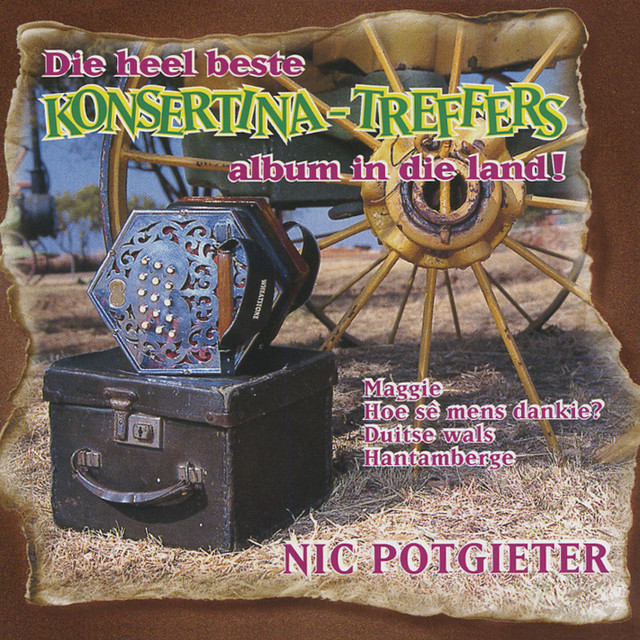
The concertina was born in the early 19th century, when English engineer Sir Charles Wheatstone devised and patent a compact, portable free-reed instrument that could be played with both hands in a pallet of expressive capability unseen in many contemporaries. First appearing around 1829–1830, the Wheatstone design quickly blossomed into several main families: the English concertina, with a chromatic layout favored for classical and parlour music; the Anglo concertina, a diatonic, button-driven cousin beloved by folk players for its punchy, singing drone-like lines; and the later duet concertina, whose two-row chromatic arrangement is tailored to a seamless scale across the entire keyboard. By the mid-Victorian era the instrument had become a fashionable staple in households, street performances, and music-hall entertainments, while also seeding a durable folk-flavored tradition that would travel far beyond Britain.
The genre’s niche in repertoire and playing styles
Concertina playing spans formal arrangements and unbuttoned folk jigs. In classical and salon circles, the English concertina supported artful, legato lines and polonaise- or waltz-inspired pieces, with composers and virtuosi expanding its technical range. In folk traditions, the Anglo concertina blossomed as a core instrument in Irish, English, and Scottish tunes, delivering crisp reels, hornpipes, and modal airs with a distinctive bite. In Brittany and parts of France, the concertina and related free-reed siblings contribute to dance music and cabaret-like performances, while in North America the instrument found a welcoming niche among folk revivalists and acoustic ensembles.
Ambassadors, key figures, and cultural ambassadors
Among the most enduring names linked to the instrument is Sir Charles Wheatstone himself, whose invention launched a global curiosity for compact concertina playing. In later decades, English folk musician John Kirkpatrick emerged as a modern ambassador of the instrument, advancing its repertoire, technique, and visibility in the English traditional scene. In Ireland, Alec Finn became a legendary figure, both as a virtuosic player and an instrument builder who helped popularize the concertina within Celtic music, shaping sounds that listeners still recognize in sessions and recordings today. These figures—spanning invention, revival, and craftsmanship—illustrate how concertina has traveled from a technological curiosity to a living language in folk and beyond.
Geography and popularity
Today the instrument is most deeply rooted in the United Kingdom and Ireland, where unique regional styles—English parlor idioms, Irish trad daintiness, and Celtic-inflected phrasing—continue to thrive. Brittany (France) hosts a parallel vibrant scene, while North America and Australasia host dedicated communities of folk players who keep concertina tunes alive in clubs, festivals, and independent releases. For enthusiasts, the concertina remains an instrument and a micro-genre in its own right: intimate, expressive, and endlessly adaptable to both traditional tunes and contemporary explorations.
If you’re exploring a niche where history, craft, and melodic clarity converge, the concertina’s world offers a rare blend of immediacy and depth. It rewards precise touch, thoughtful phrasing, and a willingness to lean into the instrument’s distinctive bounce between air, reed, and resonance.
Origins and birth of the instrument
The concertina was born in the early 19th century, when English engineer Sir Charles Wheatstone devised and patent a compact, portable free-reed instrument that could be played with both hands in a pallet of expressive capability unseen in many contemporaries. First appearing around 1829–1830, the Wheatstone design quickly blossomed into several main families: the English concertina, with a chromatic layout favored for classical and parlour music; the Anglo concertina, a diatonic, button-driven cousin beloved by folk players for its punchy, singing drone-like lines; and the later duet concertina, whose two-row chromatic arrangement is tailored to a seamless scale across the entire keyboard. By the mid-Victorian era the instrument had become a fashionable staple in households, street performances, and music-hall entertainments, while also seeding a durable folk-flavored tradition that would travel far beyond Britain.
The genre’s niche in repertoire and playing styles
Concertina playing spans formal arrangements and unbuttoned folk jigs. In classical and salon circles, the English concertina supported artful, legato lines and polonaise- or waltz-inspired pieces, with composers and virtuosi expanding its technical range. In folk traditions, the Anglo concertina blossomed as a core instrument in Irish, English, and Scottish tunes, delivering crisp reels, hornpipes, and modal airs with a distinctive bite. In Brittany and parts of France, the concertina and related free-reed siblings contribute to dance music and cabaret-like performances, while in North America the instrument found a welcoming niche among folk revivalists and acoustic ensembles.
Ambassadors, key figures, and cultural ambassadors
Among the most enduring names linked to the instrument is Sir Charles Wheatstone himself, whose invention launched a global curiosity for compact concertina playing. In later decades, English folk musician John Kirkpatrick emerged as a modern ambassador of the instrument, advancing its repertoire, technique, and visibility in the English traditional scene. In Ireland, Alec Finn became a legendary figure, both as a virtuosic player and an instrument builder who helped popularize the concertina within Celtic music, shaping sounds that listeners still recognize in sessions and recordings today. These figures—spanning invention, revival, and craftsmanship—illustrate how concertina has traveled from a technological curiosity to a living language in folk and beyond.
Geography and popularity
Today the instrument is most deeply rooted in the United Kingdom and Ireland, where unique regional styles—English parlor idioms, Irish trad daintiness, and Celtic-inflected phrasing—continue to thrive. Brittany (France) hosts a parallel vibrant scene, while North America and Australasia host dedicated communities of folk players who keep concertina tunes alive in clubs, festivals, and independent releases. For enthusiasts, the concertina remains an instrument and a micro-genre in its own right: intimate, expressive, and endlessly adaptable to both traditional tunes and contemporary explorations.
If you’re exploring a niche where history, craft, and melodic clarity converge, the concertina’s world offers a rare blend of immediacy and depth. It rewards precise touch, thoughtful phrasing, and a willingness to lean into the instrument’s distinctive bounce between air, reed, and resonance.