Genre
contemporary classical piano
Top Contemporary classical piano Artists
Showing 7 of 7 artists



About Contemporary classical piano
Contemporary classical piano is a living, elastic field that fans of the tool’s expressive possibilities crave. It encompasses music written roughly from the late 20th century to today, a period when composers expanded the instrument’s vocabulary beyond tradition to explore timbre, rhythm, microtonality, and electronics. It is not a single style but a family of approaches that share a commitment to the classical piano as a vehicle for innovation and personal voice.
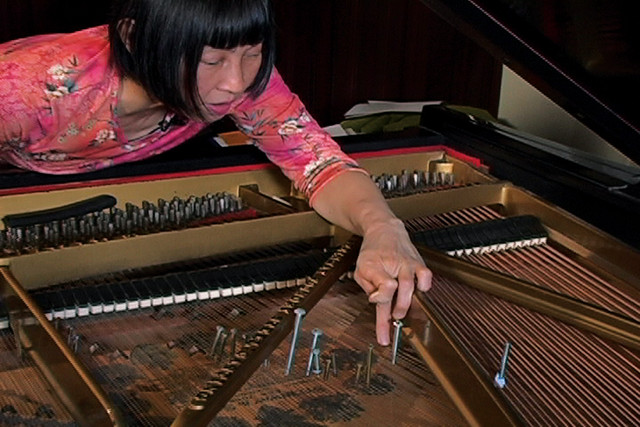
The genre owes much to post‑war experiments that challenged what a piano piece could be. John Cage’s late-1940s discoveries with prepared piano opened a door to altered timbres and chance operations. The 1960s–70s witnessed minimalism and its successors (Philip Glass, Steve Reich, Terry Riley) that stripped some music to hypnotic processes of repetition and gradual change, while elsewhere composers like Ligeti and Penderecki pushed the instrument toward density, texture, and complexity. Ligeti’s Etudes for piano (1985–2001) became touchstones for virtuosity and invention, balancing sonic invention with exacting craft. Cage’s Sonatas and Interludes and the broader exploration of nonstandard techniques still reverberate through today’s repertoire.
What characterizes contemporary classical piano today is a hunger for sound itself—its color, resonance, and the spaces between notes. You’ll hear extended techniques (inside-the-piano timbres, plucked strings, percussive attacks, prepared elements, microtonal tunings), electronic augmentation, and sometimes collaborative work with electronics, multimedia, or live processing. The music can be introspective and lyrical, a study in subtle shading; it can be electric, abrasive, or airy; it can unfold in minute micro-gestures or in expansive, cinematic arcs. It is a genre that invites careful listening, rewarding listeners who are curious about texture and gesture as much as melody and form.
Among the best-known composers who have shaped the field, Ligeti looms large, while Cage’s legacy of freedom continues to inform many younger voices. In more recent decades, the field has diversified into schools and scenes across the globe: the New Complexity composers (such as Brian Ferneyhough and Michael Finnissy) push pianism to extreme levels of notational intricacy; the minimalist‑influenced strands (Philip Glass, Steve Reich) continue to produce lucid, hypnotic piano landscapes; and the “neoclassical/ambient” branch (Ludovico Einaudi, Nils Frahm, Ólafur Arnalds, Max Richter) has helped bring contemporary piano music to a wide, often non‑classical audience.
Ambassadors of the movement in the concert world include performers such as Pierre-Laurent Aimard, who championed Ligeti and other modern repertoires; and a wave of contemporary pianists who blend classical training with broader sound-worlds. In popular culture, artists like Einaudi, Frahm, Arnalds, and Richter have broadened the reach of contemporary piano, connecting concert hall craft with cinematic and streaming audiences.
Geographically, contemporary classical piano thrives in centers of the US and Western Europe—cities like New York, Berlin, London, Paris, and Helsinki—yet its appeal has grown in Japan, South Korea, and other parts of Asia where new music scenes are rapidly expanding. The genre remains a vibrant, evolving conversation about what piano music can mean today.
If you’re exploring, start with Ligeti’s Etudes for a tour through virtuosity and timbre; pair Cage or Takemitsu for texture and space; and sample the newer voices shaping the landscape—Fra™hm, Arnalds, and Einaudi—for a sense of how contemporary piano can sound intimate, immediate, and profoundly modern.
The genre owes much to post‑war experiments that challenged what a piano piece could be. John Cage’s late-1940s discoveries with prepared piano opened a door to altered timbres and chance operations. The 1960s–70s witnessed minimalism and its successors (Philip Glass, Steve Reich, Terry Riley) that stripped some music to hypnotic processes of repetition and gradual change, while elsewhere composers like Ligeti and Penderecki pushed the instrument toward density, texture, and complexity. Ligeti’s Etudes for piano (1985–2001) became touchstones for virtuosity and invention, balancing sonic invention with exacting craft. Cage’s Sonatas and Interludes and the broader exploration of nonstandard techniques still reverberate through today’s repertoire.
What characterizes contemporary classical piano today is a hunger for sound itself—its color, resonance, and the spaces between notes. You’ll hear extended techniques (inside-the-piano timbres, plucked strings, percussive attacks, prepared elements, microtonal tunings), electronic augmentation, and sometimes collaborative work with electronics, multimedia, or live processing. The music can be introspective and lyrical, a study in subtle shading; it can be electric, abrasive, or airy; it can unfold in minute micro-gestures or in expansive, cinematic arcs. It is a genre that invites careful listening, rewarding listeners who are curious about texture and gesture as much as melody and form.
Among the best-known composers who have shaped the field, Ligeti looms large, while Cage’s legacy of freedom continues to inform many younger voices. In more recent decades, the field has diversified into schools and scenes across the globe: the New Complexity composers (such as Brian Ferneyhough and Michael Finnissy) push pianism to extreme levels of notational intricacy; the minimalist‑influenced strands (Philip Glass, Steve Reich) continue to produce lucid, hypnotic piano landscapes; and the “neoclassical/ambient” branch (Ludovico Einaudi, Nils Frahm, Ólafur Arnalds, Max Richter) has helped bring contemporary piano music to a wide, often non‑classical audience.
Ambassadors of the movement in the concert world include performers such as Pierre-Laurent Aimard, who championed Ligeti and other modern repertoires; and a wave of contemporary pianists who blend classical training with broader sound-worlds. In popular culture, artists like Einaudi, Frahm, Arnalds, and Richter have broadened the reach of contemporary piano, connecting concert hall craft with cinematic and streaming audiences.
Geographically, contemporary classical piano thrives in centers of the US and Western Europe—cities like New York, Berlin, London, Paris, and Helsinki—yet its appeal has grown in Japan, South Korea, and other parts of Asia where new music scenes are rapidly expanding. The genre remains a vibrant, evolving conversation about what piano music can mean today.
If you’re exploring, start with Ligeti’s Etudes for a tour through virtuosity and timbre; pair Cage or Takemitsu for texture and space; and sample the newer voices shaping the landscape—Fra™hm, Arnalds, and Einaudi—for a sense of how contemporary piano can sound intimate, immediate, and profoundly modern.