Genre
czech classical piano
Top Czech classical piano Artists
Showing 22 of 22 artists




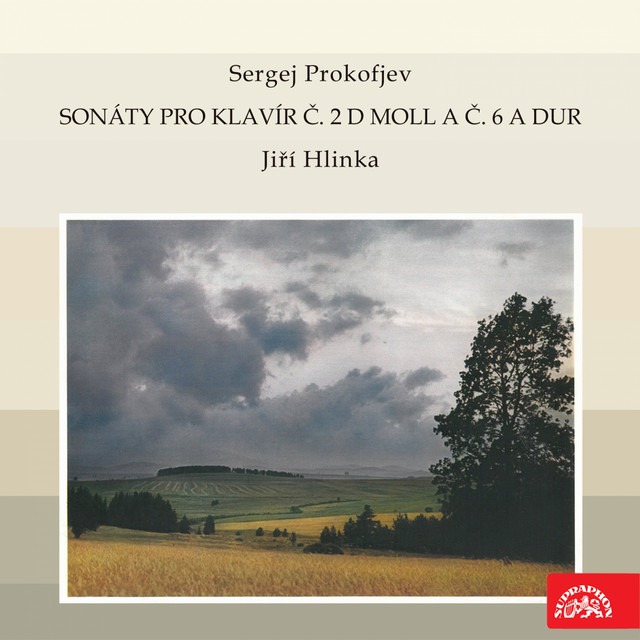
About Czech classical piano
Czech classical piano is a distinct branch of European piano literature that grew out of Bohemia’s poetic landscape and a Czech national musical awakening. It is not a single composers’ school, but a shared sensibility: a lean toward singing melodic lines, clear textures, and an often intimate, reflective temperament that can turn suddenly radiant or austere. Its repertoire blends the late-Romantic lyricism of the 19th century with a modern sensibility that valued precision, clarity, and a subtle national color.
The genre’s birth and early flowering trace to the Czech lands during the late 19th century, a period of cultural revival when Czech composers sought a voice independent of dominant Germanic and Austrian models. Bedřich Smetana and Antonín Dvořák laid the groundwork: Smetana’s piano writing—domestic character pieces and concise studies—brought Bohemian melodic syntax into a refined, classical idiom, while Dvořák expanded the piano’s expressive palette with characterful Humoresques, dances, and poetic miniatures that fuse folk-inflected cadence with refined Romantic craft. The Prague piano tradition then broadened under Leoš Janáček, whose introspective, often austere approach to piano works such as On an Overgrown Path (Po zarostlém chodníčku) fused speech-like rhythms with stark, radiantly distilled harmony. Janáček’s works helped elevate the piano to a vehicle for psychological and emotional narrative within a distinctly Czech voice.
In the 20th century, Czech pianism found a new ambassadorial voice through composers who wrote with a pianist’s sensitivity to touch, pedaling, and color. Bohuslav Martinů, though often associated with a broader Czech-French modernism, produced a substantial body of piano music—sonatas, suites, and dances—that are brisk, lucid, and architecturally inventive. The central national figures, however, emerged again as performers: Rudolf Firkušný and Ivan Moravec bridged the world of concert stages and studio recording, becoming emblematic custodians of Czech piano repertoire. Firkušný’s luminous, incisive touch and Moravec’s intimate, contemplative phrasing helped popularize Czech piano music across continents, from Carnegie Hall to major European capitals and beyond.
Today, the genre remains most deeply rooted in the Czech Republic and neighboring Central European countries, where the Prague Conservatory and the Janáček Academy of Music nurture a continuing tradition. But its appeal is international: listeners in Germany, Austria, Poland, Slovakia, and Hungary often encounter Czech piano through festival cycles and classical radio programs; the United States, the United Kingdom, and Japan have sustained a strong interest thanks to landmark recordings and authoritative performances by Firkušný, Moravec, and their successors. The music’s emotional range—lyrical cantabile lines, reflective mood, and occasional brisk, dancelike energy—continues to resonate with audiences who value musical storytelling anchored in a crisp, transparent pianism.
Key listening for enthusiasts includes Dvořák’s Humoresques and select piano pieces, Smetana’s domestic piano music, Janáček’s On an Overgrown Path, and Martinů’s various piano works, all performed by the great Czech interpreters of the 20th century and today’s rising pianists. This lineage is less about a single stylistic doctrine and more about a shared heritage: a pianistic language that translates Bohemian landscapes and Czech imagination into a lucid, emotionally precise keyboard discourse.
The genre’s birth and early flowering trace to the Czech lands during the late 19th century, a period of cultural revival when Czech composers sought a voice independent of dominant Germanic and Austrian models. Bedřich Smetana and Antonín Dvořák laid the groundwork: Smetana’s piano writing—domestic character pieces and concise studies—brought Bohemian melodic syntax into a refined, classical idiom, while Dvořák expanded the piano’s expressive palette with characterful Humoresques, dances, and poetic miniatures that fuse folk-inflected cadence with refined Romantic craft. The Prague piano tradition then broadened under Leoš Janáček, whose introspective, often austere approach to piano works such as On an Overgrown Path (Po zarostlém chodníčku) fused speech-like rhythms with stark, radiantly distilled harmony. Janáček’s works helped elevate the piano to a vehicle for psychological and emotional narrative within a distinctly Czech voice.
In the 20th century, Czech pianism found a new ambassadorial voice through composers who wrote with a pianist’s sensitivity to touch, pedaling, and color. Bohuslav Martinů, though often associated with a broader Czech-French modernism, produced a substantial body of piano music—sonatas, suites, and dances—that are brisk, lucid, and architecturally inventive. The central national figures, however, emerged again as performers: Rudolf Firkušný and Ivan Moravec bridged the world of concert stages and studio recording, becoming emblematic custodians of Czech piano repertoire. Firkušný’s luminous, incisive touch and Moravec’s intimate, contemplative phrasing helped popularize Czech piano music across continents, from Carnegie Hall to major European capitals and beyond.
Today, the genre remains most deeply rooted in the Czech Republic and neighboring Central European countries, where the Prague Conservatory and the Janáček Academy of Music nurture a continuing tradition. But its appeal is international: listeners in Germany, Austria, Poland, Slovakia, and Hungary often encounter Czech piano through festival cycles and classical radio programs; the United States, the United Kingdom, and Japan have sustained a strong interest thanks to landmark recordings and authoritative performances by Firkušný, Moravec, and their successors. The music’s emotional range—lyrical cantabile lines, reflective mood, and occasional brisk, dancelike energy—continues to resonate with audiences who value musical storytelling anchored in a crisp, transparent pianism.
Key listening for enthusiasts includes Dvořák’s Humoresques and select piano pieces, Smetana’s domestic piano music, Janáček’s On an Overgrown Path, and Martinů’s various piano works, all performed by the great Czech interpreters of the 20th century and today’s rising pianists. This lineage is less about a single stylistic doctrine and more about a shared heritage: a pianistic language that translates Bohemian landscapes and Czech imagination into a lucid, emotionally precise keyboard discourse.