Genre
dabke
Top Dabke Artists
Showing 20 of 20 artists



About Dabke
Dabke is a Levantine folk phenomenon that blends music, dance, and communal memory into a single, highly social art form. It functions as a line or circle dance performed at weddings, celebrations, and religious or seasonal gatherings, with the crowd joining hands and stamping feet in tight, synchronized steps. The music serves the dance: it is rhythmic, infectious, and built to propel a collective movement. For music enthusiasts, dabke offers a living example of how tradition can be both rooted and malleable, a genre that travels easily from village square to international festival stage.
Origins and context are rooted in the Levant’s diverse cultural landscapes—Palestine, Jordan, Lebanon, and Syria—and they extend to the diaspora communities that formed after migrations, conflict, and displacement. The word “dabke” itself is often linked to the stomping, or dabk, of feet, a sound that historically came from rural wedding circles before becoming a hallmark of urban and cross-border celebrations. Though it is a traditional form, dabke is not monolithic: regional variations exist in tempo, rhythm, and instrumentation, and the style adapts with each generation. In many villages, dabke accompanies maqams—Arab music scales and melodic patterns—while keeping a pulse that invites participation from singers, dancers, and onlookers alike.
Musically, dabke centers on percussion and rhythmic drive. The typical ensemble features the darbuka (doumbek) as the lead instrument, complemented by riq (tambourine) or traditional frame drums. Melodic textures may come from the oud, bouzouki-like strings, or a fiddle, sometimes enriched by mijwiz (a double-reed instrument) or other regional wind instruments. Rhythms range from straightforward four-beat and two-beat patterns to more complex, syncopated cycles in six-eight or asymmetric meters, all designed to sustain the line-dance’s momentum: a call-and-response between a lead drummer and the rest of the group, a shared breath between players and dancers, and the improvisatory flair of vocal lines and dance moves. The dance itself is as much about group cohesion as individual flair: dancers step in unison, shoulder-to-shoulder, weaving intricate footwork with big leaps and tight spins when the beat peaks.
In today’s world, dabke is popular across the Levantine region and among its diasporas in Europe, North America, and beyond. It remains a staple at Palestinian weddings, Jordanian community events, Lebanese celebrations, and Syrian social gatherings, while also enjoying a niche presence in world-music circuits and club scenes through fusion acts. The genre has migrated into festivals and town squares far from its Middle Eastern cradle, where audiences discover its hypnotic rhythms and communal spirit. Its adaptability is evident in how contemporary artists fuse dabke with electronic music, hip-hop, or rock, creating cross-cultural conversations without losing the core communal energy.
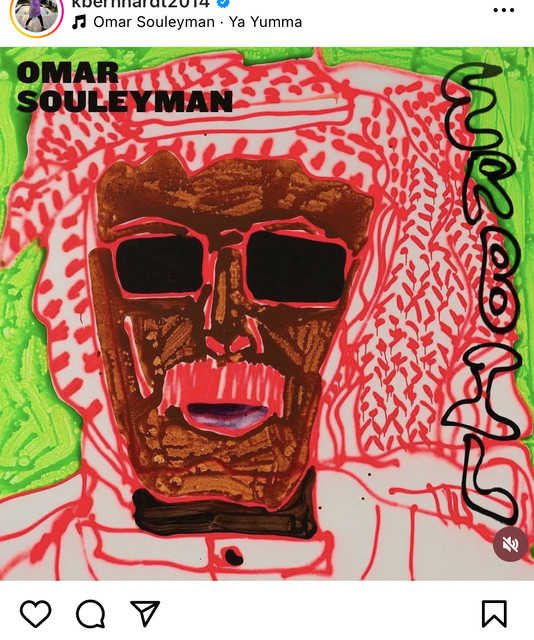
Notable modern figures often cited as ambassadors of dabke’s contemporary voice include Omar Souleyman, the Syrian musician who brought traditional dabke-inflected dance music to international clubs and festivals with a modern electronic veneer; Mohammad Assaf, the Palestinian singer who popularized folk-infused dabke songs in mainstream media; and bands from Lebanon, Jordan, and the broader diaspora that fuse traditional rhythms with indie and pop sensibilities. These artists and ensembles illuminate the genre’s ongoing evolution: dabke remains deeply traditional in its social function, yet vibrantly modern in its sonic explorations.
For enthusiasts, dabke is both a historical doorway into Levantine culture and a living, evolving soundscape that invites participation, rhythm, and shared joy.
Origins and context are rooted in the Levant’s diverse cultural landscapes—Palestine, Jordan, Lebanon, and Syria—and they extend to the diaspora communities that formed after migrations, conflict, and displacement. The word “dabke” itself is often linked to the stomping, or dabk, of feet, a sound that historically came from rural wedding circles before becoming a hallmark of urban and cross-border celebrations. Though it is a traditional form, dabke is not monolithic: regional variations exist in tempo, rhythm, and instrumentation, and the style adapts with each generation. In many villages, dabke accompanies maqams—Arab music scales and melodic patterns—while keeping a pulse that invites participation from singers, dancers, and onlookers alike.
Musically, dabke centers on percussion and rhythmic drive. The typical ensemble features the darbuka (doumbek) as the lead instrument, complemented by riq (tambourine) or traditional frame drums. Melodic textures may come from the oud, bouzouki-like strings, or a fiddle, sometimes enriched by mijwiz (a double-reed instrument) or other regional wind instruments. Rhythms range from straightforward four-beat and two-beat patterns to more complex, syncopated cycles in six-eight or asymmetric meters, all designed to sustain the line-dance’s momentum: a call-and-response between a lead drummer and the rest of the group, a shared breath between players and dancers, and the improvisatory flair of vocal lines and dance moves. The dance itself is as much about group cohesion as individual flair: dancers step in unison, shoulder-to-shoulder, weaving intricate footwork with big leaps and tight spins when the beat peaks.
In today’s world, dabke is popular across the Levantine region and among its diasporas in Europe, North America, and beyond. It remains a staple at Palestinian weddings, Jordanian community events, Lebanese celebrations, and Syrian social gatherings, while also enjoying a niche presence in world-music circuits and club scenes through fusion acts. The genre has migrated into festivals and town squares far from its Middle Eastern cradle, where audiences discover its hypnotic rhythms and communal spirit. Its adaptability is evident in how contemporary artists fuse dabke with electronic music, hip-hop, or rock, creating cross-cultural conversations without losing the core communal energy.
Notable modern figures often cited as ambassadors of dabke’s contemporary voice include Omar Souleyman, the Syrian musician who brought traditional dabke-inflected dance music to international clubs and festivals with a modern electronic veneer; Mohammad Assaf, the Palestinian singer who popularized folk-infused dabke songs in mainstream media; and bands from Lebanon, Jordan, and the broader diaspora that fuse traditional rhythms with indie and pop sensibilities. These artists and ensembles illuminate the genre’s ongoing evolution: dabke remains deeply traditional in its social function, yet vibrantly modern in its sonic explorations.
For enthusiasts, dabke is both a historical doorway into Levantine culture and a living, evolving soundscape that invites participation, rhythm, and shared joy.