Genre
danish hip hop
Top Danish hip hop Artists
Showing 25 of 104 artists








About Danish hip hop
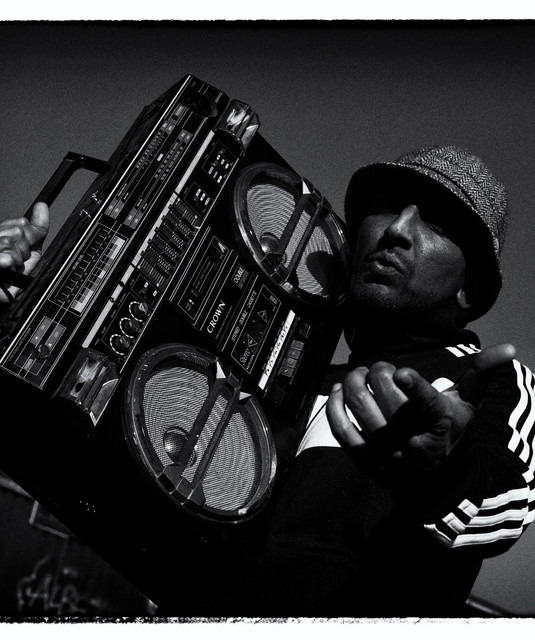
Danish hip hop is the Danish take on a worldwide culture, a scene built from the same roots as American and British rap but deeply threaded with Danish language, local humor, social commentary, and Nordic sensibilities. Born in the late 1980s and blossoming through the 1990s, it grew from underground crews in Copenhagen and spread to other cities like Aarhus and beyond. Early pioneers blended rough beats with inventive Danish wordplay, proving that rap could carry a uniquely Danish voice as well as global energy.
Historically, the Danish scene owes much to groups that treated language as a tool for experimentation as much as a vehicle for storytelling. Malk de Koijn, often cited as one of the movement’s most influential early acts, helped prove that Danish could rhyme with the same swagger as English-language rap while offering surreal, witty, and locally flavored lyricism. The 1990s also saw the emergence of groups and artists who would become anchors of the scene, laying down templates for production, flow, and collaboration that younger generations would remix and expand.
In the 2000s, Danish hip hop began to cross over more publicly, aided by acts that could balance local authenticity with wider appeal. Outlandish became a standout ambassador, celebrated for multilingual tracks and a global sound that still rested on Danish roots. Suspekt entered with a darker, more visceral approach, pushing the genre into a harder, more cinematic realm. Alongside them, artists like L.O.C. helped fuse hip hop with broader Danish pop and rock traditions, broadening the audience without diluting the core street-level grit.
Today’s Danish hip hop is protean. The scene thrives on sharp lyricism, inventive production, and a willingness to blend genres—jazz, funk, electronic textures, and pop sensibilities all show up in Danish tracks. It’s common for Danish rappers to switch between Danish and English, or to lace Danish verses with Arabic, Turkish, or other influences, reflecting the country’s growing multicultural fabric. The live circuit is vibrant, with clubs, cafés, and festivals across Denmark providing a steady stream of new voices alongside established names.
Key contemporary voices act as ambassadors for the genre both at home and abroad. Beyond the mid-2000s pioneers, you’ll find acts that have carried Danish hip hop onto European stages and into streaming playlists across Europe. In recent years, a new generation has further diversified the sound: lyrical punchlines, social realism, and club-friendly bangers that still speak in Danish. Although the domestic scene remains the engine, Denmark’s hip hop has also found resonance in neighboring Nordic countries and in parts of Northern Europe, where cross-border collaborations and tour connections keep the energy flowing.
What makes Danish hip hop compelling to enthusiasts is not merely its native language, but its culture of risk-taking: playful wordplay, precise rhythms, and a willingness to address everyday life, politics, and identity with honesty and humor. It remains a dynamic, evolving scene—rooted in Copenhagen’s and Aarhus’s clubs, threaded through with global influences, and continually redefining what Danish voices can sound like in the world of hip hop.
Historically, the Danish scene owes much to groups that treated language as a tool for experimentation as much as a vehicle for storytelling. Malk de Koijn, often cited as one of the movement’s most influential early acts, helped prove that Danish could rhyme with the same swagger as English-language rap while offering surreal, witty, and locally flavored lyricism. The 1990s also saw the emergence of groups and artists who would become anchors of the scene, laying down templates for production, flow, and collaboration that younger generations would remix and expand.
In the 2000s, Danish hip hop began to cross over more publicly, aided by acts that could balance local authenticity with wider appeal. Outlandish became a standout ambassador, celebrated for multilingual tracks and a global sound that still rested on Danish roots. Suspekt entered with a darker, more visceral approach, pushing the genre into a harder, more cinematic realm. Alongside them, artists like L.O.C. helped fuse hip hop with broader Danish pop and rock traditions, broadening the audience without diluting the core street-level grit.
Today’s Danish hip hop is protean. The scene thrives on sharp lyricism, inventive production, and a willingness to blend genres—jazz, funk, electronic textures, and pop sensibilities all show up in Danish tracks. It’s common for Danish rappers to switch between Danish and English, or to lace Danish verses with Arabic, Turkish, or other influences, reflecting the country’s growing multicultural fabric. The live circuit is vibrant, with clubs, cafés, and festivals across Denmark providing a steady stream of new voices alongside established names.
Key contemporary voices act as ambassadors for the genre both at home and abroad. Beyond the mid-2000s pioneers, you’ll find acts that have carried Danish hip hop onto European stages and into streaming playlists across Europe. In recent years, a new generation has further diversified the sound: lyrical punchlines, social realism, and club-friendly bangers that still speak in Danish. Although the domestic scene remains the engine, Denmark’s hip hop has also found resonance in neighboring Nordic countries and in parts of Northern Europe, where cross-border collaborations and tour connections keep the energy flowing.
What makes Danish hip hop compelling to enthusiasts is not merely its native language, but its culture of risk-taking: playful wordplay, precise rhythms, and a willingness to address everyday life, politics, and identity with honesty and humor. It remains a dynamic, evolving scene—rooted in Copenhagen’s and Aarhus’s clubs, threaded through with global influences, and continually redefining what Danish voices can sound like in the world of hip hop.