Genre
djembe
Top Djembe Artists
Showing 19 of 19 artists


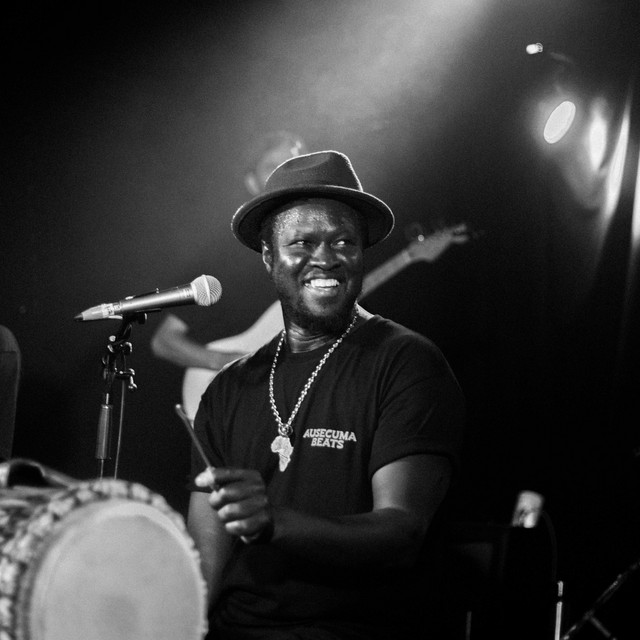


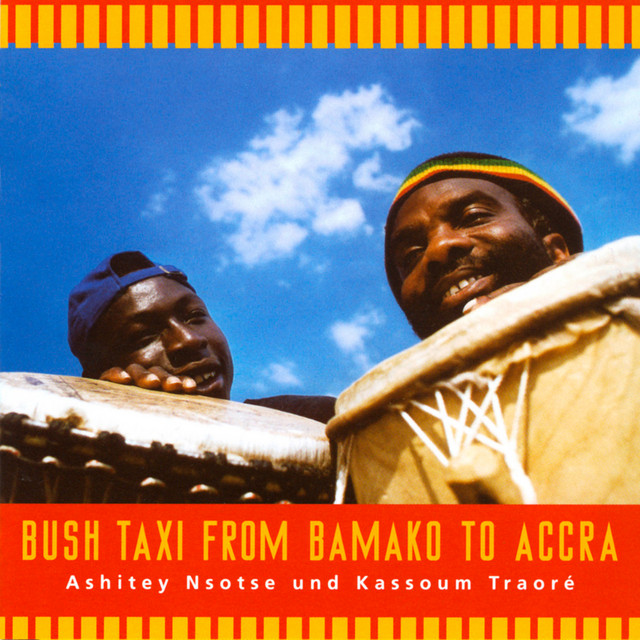


About Djembe
Djembe is not a single fixed style but a living family of rhythms centered on a single goblet-shaped drum. Originating in West Africa, the djembe is inseparable from the Mandé-speaking communities of the region, especially in present-day Guinea, Mali, Senegal, and the Ivory Coast. For centuries, the drum has traveled with traders, griots, and artisans, but its modern currency comes from its role in communal life: ceremonies, harvests, rites of passage, and storytelling. The name djembe is believed to derive from the Bambara language, and while exact meanings vary, it is broadly associated with gathering, communication, and celebration.
The instrument is carved from a single block of hardwood, with an animal skin head stretched by ropes. When struck with bare hands, the djembe produces a spectrum of tones: a deep bass from the center, a clear tone from the edge, and a high-pitched slap on the rim. Mastery lies in precision and dynamic control, allowing players to swap between whisper-soft sounds and thunderous accents. In traditional ensembles, djembe calls and responds to pole-based drums like dunun, weaving polyrhythms and call-and-response patterns that echo around the village drum circle.
The modern story of the djembe begins in the mid-20th century, when West African drumming entered global consciousness through ensembles such as Les Ballets Africains and other cultural troupes. The instrument then spread to Europe, the Americas, and beyond, transforming it into a symbol of cultural exchange. Pioneering players and teachers—Mamady Keïta of Guinea, renowned for his technique and pedagogy, and Famoudou Konaté, who taught countless students around the world—helped codify the instrument’s vocabulary and repertoire. In the United States, Babatunde Olatunji popularized West African drumming with his Drums of Passion and associated workshops, bringing rhythm circles and djembe education to a broad audience. In Europe, a new generation of players from Guinea, Mali, and Senegal runs clinics, releases albums, and leads master classes that continue to expand the instrument’s reach.
Geography and popularity: The djembe remains most closely associated with West Africa, where it is woven into social ceremonies, storytelling, and religious rituals. In Guinea and Mali, it is a living art form and a diplomatic language—deployed to mark celebrations, resolve disputes, and teach younger generations. Globally, it thrives in diasporic communities and on the world music circuit. The United States, France, the United Kingdom, Spain, Germany, and Italy host vibrant scenes of drum circles, schools, and festivals, while festivals across Scandinavia, Brazil, and the Caribbean welcome djembe performers as part of broader African and Afro-diasporic programs.
Today’s djembe scene is marked by cross-cultural collaboration and fusion: jazz percussionists weave in West African rhythms; electronic producers sample or interact with live tapping; and community groups sustain intergenerational exchange. The instrument remains a tool for storytelling and a bridge between tradition and experimentation—an invitation to listen, respond, and gather. Whether heard on a village square, a concert hall, or a fusion project, the djembe invites participation and listening. It is both rooted in memory and open to innovation, a living language of rhythm.
The instrument is carved from a single block of hardwood, with an animal skin head stretched by ropes. When struck with bare hands, the djembe produces a spectrum of tones: a deep bass from the center, a clear tone from the edge, and a high-pitched slap on the rim. Mastery lies in precision and dynamic control, allowing players to swap between whisper-soft sounds and thunderous accents. In traditional ensembles, djembe calls and responds to pole-based drums like dunun, weaving polyrhythms and call-and-response patterns that echo around the village drum circle.
The modern story of the djembe begins in the mid-20th century, when West African drumming entered global consciousness through ensembles such as Les Ballets Africains and other cultural troupes. The instrument then spread to Europe, the Americas, and beyond, transforming it into a symbol of cultural exchange. Pioneering players and teachers—Mamady Keïta of Guinea, renowned for his technique and pedagogy, and Famoudou Konaté, who taught countless students around the world—helped codify the instrument’s vocabulary and repertoire. In the United States, Babatunde Olatunji popularized West African drumming with his Drums of Passion and associated workshops, bringing rhythm circles and djembe education to a broad audience. In Europe, a new generation of players from Guinea, Mali, and Senegal runs clinics, releases albums, and leads master classes that continue to expand the instrument’s reach.
Geography and popularity: The djembe remains most closely associated with West Africa, where it is woven into social ceremonies, storytelling, and religious rituals. In Guinea and Mali, it is a living art form and a diplomatic language—deployed to mark celebrations, resolve disputes, and teach younger generations. Globally, it thrives in diasporic communities and on the world music circuit. The United States, France, the United Kingdom, Spain, Germany, and Italy host vibrant scenes of drum circles, schools, and festivals, while festivals across Scandinavia, Brazil, and the Caribbean welcome djembe performers as part of broader African and Afro-diasporic programs.
Today’s djembe scene is marked by cross-cultural collaboration and fusion: jazz percussionists weave in West African rhythms; electronic producers sample or interact with live tapping; and community groups sustain intergenerational exchange. The instrument remains a tool for storytelling and a bridge between tradition and experimentation—an invitation to listen, respond, and gather. Whether heard on a village square, a concert hall, or a fusion project, the djembe invites participation and listening. It is both rooted in memory and open to innovation, a living language of rhythm.