Genre
drone rock
Top Drone rock Artists
Showing 4 of 4 artists


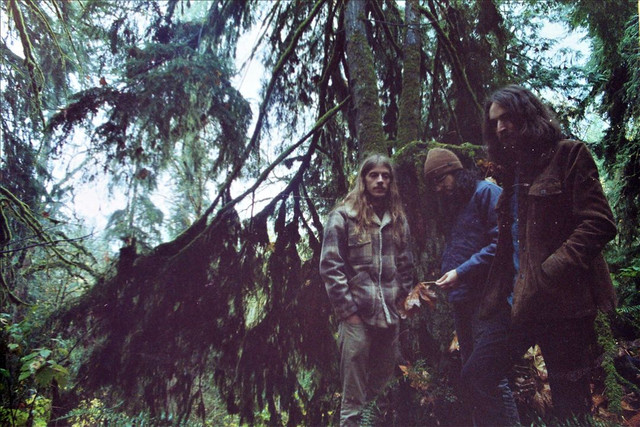
About Drone rock
Drone rock is a music genre that sits at the intersection of rock’s blunt force and the hypnotic patience of drone-based sound. It casts long, sustained tones as the backbone of its texture, layering guitars, bass, keyboards, and electronics into thick, shimmering fogs. The rhythm is often minimal or even absent in traditional sense, while repetition, drift, and gradual crescendoes carry the listening journey. The effect can be meditative and immersive, or claustrophobic and overwhelming, depending on how the drones morph, modulate, and interact with space and volume.
The lineage runs deep. Drone as a concept can be traced back to the 1960s with La Monte Young and his Theatre of Eternal Music, who explored sustain as time itself. In rock terms, the Velvet Underground’s early use of droning, violist John Cale’s strings, and the general amplification of noise introduced a rock-friendly sense of sustained sound. By the late 1980s and into the 1990s, UK and US bands fused these ideas with psychedelic, post-punk, and minimalist tendencies, giving rise to what critics began labeling drone rock—sometimes overlapping with space rock, shoegaze, or post-rock, depending on the emphasis on atmosphere, texture, or progression. The result was not so much a single manifesto as a field of practice: tracks and records designed to be lived in for long stretches, where the drone becomes a character in its own right.
Key ambassadors and touchstones illuminate the map of drone rock. Spacemen 3 fused hypnotic guitar drones with spaces between notes, anchoring a UK line that would influence later space-leaning acts. Loop carried a similarly austere, hypnotic guitar vocabulary, helping define a late-80s/early-90s English strand of the genre. In the US, Earth pushed the drone toward a heavy, bass-forward, monolithic racket that foreshadowed drone metal, while Sunn O))) expanded the form into extreme volume and tectonic slow-burn dynamics. Godspeed You! Black Emperor brought a cinematic, orchestral sense to drone, threading political mood into long-form pieces. More melodic and textural strands—exemplified by Spiritualized—show that drone rock can also be expansive, dreamy, and emotionally direct. Across decades, these artists act as ambassadors not because they all sound the same, but because they demonstrate how sustained sound can carry atmosphere, emotion, and narrative without conventional song structures.
Geographically, drone rock thrives where experimentation with sound production and distribution is vibrant: Europe and North America are the core hubs, with strong scenes in the UK, Canada, the Pacific Northwest, and parts of Scandinavia. The DIY ethic and independent labels—Kranky and other imprints in the US, European small presses, and festival circuits—have kept the genre buoyant, allowing bands to explore textures that might frighten mainstream audiences but reward attentive listening. Japan and Icelandic circles also contribute distinctive takes, reflecting local approaches to noise, minimalism, and rock.
For the curious enthusiast, drone rock rewards patience and attentive listening: note how timbre and sustain shape emotion as powerfully as melody and form. Begin with foundational touchstones—Spacemen 3’s spacey minimalism, Loop’s drone-soaked riffs, Earth’s heavy, hum-driven records, Sunn O)))’s tectonic slabs of sound, and Godspeed You! Black Emperor’s sprawling epics—and let the textures unfold.
The lineage runs deep. Drone as a concept can be traced back to the 1960s with La Monte Young and his Theatre of Eternal Music, who explored sustain as time itself. In rock terms, the Velvet Underground’s early use of droning, violist John Cale’s strings, and the general amplification of noise introduced a rock-friendly sense of sustained sound. By the late 1980s and into the 1990s, UK and US bands fused these ideas with psychedelic, post-punk, and minimalist tendencies, giving rise to what critics began labeling drone rock—sometimes overlapping with space rock, shoegaze, or post-rock, depending on the emphasis on atmosphere, texture, or progression. The result was not so much a single manifesto as a field of practice: tracks and records designed to be lived in for long stretches, where the drone becomes a character in its own right.
Key ambassadors and touchstones illuminate the map of drone rock. Spacemen 3 fused hypnotic guitar drones with spaces between notes, anchoring a UK line that would influence later space-leaning acts. Loop carried a similarly austere, hypnotic guitar vocabulary, helping define a late-80s/early-90s English strand of the genre. In the US, Earth pushed the drone toward a heavy, bass-forward, monolithic racket that foreshadowed drone metal, while Sunn O))) expanded the form into extreme volume and tectonic slow-burn dynamics. Godspeed You! Black Emperor brought a cinematic, orchestral sense to drone, threading political mood into long-form pieces. More melodic and textural strands—exemplified by Spiritualized—show that drone rock can also be expansive, dreamy, and emotionally direct. Across decades, these artists act as ambassadors not because they all sound the same, but because they demonstrate how sustained sound can carry atmosphere, emotion, and narrative without conventional song structures.
Geographically, drone rock thrives where experimentation with sound production and distribution is vibrant: Europe and North America are the core hubs, with strong scenes in the UK, Canada, the Pacific Northwest, and parts of Scandinavia. The DIY ethic and independent labels—Kranky and other imprints in the US, European small presses, and festival circuits—have kept the genre buoyant, allowing bands to explore textures that might frighten mainstream audiences but reward attentive listening. Japan and Icelandic circles also contribute distinctive takes, reflecting local approaches to noise, minimalism, and rock.
For the curious enthusiast, drone rock rewards patience and attentive listening: note how timbre and sustain shape emotion as powerfully as melody and form. Begin with foundational touchstones—Spacemen 3’s spacey minimalism, Loop’s drone-soaked riffs, Earth’s heavy, hum-driven records, Sunn O)))’s tectonic slabs of sound, and Godspeed You! Black Emperor’s sprawling epics—and let the textures unfold.