Genre
dutch contemporary classical
Top Dutch contemporary classical Artists
Showing 25 of 29 artists










About Dutch contemporary classical
Dutch contemporary classical is the Netherlands’ distinct voice in 20th- and 21st-century art music, a field that blends steel-tight craftsmanship with theatricality, electronic textures, and cross-disciplinary storytelling. It grew out of postwar European modernism and a robust Dutch support system for the arts, evolving from the 1960s into a vibrant ecosystem of composers, performers, and festivals that continually re-interpret what concert music can be.
The birth of this scene is often traced to a generation that challenged the rigid certainties of serialism while staying resolutely musical. In the Netherlands, composers sought new energies—rhythmic drive, vivid timbres, and an openness to influence from jazz, folk, and contemporary media. The late 1960s through the 1980s saw a “New Dutch Music” that experimented with ensemble texture, open form, and the integration of electronics, often with a strong sense of theater or social commentary. Simeon ten Holt’s Canto Ostinato and Louis Andriessen’s expanding works became touchstones, showing how Dutch composers could fuse minimalism’s repetition with polyphonic density, momentum, and risk-taking.
Key artists and ambassadors of the genre include Louis Andriessen, one of the most influential Dutch composers of the late 20th century, whose works such as De Materie and Hymnen fuse ritual intensity with large ensembles and political or cultural subtexts. Simeon ten Holt, with Canto Ostinato, became a beacon for meditative, repeated patterns that invite improvisation within a structured frame. Theo Loevendie helped bridge jazz-inflected languages and European modernism, enriching the Dutch sound with accessible color and swing. In the new millennium, Michel van der Aa emerged as a leading cross-media innovator, writing for orchestra, chamber groups, and film or video to create immersive experiences. These figures—along with others like Gijsbrecht van der Wal and, more broadly, the ensembles and institutions that championed their music—shaped a language that remains recognizably Dutch in its rigor and playfulness.
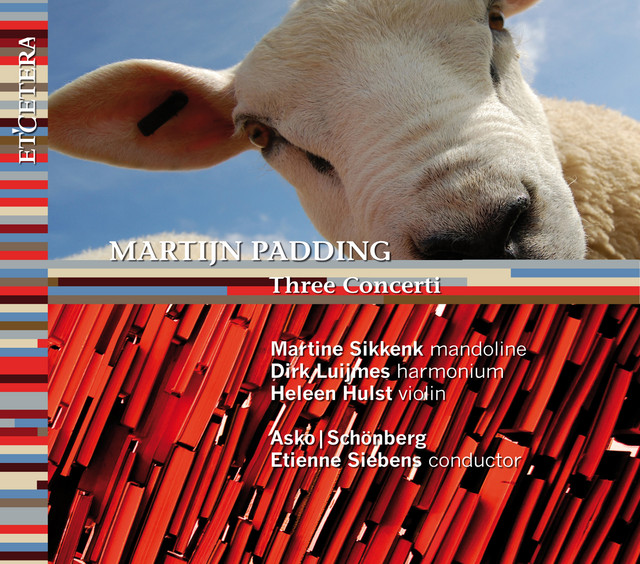
Institutions and platforms are essential to the scene. The Asko|Schönberg Ensemble, a prominent Dutch new-music collective, has premiered and toured much of the country’s contemporary repertoire, often collaborating with living composers for purpose-built productions. The Gaudeamus Muziekweek festival has long served as a cradle for young Dutch composers and international guests, distributing prizes and presenting works that push the medium forward. The Concertgebouw and major Dutch ensembles frequently program contemporary works by Dutch and international creators, helping to keep the repertoire in lively circulation.
Geographically, Dutch contemporary classical enjoys its strongest base in the Netherlands and neighboring Belgium, with strong followings in the Nordic countries and Germany, where audiences and musicians share affinities for textural color, rhythmic vitality, and the fusion of electronic and acoustic forces. In Britain and the United States, interest tends to rise around festivals, scholarly studies, and touring ensembles that highlight Dutch composers’ precision, drama, and often autobiographical or political undercurrents.
For listeners, this scene offers accessible entry points—recurrent motifs, compelling storytelling, and a willingness to bend listening expectations—while rewarding repeated hearings with new details in timbre, structure, and performance practice. Dutch contemporary classical is not a trend but a sustained conversation about what contemporary music can and should be.
The birth of this scene is often traced to a generation that challenged the rigid certainties of serialism while staying resolutely musical. In the Netherlands, composers sought new energies—rhythmic drive, vivid timbres, and an openness to influence from jazz, folk, and contemporary media. The late 1960s through the 1980s saw a “New Dutch Music” that experimented with ensemble texture, open form, and the integration of electronics, often with a strong sense of theater or social commentary. Simeon ten Holt’s Canto Ostinato and Louis Andriessen’s expanding works became touchstones, showing how Dutch composers could fuse minimalism’s repetition with polyphonic density, momentum, and risk-taking.
Key artists and ambassadors of the genre include Louis Andriessen, one of the most influential Dutch composers of the late 20th century, whose works such as De Materie and Hymnen fuse ritual intensity with large ensembles and political or cultural subtexts. Simeon ten Holt, with Canto Ostinato, became a beacon for meditative, repeated patterns that invite improvisation within a structured frame. Theo Loevendie helped bridge jazz-inflected languages and European modernism, enriching the Dutch sound with accessible color and swing. In the new millennium, Michel van der Aa emerged as a leading cross-media innovator, writing for orchestra, chamber groups, and film or video to create immersive experiences. These figures—along with others like Gijsbrecht van der Wal and, more broadly, the ensembles and institutions that championed their music—shaped a language that remains recognizably Dutch in its rigor and playfulness.
Institutions and platforms are essential to the scene. The Asko|Schönberg Ensemble, a prominent Dutch new-music collective, has premiered and toured much of the country’s contemporary repertoire, often collaborating with living composers for purpose-built productions. The Gaudeamus Muziekweek festival has long served as a cradle for young Dutch composers and international guests, distributing prizes and presenting works that push the medium forward. The Concertgebouw and major Dutch ensembles frequently program contemporary works by Dutch and international creators, helping to keep the repertoire in lively circulation.
Geographically, Dutch contemporary classical enjoys its strongest base in the Netherlands and neighboring Belgium, with strong followings in the Nordic countries and Germany, where audiences and musicians share affinities for textural color, rhythmic vitality, and the fusion of electronic and acoustic forces. In Britain and the United States, interest tends to rise around festivals, scholarly studies, and touring ensembles that highlight Dutch composers’ precision, drama, and often autobiographical or political undercurrents.
For listeners, this scene offers accessible entry points—recurrent motifs, compelling storytelling, and a willingness to bend listening expectations—while rewarding repeated hearings with new details in timbre, structure, and performance practice. Dutch contemporary classical is not a trend but a sustained conversation about what contemporary music can and should be.