Genre
dutch experimental
Top Dutch experimental Artists
Showing 5 of 5 artists


About Dutch experimental
Dutch experimental is a flexible umbrella for the Netherlands’ long-running pursuit of sound that refuses easy categorization. It sits at the intersection of contemporary classical, electronic, improvisational, and noise practices, often focusing on process, texture, and the politics of listening as much as on melody or rhythm. The scene has a distinctively Dutch flavor: a legacy of rigorous formalism blended with curiosity about new technologies, extended instrumental techniques, and collaborative performance.
Origins and birth
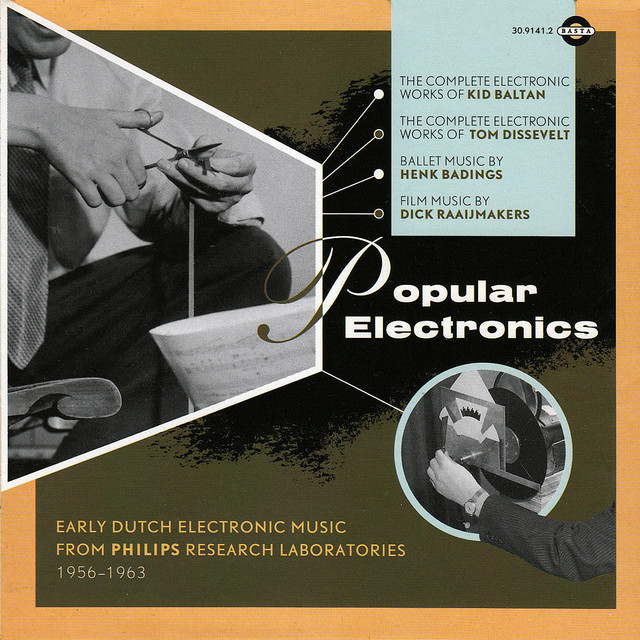
The Dutch experimental lineage stretches back to the late 1950s and 1960s, when electronic experimentation began taking hold in the Netherlands. Pioneers Tom Dissevelt and Kid Baltan (a collaboration that produced some of the era’s early electronic pieces) helped plant the seeds of a distinctly Dutch approach to synthetic sound and tape-based composition. The Fluxus-era avant-garde also left its mark, encouraging interdisciplinary happenings and demonstrations that blurred art, music, and everyday life. By the 1970s and 1980s, a more institutionally rooted scene had emerged: the rise of live electronics, minimalism, and large-scale, politically conscious works by composers such as Simeon Ten Holt and Louis Andriessen. Forgeable networks—schools, studios, and performance spaces—began to knit together composers, performers, and engineers.
Key artists and ambassadors
- Simeon Ten Holt is a touchstone for Dutch minimalism and tactile repetition. His Canto Ostinato (written in the early 1970s) has become one of the Netherlands’ most beloved orchestral-in-a-room works, performed worldwide by piano, marimba, and other configurations, often in open-ended, repeating structures.
- Louis Andriessen stands as a towering figure in 20th/21st-century Dutch music, weaving radical ideas with accessibility. Works like De Materie and Hoketus challenged listeners and institutions alike, helping to define a distinctly Dutch experimental voice that could speak to both avant-garde circles and broader concert audiences.
- Maarten Altena is known for improvisational rigor and a flexible approach to ensemble writing, with the Maarten Altena Ensemble at the forefront of contemporary Dutch improvised and experimental music.
- Early electronic pioneers Tom Dissevelt and Kid Baltan (Dick Raaijmakers) are celebrated for startlingly forward-thinking electronic experiments from the 1950s and 1960s, often cited as precursors to later European electronic music scenes.
- In more recent decades, figures like Gert-Jan Prins have helped keep live electronics and improvisation vibrant, often anchored by Amsterdam’s STEIM (Studio for Electro Instrumental Music), a hub for creative electronics and performance.
Where it thrives
The Netherlands remains the most active hub for Dutch experimental music, with Amsterdam, The Hague, and Rotterdam serving as focal points for venues, studios, and ensembles. Institutions such as the Institute of Sonology (at The Hague/Amsterdam) and STEIM have trained and connected generations of composers and performers, while festivals and venues—plus the Gaudeamus Festival for new music—provide ongoing platforms for risk-taking. The scene has also resonated beyond Dutch borders, with strong interests in Belgium, Germany, and the Nordic countries, and a dedicated, though sometimes smaller, audience in the United Kingdom and the United States.
Listening pointers
If you’re exploring, start with Ten Holt’s Canto Ostinato, Andriessen’s De Materie, and some archival electronic works by Dissevelt and Baltan. Then dip into contemporary offerings by Altena, Prins, and related collectives to hear how Dutch experimental music has evolved—always reimagining the relationship between sound, space, and performer.
Origins and birth
The Dutch experimental lineage stretches back to the late 1950s and 1960s, when electronic experimentation began taking hold in the Netherlands. Pioneers Tom Dissevelt and Kid Baltan (a collaboration that produced some of the era’s early electronic pieces) helped plant the seeds of a distinctly Dutch approach to synthetic sound and tape-based composition. The Fluxus-era avant-garde also left its mark, encouraging interdisciplinary happenings and demonstrations that blurred art, music, and everyday life. By the 1970s and 1980s, a more institutionally rooted scene had emerged: the rise of live electronics, minimalism, and large-scale, politically conscious works by composers such as Simeon Ten Holt and Louis Andriessen. Forgeable networks—schools, studios, and performance spaces—began to knit together composers, performers, and engineers.
Key artists and ambassadors
- Simeon Ten Holt is a touchstone for Dutch minimalism and tactile repetition. His Canto Ostinato (written in the early 1970s) has become one of the Netherlands’ most beloved orchestral-in-a-room works, performed worldwide by piano, marimba, and other configurations, often in open-ended, repeating structures.
- Louis Andriessen stands as a towering figure in 20th/21st-century Dutch music, weaving radical ideas with accessibility. Works like De Materie and Hoketus challenged listeners and institutions alike, helping to define a distinctly Dutch experimental voice that could speak to both avant-garde circles and broader concert audiences.
- Maarten Altena is known for improvisational rigor and a flexible approach to ensemble writing, with the Maarten Altena Ensemble at the forefront of contemporary Dutch improvised and experimental music.
- Early electronic pioneers Tom Dissevelt and Kid Baltan (Dick Raaijmakers) are celebrated for startlingly forward-thinking electronic experiments from the 1950s and 1960s, often cited as precursors to later European electronic music scenes.
- In more recent decades, figures like Gert-Jan Prins have helped keep live electronics and improvisation vibrant, often anchored by Amsterdam’s STEIM (Studio for Electro Instrumental Music), a hub for creative electronics and performance.
Where it thrives
The Netherlands remains the most active hub for Dutch experimental music, with Amsterdam, The Hague, and Rotterdam serving as focal points for venues, studios, and ensembles. Institutions such as the Institute of Sonology (at The Hague/Amsterdam) and STEIM have trained and connected generations of composers and performers, while festivals and venues—plus the Gaudeamus Festival for new music—provide ongoing platforms for risk-taking. The scene has also resonated beyond Dutch borders, with strong interests in Belgium, Germany, and the Nordic countries, and a dedicated, though sometimes smaller, audience in the United Kingdom and the United States.
Listening pointers
If you’re exploring, start with Ten Holt’s Canto Ostinato, Andriessen’s De Materie, and some archival electronic works by Dissevelt and Baltan. Then dip into contemporary offerings by Altena, Prins, and related collectives to hear how Dutch experimental music has evolved—always reimagining the relationship between sound, space, and performer.