Genre
early music choir
Top Early music choir Artists
Showing 8 of 8 artists


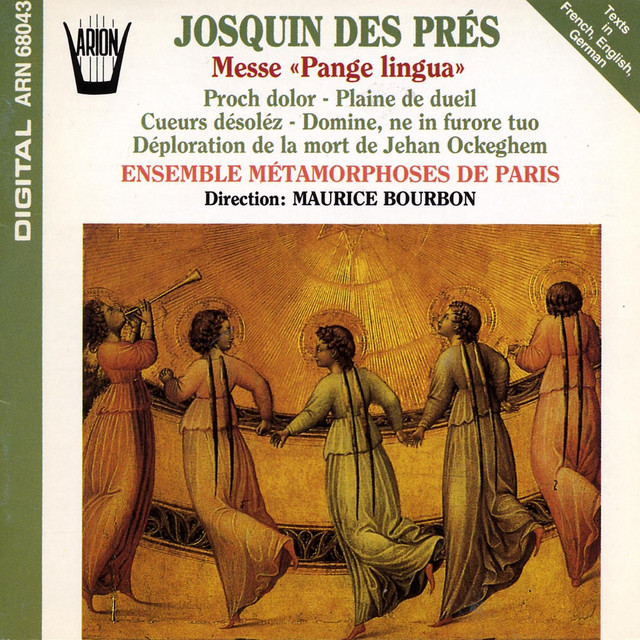


About Early music choir
An early music choir specializes in performing Renaissance, medieval, and sometimes early Baroque vocal repertoire with a historically informed approach. These choirs explore the sound worlds that predate the large Romantic choral tradition, aiming for transparency of line, balance of voices, and a close connection to the intentions of the original composers. The voice becomes a clockwork of polyphony: independent lines weaving together, with text in Latin, English, French, Italian, or a mixture of medieval vernaculars, often sung a cappella or with period-appropriate continuo instruments.
How and when it’s born
The modern revival of early music began in the late 19th and early 20th centuries, sparked by collectors and performers such as Arnold Dolmetsch, who rebuilt interest in medieval and Renaissance repertoires and in historical instruments. This initial revival gradually matured into a broader movement after World War II, as scholars and performers pushed historically informed performance (HIP) practice: using period-appropriate tunings, vowel shapes, phrasing, and ornaments; sometimes employing members of a choir trained to balance a texture rooted in medieval and Renaissance thinking. By the 1960s–1980s, ensembles devoted to early vocal music—often focusing on a cappella Renaissance polyphony or medieval chant—became a recognizable facet of the classical world. Since then, the field has expanded to include the Baroque era with a historically informed perspective, though many choirs specialize primarily in pre-Baroque repertoires.
Repertoire and practice
Early music choirs typically program Latin sacred works (Palestrina, Victoria, Lassus, Victoria; you’ll also encounter anonymous Mass cycles), English Renaissance polyphony (Tallis, Byrd, Dowland, Tallis’s successors), French and Italian Renaissance chansons, and medieval repertoire (Notre Dame school, Machaut, trouvères, ambitus of Ars Nova). In performance, choirs emphasize clarity of text, laser‑sharp diction, and the interlocking lines of polyphony. Some pieces are performed a cappella, while others are sung with a small continuo group or period instruments such as viola da gamba, theorbo, or lute, depending on the work’s period and the conductor’s approach. Practice rooms often focus on ensemble balance, precise diction, and historically informed pronunciation choices, from English vowels to Latin enunciation, as fitting the repertoire and the ensemble’s aim.
Key ambassadors and artists
- Arnold Dolmetsch and family, early champions of historical performance and instrument reconstruction.
- The Tallis Scholars (famed for Renaissance sacred polyphony and close, intonated blend).
- The Hilliard Ensemble (medieval to early Renaissance and sacred repertoire with a distinctive sonority).
- Emma Kirkby (renowned soprano whose clear, agile singing helped popularize early English and Italian vocal music).
- Jordi Savall (viola da gamba virtuoso and conductor, founder of Hespèrion, championing Iberian and European early music).
- Ton Koopman (conducts the Amsterdam Baroque Orchestra & Choir, with a celebrated Bach and Baroque catalog).
These figures and groups have become enduring touchstones for listeners who seek the textures and reverent clarity of early vocal music.
Geography and popularity
Early music choirs are especially popular in Europe—United Kingdom, the Netherlands, France, Germany, and Italy have vibrant scenes, festivals, and chamber choirs devoted to this repertoire. North America—particularly the United States and Canada—also hosts strong early music communities, with touring ensembles, university programs, and artistic directors dedicated to HIP-informed singing. Beyond these regions, Australia and parts of Asia (notably Japan) maintain growing audiences for early music, supported by specialized ensembles and recording labels. For enthusiasts, this cross‑regional ecosystem offers rich performances, scholarly context, and a listening experience that highlights voice-leading, past rituals of sound, and the enduring human fascination with sacred and secular musical storytelling from the distant past.
How and when it’s born
The modern revival of early music began in the late 19th and early 20th centuries, sparked by collectors and performers such as Arnold Dolmetsch, who rebuilt interest in medieval and Renaissance repertoires and in historical instruments. This initial revival gradually matured into a broader movement after World War II, as scholars and performers pushed historically informed performance (HIP) practice: using period-appropriate tunings, vowel shapes, phrasing, and ornaments; sometimes employing members of a choir trained to balance a texture rooted in medieval and Renaissance thinking. By the 1960s–1980s, ensembles devoted to early vocal music—often focusing on a cappella Renaissance polyphony or medieval chant—became a recognizable facet of the classical world. Since then, the field has expanded to include the Baroque era with a historically informed perspective, though many choirs specialize primarily in pre-Baroque repertoires.
Repertoire and practice
Early music choirs typically program Latin sacred works (Palestrina, Victoria, Lassus, Victoria; you’ll also encounter anonymous Mass cycles), English Renaissance polyphony (Tallis, Byrd, Dowland, Tallis’s successors), French and Italian Renaissance chansons, and medieval repertoire (Notre Dame school, Machaut, trouvères, ambitus of Ars Nova). In performance, choirs emphasize clarity of text, laser‑sharp diction, and the interlocking lines of polyphony. Some pieces are performed a cappella, while others are sung with a small continuo group or period instruments such as viola da gamba, theorbo, or lute, depending on the work’s period and the conductor’s approach. Practice rooms often focus on ensemble balance, precise diction, and historically informed pronunciation choices, from English vowels to Latin enunciation, as fitting the repertoire and the ensemble’s aim.
Key ambassadors and artists
- Arnold Dolmetsch and family, early champions of historical performance and instrument reconstruction.
- The Tallis Scholars (famed for Renaissance sacred polyphony and close, intonated blend).
- The Hilliard Ensemble (medieval to early Renaissance and sacred repertoire with a distinctive sonority).
- Emma Kirkby (renowned soprano whose clear, agile singing helped popularize early English and Italian vocal music).
- Jordi Savall (viola da gamba virtuoso and conductor, founder of Hespèrion, championing Iberian and European early music).
- Ton Koopman (conducts the Amsterdam Baroque Orchestra & Choir, with a celebrated Bach and Baroque catalog).
These figures and groups have become enduring touchstones for listeners who seek the textures and reverent clarity of early vocal music.
Geography and popularity
Early music choirs are especially popular in Europe—United Kingdom, the Netherlands, France, Germany, and Italy have vibrant scenes, festivals, and chamber choirs devoted to this repertoire. North America—particularly the United States and Canada—also hosts strong early music communities, with touring ensembles, university programs, and artistic directors dedicated to HIP-informed singing. Beyond these regions, Australia and parts of Asia (notably Japan) maintain growing audiences for early music, supported by specialized ensembles and recording labels. For enthusiasts, this cross‑regional ecosystem offers rich performances, scholarly context, and a listening experience that highlights voice-leading, past rituals of sound, and the enduring human fascination with sacred and secular musical storytelling from the distant past.