Genre
early music ensemble
Top Early music ensemble Artists
Showing 13 of 13 artists





About Early music ensemble
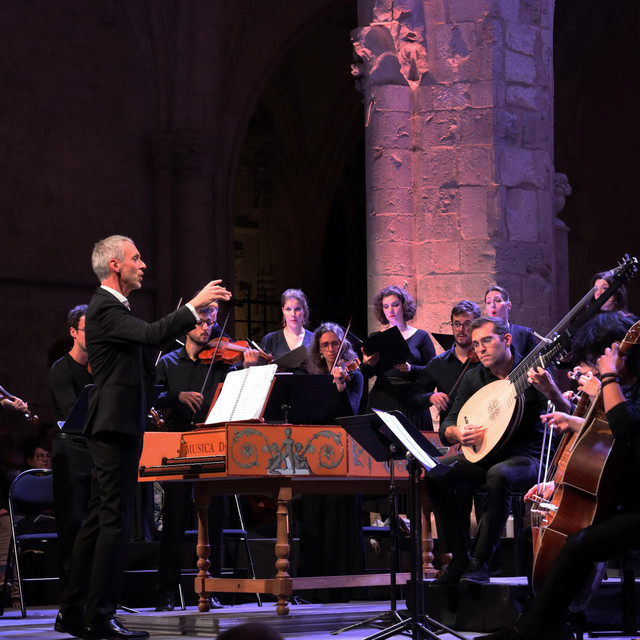
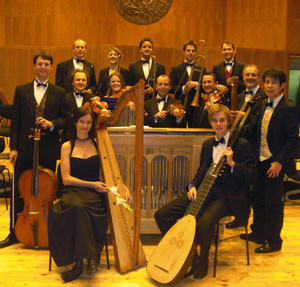
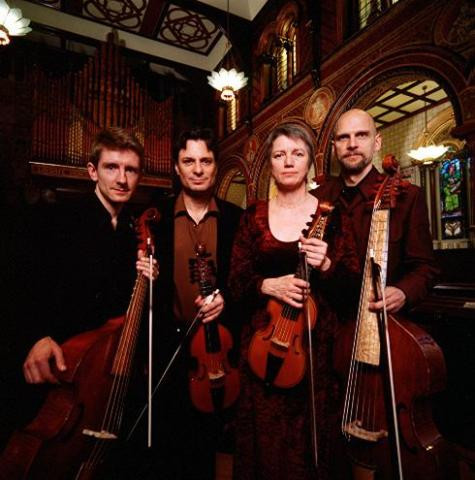
An early music ensemble is a group dedicated to performing medieval, Renaissance, and Baroque repertoire with historically informed practices and often with period instruments. They seek to resurrect the sound-world of the composer’s own era, from the lithe polyphony of the Renaissance to the intimate textures of Baroque vocal music. Ensembles vary from intimate viol consorts and recorder groups to full-sized baroque orchestras, but all share a careful approach to texture, rhythm, and ornamentation, and many use gut strings, viola da gamba, recorders, cornetts, theorbo, harpsichord, and natural horns, sometimes alongside modern instruments when necessary.
The modern revival began in England at the turn of the 20th century with Arnold Dolmetsch, who rebuilt antique instruments and staged concerts that introduced audiences to older repertoires. The movement gained momentum after World War II, as scholars and performers such as Nikolaus Harnoncourt and Gustav Leonhardt advocated historical tuning, temperaments, and performance practice. From the 1960s onward a wave of ensembles—The English Concert, The Academy of Ancient Music, and Les Arts Florissants, among others—brought Bach, Handel, Monteverdi, and their predecessors to broader audiences and helped normalize the use of period instruments.
Ambassadors of the genre include Jordi Savall, whose ensembles Hespèrion XXI and Le Concert des Nations have toured worldwide; William Christie, who rebuilt French Baroque vocal music through Les Arts Florissants; Trevor Pinnock and Christopher Hogwood, central figures in the spread of authentic performance practice; and the circles around Concentus Musicus Wien, which helped popularize early music through powerful, historically informed interpretations. In the vocal realm, performers such as Emma Kirkby have become emblematic of the clarity and poised diction prized by enthusiasts. Collectively, these figures helped define a sound that values lightness of texture, precise articulation, and transparent counterpoint.
In terms of repertoire, early music ensembles illuminate a broad span: medieval chant and vernacular polyphony, secular and sacred Renaissance music, and the vast Baroque salon and church repertory. Performance practice often embraces authentic tunings—typically around Baroque A = 415 Hz, with temperaments such as meantone for certain Renaissance works—and continuo practice that uses figured bass to guide harmony. The aesthetics emphasize ensemble balance, phrasing, and an immediacy of texture that can feel both historical and vividly present.
Geographically, the genre has deep roots in Europe—Britain, France, the Netherlands, Germany, and Italy—where the tradition of early music institutions and festivals runs strongest. It has grown substantially in North America and has been embraced in Australia, Japan, and beyond, aided by recordings and international tours. For music enthusiasts, early music ensembles offer a portal to a different listening experience: a meticulous blend of scholarship and artistry, where sound, gesture, and history meet in live performance.
The modern revival began in England at the turn of the 20th century with Arnold Dolmetsch, who rebuilt antique instruments and staged concerts that introduced audiences to older repertoires. The movement gained momentum after World War II, as scholars and performers such as Nikolaus Harnoncourt and Gustav Leonhardt advocated historical tuning, temperaments, and performance practice. From the 1960s onward a wave of ensembles—The English Concert, The Academy of Ancient Music, and Les Arts Florissants, among others—brought Bach, Handel, Monteverdi, and their predecessors to broader audiences and helped normalize the use of period instruments.
Ambassadors of the genre include Jordi Savall, whose ensembles Hespèrion XXI and Le Concert des Nations have toured worldwide; William Christie, who rebuilt French Baroque vocal music through Les Arts Florissants; Trevor Pinnock and Christopher Hogwood, central figures in the spread of authentic performance practice; and the circles around Concentus Musicus Wien, which helped popularize early music through powerful, historically informed interpretations. In the vocal realm, performers such as Emma Kirkby have become emblematic of the clarity and poised diction prized by enthusiasts. Collectively, these figures helped define a sound that values lightness of texture, precise articulation, and transparent counterpoint.
In terms of repertoire, early music ensembles illuminate a broad span: medieval chant and vernacular polyphony, secular and sacred Renaissance music, and the vast Baroque salon and church repertory. Performance practice often embraces authentic tunings—typically around Baroque A = 415 Hz, with temperaments such as meantone for certain Renaissance works—and continuo practice that uses figured bass to guide harmony. The aesthetics emphasize ensemble balance, phrasing, and an immediacy of texture that can feel both historical and vividly present.
Geographically, the genre has deep roots in Europe—Britain, France, the Netherlands, Germany, and Italy—where the tradition of early music institutions and festivals runs strongest. It has grown substantially in North America and has been embraced in Australia, Japan, and beyond, aided by recordings and international tours. For music enthusiasts, early music ensembles offer a portal to a different listening experience: a meticulous blend of scholarship and artistry, where sound, gesture, and history meet in live performance.