Genre
experimental rock
Top Experimental rock Artists
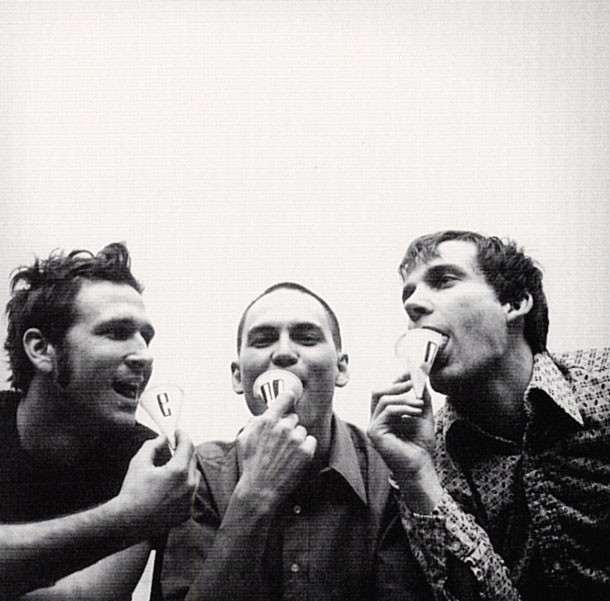
About Experimental rock
Experimental rock is a broad, evolving umbrella rather than a fixed style. It describes rock music that deliberately pushes beyond conventional song structures, riffs, and verse-chorus form, using unconventional timbres, textures, rhythms, and recording techniques to create something exploratory and often theatrical. The result can feel scholarly and raw, meditative and chaotic, or all of the above at once. Its core impulse is not simply to sound strange but to investigate what rock can be when the familiar boundaries are bent or broken.
Origins trace back to the mid-to-late 1960s, when artists in the United States and Europe began treating the studio as an instrument and embracing avant-garde techniques. The Velvet Underground, with John Cale’s background in experimental music and Lou Reed’s raw, vulnerable sensibility, are widely cited as proto-experimental rock. Their 1967 debut and subsequent work infused drone, dissonance, and unorthodox lyricity into rock. Around the same time, Frank Zappa and the Mothers of Invention pushed rock toward satire, quotation, and complex, collage-like composition. Pink Floyd explored soundscapes and concept albums, while King Crimson’s 1969 breakout In the Court of the Crimson King helped anchor a more “progressive” but uncompromising approach to form. In Europe, Krautrock groups like Can and Neu! deployed motorik rhythms, tape loops, and hypnotic repetition that would influence later generations of experimentalists.
The 1970s and 1980s expanded the field through diverse veins. Captain Beefheart’s Trout Mask Replica (1969) remains a touchstone for extreme rhythmic ingenuity and found-instruments texture. Brian Eno’s production and solo work further blurred the lines between studio craft and musical idea—an influence felt deeply in art rock, ambient-influenced experiments, and post-punk. The post-punk and no wave movements in New York, London, and elsewhere nourished a generation of bands determined to insist on improvisation, noise, and nonstandard guitar tunings. Sonic Youth became synonymous with song-based yet sonically fearless experimentation, while Talking Heads fused world rhythms, electronics, and funk into cognitively challenging music. The late 1990s and early 2000s saw rock embracing even more audacious choices: Radiohead’s OK Computer and Kid A braided electronic textures, irregular meters, and abstract lyrics into mainstream-leaning records; bands like Godspeed You! Black Emperor and Do Make Say Think pushed toward expansive, cinematic forms that blurred the line between rock and experimental composition.
Key ambassadors include The Velvet Underground, Captain Beefheart, Frank Zappa, King Crimson, Pink Floyd, Brian Eno, Talking Heads, Sonic Youth, Radiohead, Godspeed You! Black Emperor, Can, and Neu!. Their work demonstrates the genre’s spectrum—from drone and minimalism to jagged noise to sprawling, contemplative epics.
Geographically, experimental rock has found its strongest roots in the United States and the United Kingdom, but its influence is global. Europe’s avant-rock and Krautrock schools, Japan’s noise and post-rock circles, Canada’s Godspeed You! Black Emperor, and various DIY scenes worldwide all contribute to a living, international ecosystem that thrives on fearless listening.
If you crave music that challenges your expectations as much as it rewards patient listening, experimental rock offers a continually fertile ground: a reminder that rock can be a laboratory as well as a form of expression.
Origins trace back to the mid-to-late 1960s, when artists in the United States and Europe began treating the studio as an instrument and embracing avant-garde techniques. The Velvet Underground, with John Cale’s background in experimental music and Lou Reed’s raw, vulnerable sensibility, are widely cited as proto-experimental rock. Their 1967 debut and subsequent work infused drone, dissonance, and unorthodox lyricity into rock. Around the same time, Frank Zappa and the Mothers of Invention pushed rock toward satire, quotation, and complex, collage-like composition. Pink Floyd explored soundscapes and concept albums, while King Crimson’s 1969 breakout In the Court of the Crimson King helped anchor a more “progressive” but uncompromising approach to form. In Europe, Krautrock groups like Can and Neu! deployed motorik rhythms, tape loops, and hypnotic repetition that would influence later generations of experimentalists.
The 1970s and 1980s expanded the field through diverse veins. Captain Beefheart’s Trout Mask Replica (1969) remains a touchstone for extreme rhythmic ingenuity and found-instruments texture. Brian Eno’s production and solo work further blurred the lines between studio craft and musical idea—an influence felt deeply in art rock, ambient-influenced experiments, and post-punk. The post-punk and no wave movements in New York, London, and elsewhere nourished a generation of bands determined to insist on improvisation, noise, and nonstandard guitar tunings. Sonic Youth became synonymous with song-based yet sonically fearless experimentation, while Talking Heads fused world rhythms, electronics, and funk into cognitively challenging music. The late 1990s and early 2000s saw rock embracing even more audacious choices: Radiohead’s OK Computer and Kid A braided electronic textures, irregular meters, and abstract lyrics into mainstream-leaning records; bands like Godspeed You! Black Emperor and Do Make Say Think pushed toward expansive, cinematic forms that blurred the line between rock and experimental composition.
Key ambassadors include The Velvet Underground, Captain Beefheart, Frank Zappa, King Crimson, Pink Floyd, Brian Eno, Talking Heads, Sonic Youth, Radiohead, Godspeed You! Black Emperor, Can, and Neu!. Their work demonstrates the genre’s spectrum—from drone and minimalism to jagged noise to sprawling, contemplative epics.
Geographically, experimental rock has found its strongest roots in the United States and the United Kingdom, but its influence is global. Europe’s avant-rock and Krautrock schools, Japan’s noise and post-rock circles, Canada’s Godspeed You! Black Emperor, and various DIY scenes worldwide all contribute to a living, international ecosystem that thrives on fearless listening.
If you crave music that challenges your expectations as much as it rewards patient listening, experimental rock offers a continually fertile ground: a reminder that rock can be a laboratory as well as a form of expression.