Genre
folclor afrocolombiano
Top Folclor afrocolombiano Artists
Showing 10 of 10 artists



About Folclor afrocolombiano
Folclor afrocolombiano is the rich tapestry of traditional music and dance created by Afro-Colombian communities along Colombia’s Pacific and Caribbean coasts. Born from the African diasporas brought to Colombian ports and plantations during the colonial era, it grew through centuries of contact with Indigenous and Spanish influences, crystallizing into distinct regional forms that remain vital in contemporary Colombian culture and in the world music scene.
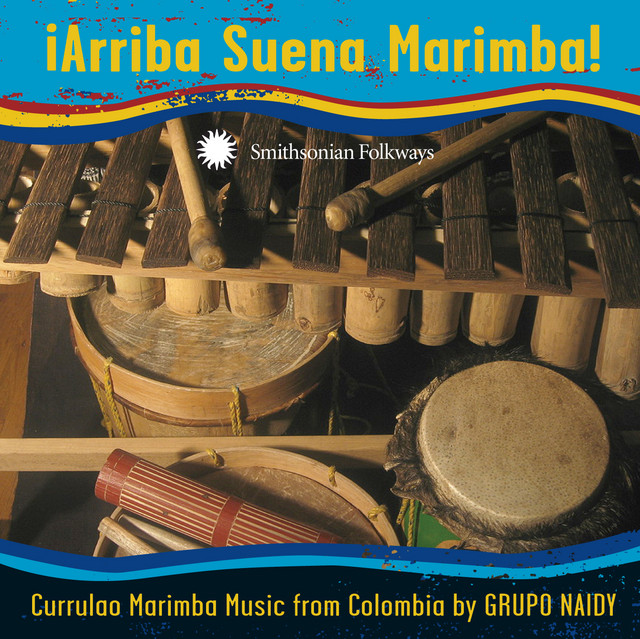
A key backbone of this repertoire is the Pacific currulao, a deeply communal, percussion-driven current built around the marimba de chonta (a wooden keyboard instrument) and a battery of drums such as the tambor mayor, cununo, tambora, and guasa. Currulao thrives on interlocking percussion patterns, call-and-response singing, and dance circles where the women’s graceful, swirling movements contrast with the climactic drum solos. The marimba’s resonant voices weave with polyrhythmic drum textures to create a hypnotic, almost ceremonial mood that speaks to riverine forests and coastal villages.
Along the Caribbean coast, porro and bullerengue—often performed by brass bands and vocal choirs—mark the music’s festive yet expressive character. Porro emerged from coastal towns in the late 19th and early 20th centuries, evolving into lush parades and street performances with brass choruses and infectious horn lines. Bullerengue, a vocal-and-percussion tradition, centers female ensembles singing polyrhythmic songs that accompany dance and ritual, especially in communities from Sucre, Córdoba, and Bolivar. Mapalé, another strong Afro-Colombian form, is a rapid, sensuous dance music rooted in coastal communities and street-corner ensembles, illustrating the fusion of African-rooted rhythms with Caribbean coastal life.
Beyond these, the broader Afro-Colombian lexicon includes zumbagüero, champeta-adjacent fusions, and the enduring presence of gaita and other wind-and-drums textures in manos-a-cuerpo performances. The instruments themselves—marimba de chonta, cununo, tambor, guasa, and brass in porro—are as much cultural symbols as sonic tools, carrying histories of labor, resistance, and communal celebration.
Ambassadors of this music on the global stage include Toto La Momposina, whose performances of cumbia, bullerengue, and porro with fiery, seasoned storytelling have brought Afro-Colombian folk into international consciousness. Petrona Martínez, a renowned bullerengue singer, stands among the most respected interpreters of the Caribbean afro-voice tradition. Together with historic ensembles like Los Gaiteros de San Jacinto, these artists have helped frame Afro-Colombian folclor as a living, evolving heritage rather than a museum piece.
In terms of reach, folclor afrocolombiano is most popular in Colombia—especially in the Pacific departments (Valle del Cauca, Chocó, Nariño) and along the Caribbean coast—where it remains inseparable from regional identity, festivals, and everyday social life. Internationally, it finds a devoted audience among world-music enthusiasts and Latin music communities in the United States, Spain, Italy, and parts of Western Europe, where contemporary artists blend traditional textures with jazz, electronics, and hip‑hop sensibilities—keeping the tradition vibrant for new generations.
For the aficionado, Afro-Colombian folklore offers a doorway into a dynamic, centuries-spanning musical ecology: percussion as speech, voice as ceremony, dance as memory, and community as the core of sound.
A key backbone of this repertoire is the Pacific currulao, a deeply communal, percussion-driven current built around the marimba de chonta (a wooden keyboard instrument) and a battery of drums such as the tambor mayor, cununo, tambora, and guasa. Currulao thrives on interlocking percussion patterns, call-and-response singing, and dance circles where the women’s graceful, swirling movements contrast with the climactic drum solos. The marimba’s resonant voices weave with polyrhythmic drum textures to create a hypnotic, almost ceremonial mood that speaks to riverine forests and coastal villages.
Along the Caribbean coast, porro and bullerengue—often performed by brass bands and vocal choirs—mark the music’s festive yet expressive character. Porro emerged from coastal towns in the late 19th and early 20th centuries, evolving into lush parades and street performances with brass choruses and infectious horn lines. Bullerengue, a vocal-and-percussion tradition, centers female ensembles singing polyrhythmic songs that accompany dance and ritual, especially in communities from Sucre, Córdoba, and Bolivar. Mapalé, another strong Afro-Colombian form, is a rapid, sensuous dance music rooted in coastal communities and street-corner ensembles, illustrating the fusion of African-rooted rhythms with Caribbean coastal life.
Beyond these, the broader Afro-Colombian lexicon includes zumbagüero, champeta-adjacent fusions, and the enduring presence of gaita and other wind-and-drums textures in manos-a-cuerpo performances. The instruments themselves—marimba de chonta, cununo, tambor, guasa, and brass in porro—are as much cultural symbols as sonic tools, carrying histories of labor, resistance, and communal celebration.
Ambassadors of this music on the global stage include Toto La Momposina, whose performances of cumbia, bullerengue, and porro with fiery, seasoned storytelling have brought Afro-Colombian folk into international consciousness. Petrona Martínez, a renowned bullerengue singer, stands among the most respected interpreters of the Caribbean afro-voice tradition. Together with historic ensembles like Los Gaiteros de San Jacinto, these artists have helped frame Afro-Colombian folclor as a living, evolving heritage rather than a museum piece.
In terms of reach, folclor afrocolombiano is most popular in Colombia—especially in the Pacific departments (Valle del Cauca, Chocó, Nariño) and along the Caribbean coast—where it remains inseparable from regional identity, festivals, and everyday social life. Internationally, it finds a devoted audience among world-music enthusiasts and Latin music communities in the United States, Spain, Italy, and parts of Western Europe, where contemporary artists blend traditional textures with jazz, electronics, and hip‑hop sensibilities—keeping the tradition vibrant for new generations.
For the aficionado, Afro-Colombian folklore offers a doorway into a dynamic, centuries-spanning musical ecology: percussion as speech, voice as ceremony, dance as memory, and community as the core of sound.