Genre
german tech house
Top German tech house Artists
Showing 12 of 12 artists



About German tech house
German tech house is a groove-forward branch of electronic dance music that blends the warm, human vibe of house with the steely resolve of techno. It emphasizes bass-driven momentum, crisp percussion, and a hypnotic, looping sensibility that keeps dancers in a tidal groove rather than in a straight rhythm. What marks it as German isn't just its origin, but a certain rigor and refinement in production: a clean final mix, a preference for punchy kick drums, and an emphasis on a rolling bassline that evolves over a track's duration.
Originating in the late 1990s and early 2000s within Germany's club capitals, especially Berlin's after-hours and Hamburg's label culture, German tech house matured as DJs merged Detroit and Chicago influences with Berlin's demand for precision. The scene rode the momentum of legendary venues such as Tresor, Berghain and the club-night circuits that championed a relentless, midnight-friendly tempo. By the mid-2010s, the sound had coalesced into a recognizable strand: tactile, groove-centric tracks that could fill a dance floor while remaining intimate enough for late-night listening.
Typical tempos hover around 120–125 BPM, with hi-hats riding tight, clipped snares, and basslines that bounce in short, skittering steps. Producers favor modular synth textures, warm analog tones, and sub-bass that breathes rather than dominates. The vibe ranges from hard, funk-laden tracks to more melodic, melancholic tunes; the German touch often adds a sense of space and restraint, leaning into subtle dynamics and a willingness to let a groove breathe.
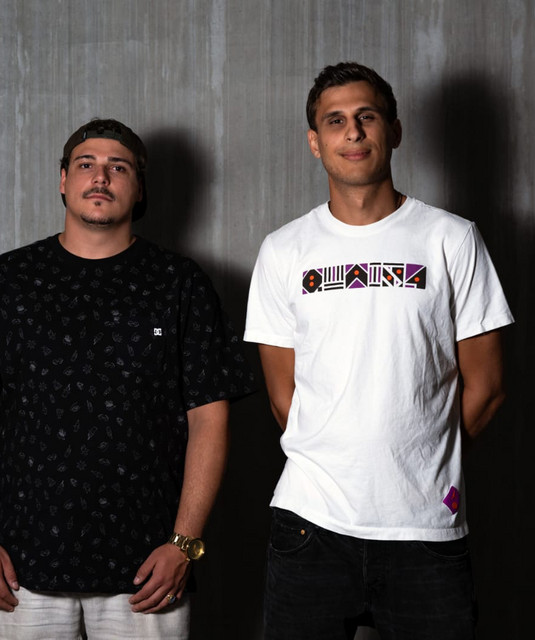
Among the genre's most influential figures are Solomun, the Hamburg-born DJ whose Diynamic label helped globalize German-touched house; Loco Dice, the Berlin-born producer whose Desolat imprint championed a club-ready, punchy groove worldwide; Ame and Dixon, whose Innervisions collective pushed a melodic, almost sunlit edge of tech house; Andhim, a Cologne duo known for their playful, late-night moods; Pan-Pot, the Berlin-based duo that fused techno's energy with house's drive; and Gerd Janson, a tastemaking DJ and producer whose Running Back label has become a touchstone for groove-forward electronic music. Together, they have served as ambassadors, guiding listeners toward the warm, floor-friendly corners of tech house while preserving the German appetite for quality and depth.
Germany remains the home base and strongest market, with Berlin, Hamburg, and Cologne fueling a steady stream of clubs, labels, and festivals. Beyond Germany, German tech house has found fertile ground in Europe—especially the United Kingdom, the Netherlands, Spain, Italy, and France—where clubs and festivals prize the genre's momentum and mood. It also has a devoted following in other regions through international tours, label nights, and streaming playlists, making the sound a familiar part of contemporary European dance floors and a growing presence in the global underground.
Overall, German tech house is less a rigid style and more a sensibility: a commitment to groove, a love of craft, and a communal sense of the dance floor as a shared space where subtlety can carry as much weight as velocity. For newcomers, the genre offers a gateway to a European scene of labels and clubs.
Originating in the late 1990s and early 2000s within Germany's club capitals, especially Berlin's after-hours and Hamburg's label culture, German tech house matured as DJs merged Detroit and Chicago influences with Berlin's demand for precision. The scene rode the momentum of legendary venues such as Tresor, Berghain and the club-night circuits that championed a relentless, midnight-friendly tempo. By the mid-2010s, the sound had coalesced into a recognizable strand: tactile, groove-centric tracks that could fill a dance floor while remaining intimate enough for late-night listening.
Typical tempos hover around 120–125 BPM, with hi-hats riding tight, clipped snares, and basslines that bounce in short, skittering steps. Producers favor modular synth textures, warm analog tones, and sub-bass that breathes rather than dominates. The vibe ranges from hard, funk-laden tracks to more melodic, melancholic tunes; the German touch often adds a sense of space and restraint, leaning into subtle dynamics and a willingness to let a groove breathe.
Among the genre's most influential figures are Solomun, the Hamburg-born DJ whose Diynamic label helped globalize German-touched house; Loco Dice, the Berlin-born producer whose Desolat imprint championed a club-ready, punchy groove worldwide; Ame and Dixon, whose Innervisions collective pushed a melodic, almost sunlit edge of tech house; Andhim, a Cologne duo known for their playful, late-night moods; Pan-Pot, the Berlin-based duo that fused techno's energy with house's drive; and Gerd Janson, a tastemaking DJ and producer whose Running Back label has become a touchstone for groove-forward electronic music. Together, they have served as ambassadors, guiding listeners toward the warm, floor-friendly corners of tech house while preserving the German appetite for quality and depth.
Germany remains the home base and strongest market, with Berlin, Hamburg, and Cologne fueling a steady stream of clubs, labels, and festivals. Beyond Germany, German tech house has found fertile ground in Europe—especially the United Kingdom, the Netherlands, Spain, Italy, and France—where clubs and festivals prize the genre's momentum and mood. It also has a devoted following in other regions through international tours, label nights, and streaming playlists, making the sound a familiar part of contemporary European dance floors and a growing presence in the global underground.
Overall, German tech house is less a rigid style and more a sensibility: a commitment to groove, a love of craft, and a communal sense of the dance floor as a shared space where subtlety can carry as much weight as velocity. For newcomers, the genre offers a gateway to a European scene of labels and clubs.