Genre
guqin
Top Guqin Artists
Showing 15 of 15 artists

About Guqin
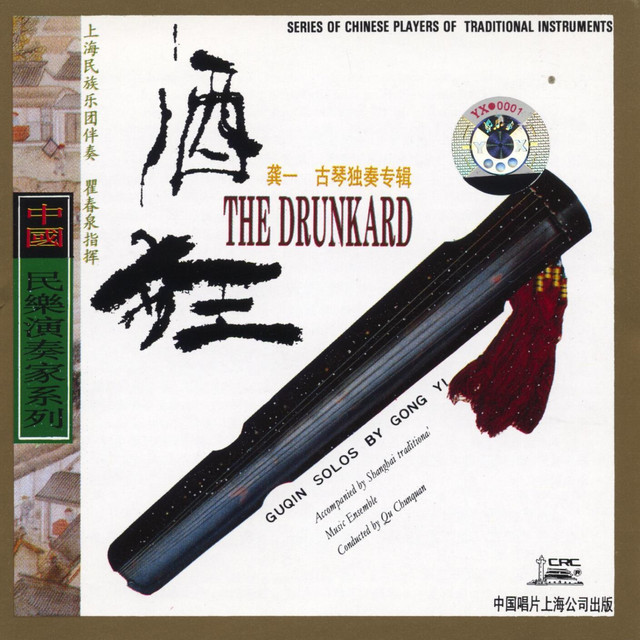
The guqin is one of the oldest continuously played musical instruments in the world, a seven‑string zither whose quiet, refined timbre has long been associated with scholars, poets, and Daoist contemplation. Its sound is intimate, almost vocal in its expressiveness, capable of suggesting wind, water, and distant mountains with mere whispers of touch and release. For centuries it has stood at the crossroads of art, philosophy, and courtly ritual in China, and in recent decades it has found a new audience among serious music enthusiasts around the globe.
Origins and history: The guqin’s lineage stretches back more than 3,000 years in Chinese culture. It is intertwined with the classical canon of literati culture and is repeatedly referenced in ancient poetry and philosophical writings. Although the instrument evolved through many eras, the form most people recognize today—seven strings, a long wooden soundboard, and a fretted surface—became standardized during the early imperial period and continued to be cultivated in the Song, Yuan, Ming, and Qing dynasties. In the 20th century the guqin experienced a revival, both in China and abroad, as a living link to traditional Chinese aesthetics. In 2003 UNESCO inscribed Guqin culture on its Representative List of the Intangible Cultural Heritage of Humanity, underscoring its global cultural significance and the need to preserve its practice, teaching, and repertoire.
Play, technique, and listening: The guqin is typically plucked with the right hand using delicate finger picks or natural nails, while the left hand lightly frets the strings to produce pitch and ornamentation. Unlike many fretted instruments, the guqin’s surface is treated as a tonal landscape: performers bend, slide, and李停 vibrato the strings to achieve subtle inflections. The instrument is not designed for loud, virtuosic display; rather, it rewards patient listening, phrasing, and the meditation of sound. Its repertoire blends programmatic pieces that evoke natural scenes with character pieces and philosophical meditations. Classic works include flowing, contemplative pieces such as Liu Shui (Flowing Water) and Yang Guan San Die (The Two Passes by Yang Pass), among others that invite a shaped, almost conversational approach to tempo and dynamics.
Ambassadors and key figures: The guqin has had many leading interpreters who helped shape its modern revival. Guan Pinghu (管平湖) is one of the most revered 20th‑century masters, celebrated for his eloquent tone and refined phrasing, whose recordings helped bring guqin artistry to international audiences. Li Xiangting (李祥霆) is another towering figure—a renowned performer and educator who has trained generations of students and helped organize guqin programs across major conservatories in China. Together with other contemporary masters, they have served as ambassadors, performing worldwide, collaborating with artists from other traditions, and preserving both the instrument’s technique and its philosophical lineage.
Geography and reception: Today, the guqin remains most popular in China, Taiwan, and among Chinese communities abroad (Singapore, Malaysia, and diaspora contexts). Interest in the guqin has also grown in Europe, North America, and elsewhere, where concert programs, festivals, and academic studies increasingly explore its aesthetics, history, and cross‑cultural connections. For enthusiasts, the guqin offers not just music but a portal into a tradition that blends sound, scholarship, and a long conversation with nature, time, and the self.
Origins and history: The guqin’s lineage stretches back more than 3,000 years in Chinese culture. It is intertwined with the classical canon of literati culture and is repeatedly referenced in ancient poetry and philosophical writings. Although the instrument evolved through many eras, the form most people recognize today—seven strings, a long wooden soundboard, and a fretted surface—became standardized during the early imperial period and continued to be cultivated in the Song, Yuan, Ming, and Qing dynasties. In the 20th century the guqin experienced a revival, both in China and abroad, as a living link to traditional Chinese aesthetics. In 2003 UNESCO inscribed Guqin culture on its Representative List of the Intangible Cultural Heritage of Humanity, underscoring its global cultural significance and the need to preserve its practice, teaching, and repertoire.
Play, technique, and listening: The guqin is typically plucked with the right hand using delicate finger picks or natural nails, while the left hand lightly frets the strings to produce pitch and ornamentation. Unlike many fretted instruments, the guqin’s surface is treated as a tonal landscape: performers bend, slide, and李停 vibrato the strings to achieve subtle inflections. The instrument is not designed for loud, virtuosic display; rather, it rewards patient listening, phrasing, and the meditation of sound. Its repertoire blends programmatic pieces that evoke natural scenes with character pieces and philosophical meditations. Classic works include flowing, contemplative pieces such as Liu Shui (Flowing Water) and Yang Guan San Die (The Two Passes by Yang Pass), among others that invite a shaped, almost conversational approach to tempo and dynamics.
Ambassadors and key figures: The guqin has had many leading interpreters who helped shape its modern revival. Guan Pinghu (管平湖) is one of the most revered 20th‑century masters, celebrated for his eloquent tone and refined phrasing, whose recordings helped bring guqin artistry to international audiences. Li Xiangting (李祥霆) is another towering figure—a renowned performer and educator who has trained generations of students and helped organize guqin programs across major conservatories in China. Together with other contemporary masters, they have served as ambassadors, performing worldwide, collaborating with artists from other traditions, and preserving both the instrument’s technique and its philosophical lineage.
Geography and reception: Today, the guqin remains most popular in China, Taiwan, and among Chinese communities abroad (Singapore, Malaysia, and diaspora contexts). Interest in the guqin has also grown in Europe, North America, and elsewhere, where concert programs, festivals, and academic studies increasingly explore its aesthetics, history, and cross‑cultural connections. For enthusiasts, the guqin offers not just music but a portal into a tradition that blends sound, scholarship, and a long conversation with nature, time, and the self.