Genre
harpsichord
Top Harpsichord Artists
Showing 25 of 32 artists






About Harpsichord
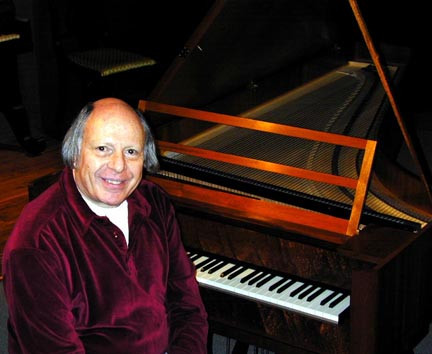
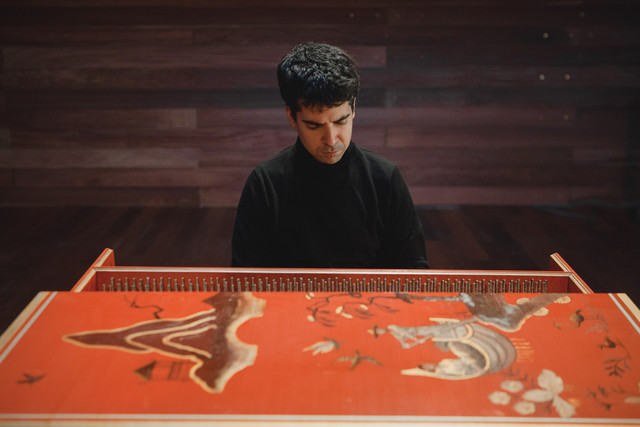
The harpsichord is not a stand-alone “genre” so much as a sonic universe built around a single family of keyboard instruments whose plucked strings produce sound in a striking, crisp way. Born in Renaissance Europe, the harpsichord flourished especially during the Baroque era (roughly 1600–1750), when courts and churches filled with intricate, ornamented keyboard music. Its mechanism—strings wired to a quill that plucks the string when a key is pressed—gives it a bright, articulate attack and a purposefully percussive sustain. Dynamics come from touch and registration rather than pedal shading, which makes every phrase feel like a theatrical statement: precise, sculpted, and sometimes gilded with rapid figurations.
Historically, the harpsichord diversified quickly. You could find spinet and Virginal varieties in Elizabethan and early Dutch households, and grand double-manual concert harpsichords in aristocratic salons. Builders such as the Italian and Flemish luthiers of the 16th and 17th centuries refined the instrument’s timbre, range, and action, setting the stage for a repertoire that ranges from intimate domestic pieces to full-blown concert fantasia.
Focal points of the harpsichord repertoire are deeply anchored in the Baroque. In Germany and Central Europe, Johann Sebastian Bach remains the touchstone for keyboard lovers; his Well-Tempered Clavier, English and French Suites, Partitas, and the Goldberg Variations showcase everything the instrument can express—clear counterpoint, lithe arpeggios, and intimate cantabile lines. In France, François Couperin’s Pièces de clavecin and Jean-Philippe Rameau’s Pièces de clavecin defined a French keyboard aesthetic built on ornate ornamentation, rhetorical phrasing, and a refined sense of dance form. Domenico Scarlatti, working at the Spanish and Portuguese courts, composed hundreds of sparkling sonatas that revel in surprises of harmony, tempo, and technical bravura, many of which still spark astonishment in modern performances.
If you trace the instrument’s ambassadors, you’ll encounter a lineage that moves from the 18th‑century masterworks to the 20th‑century revival of early music. Wanda Landowska is often cited as a catalyst for the harpsichord’s modern comeback, bringing Baroque repertoire to concert halls with a new sense of stylistic discipline. Later figures—Gustav Leonhardt, Trevor Pinnock, Ton Koopman, and Malcolm Bilson—helped establish historically informed performance practice, pairing period-appropriate technique with modern scholarship. Contemporary virtuosos and ensembles—these days spanning Europe, North America, and beyond—continue to explore rare composers, transcriptions, and contemporary works written for the instrument, expanding the harpsichord’s expressive range.
Geographically, the harpsichord enjoyed its deepest roots in France, Italy, the Netherlands, and Germany during its heyday. Its modern revival has found audiences in many countries, with strong traditions in the United States, the United Kingdom, Germany, the Netherlands, and France, and a growing presence in Japan and other parts of Asia where early music is enthusiastically explored. For the modern listener, the harpsichord offers a historical lens—an audibly precise, brightly colored voice that reveals the architectural beauty of Baroque musical thinking—while continuing to inspire new commissions, arrangements, and performances that push its expressive boundaries.
Historically, the harpsichord diversified quickly. You could find spinet and Virginal varieties in Elizabethan and early Dutch households, and grand double-manual concert harpsichords in aristocratic salons. Builders such as the Italian and Flemish luthiers of the 16th and 17th centuries refined the instrument’s timbre, range, and action, setting the stage for a repertoire that ranges from intimate domestic pieces to full-blown concert fantasia.
Focal points of the harpsichord repertoire are deeply anchored in the Baroque. In Germany and Central Europe, Johann Sebastian Bach remains the touchstone for keyboard lovers; his Well-Tempered Clavier, English and French Suites, Partitas, and the Goldberg Variations showcase everything the instrument can express—clear counterpoint, lithe arpeggios, and intimate cantabile lines. In France, François Couperin’s Pièces de clavecin and Jean-Philippe Rameau’s Pièces de clavecin defined a French keyboard aesthetic built on ornate ornamentation, rhetorical phrasing, and a refined sense of dance form. Domenico Scarlatti, working at the Spanish and Portuguese courts, composed hundreds of sparkling sonatas that revel in surprises of harmony, tempo, and technical bravura, many of which still spark astonishment in modern performances.
If you trace the instrument’s ambassadors, you’ll encounter a lineage that moves from the 18th‑century masterworks to the 20th‑century revival of early music. Wanda Landowska is often cited as a catalyst for the harpsichord’s modern comeback, bringing Baroque repertoire to concert halls with a new sense of stylistic discipline. Later figures—Gustav Leonhardt, Trevor Pinnock, Ton Koopman, and Malcolm Bilson—helped establish historically informed performance practice, pairing period-appropriate technique with modern scholarship. Contemporary virtuosos and ensembles—these days spanning Europe, North America, and beyond—continue to explore rare composers, transcriptions, and contemporary works written for the instrument, expanding the harpsichord’s expressive range.
Geographically, the harpsichord enjoyed its deepest roots in France, Italy, the Netherlands, and Germany during its heyday. Its modern revival has found audiences in many countries, with strong traditions in the United States, the United Kingdom, Germany, the Netherlands, and France, and a growing presence in Japan and other parts of Asia where early music is enthusiastically explored. For the modern listener, the harpsichord offers a historical lens—an audibly precise, brightly colored voice that reveals the architectural beauty of Baroque musical thinking—while continuing to inspire new commissions, arrangements, and performances that push its expressive boundaries.