Genre
histoire pour enfants
Top Histoire pour enfants Artists
Showing 25 of 51 artists









About Histoire pour enfants
Histoire pour enfants is a niche yet enduring approach in music that blends narration, theatre and orchestral or instrumental color to tell stories for young listeners. Far from a single fixed style, it is best understood as a practice: music that invites a listener to follow a plot, meet characters, and experience a tale through sound, spoken word and sometimes song.
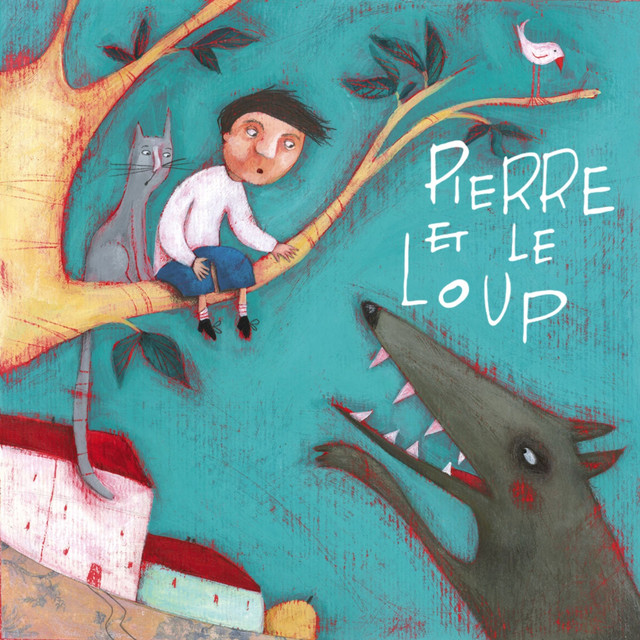
Its origins lie in the early 20th century, when composers began to experiment with combining spoken narration and music to make stories come alive. Two often-cited anchors are Maurice Ravel’s Ma mère l’Oye (Mother Goose) suite, first written for piano four hands in 1908 and later orchestrated. Although not a “narrated opera,” the work is steeped in fairy-tale imagery and child-friendly imagination, and it helped establish a model for music that evokes stories through descriptive titles and vivid musical scenes. Sergei Prokofiev’s Peter and the Wolf (1936) is the other foundational specimen: a narrated tale in which each character is represented by a distinct instrument, turning the concert hall into a storytelling stage. Since then, countless composers and performers have expanded the format, from faithful adaptations of fairy tales to original narratives written specifically for concerts, radio plays, or picture-book symphonies.
In practice, histoire pour enfants often centers on a simple premise: a story suitable for a child’s age is told while music supplies mood, action and emotion. Narration can be in the listeners’ language or in a refined, spoken-word English, French, Spanish, or other languages, sometimes alternating with sung phrases. Instrumentation ranges from intimate piano or string quartets to full symphonic forces, sometimes enriched with electronics, folk instruments, or theatre elements. Performances may occur as standalone concerts, integrated into educational programs, or as multimedia stage works that combine storytelling, movement and dance.
The genre enjoys particular strength in Francophone contexts, where the label and its variants are most widely used. France, Belgium, Switzerland, and Canada (especially Quebec) are notable hubs, with a robust ecosystem of orchestras, conservatories, libraries, and schools programming narrated music for children. The format has also spread across Europe and into North America, where it intersects with early-music outreach, music education, and family concerts. Beyond the classical world, there are cross-genre reinterpretations—folk, pop, and contemporary classical artists who produce “story albums” or stage pieces for kids—keeping the tradition flexible and accessible.
Key ambassadors of histoire pour enfants include historic touchstones like Prokofiev’s Peter and the Wolf and Ravel’s Ma mère l’Oye, which continue to appear in concert programs and recordings as touchstones of musical storytelling. In modern practice, the role of the narrator—often a skilled actor or voice artist—has become as important as the music itself, because the delivery of the tale shapes the audience’s engagement just as strongly as the melodies.
For enthusiasts, this genre offers a bridge between literature and sound: a way to explore how music can dramatize narrative, how character and mood can be encoded in timbre and tempo, and how storytelling can be experienced through listening. If you’re curious, seek out a Peter and the Wolf recording with a good narrator, or a recital of Ma mère l’Oye, and then explore newer, contemporary takes that remix the format for today’s listeners.
Its origins lie in the early 20th century, when composers began to experiment with combining spoken narration and music to make stories come alive. Two often-cited anchors are Maurice Ravel’s Ma mère l’Oye (Mother Goose) suite, first written for piano four hands in 1908 and later orchestrated. Although not a “narrated opera,” the work is steeped in fairy-tale imagery and child-friendly imagination, and it helped establish a model for music that evokes stories through descriptive titles and vivid musical scenes. Sergei Prokofiev’s Peter and the Wolf (1936) is the other foundational specimen: a narrated tale in which each character is represented by a distinct instrument, turning the concert hall into a storytelling stage. Since then, countless composers and performers have expanded the format, from faithful adaptations of fairy tales to original narratives written specifically for concerts, radio plays, or picture-book symphonies.
In practice, histoire pour enfants often centers on a simple premise: a story suitable for a child’s age is told while music supplies mood, action and emotion. Narration can be in the listeners’ language or in a refined, spoken-word English, French, Spanish, or other languages, sometimes alternating with sung phrases. Instrumentation ranges from intimate piano or string quartets to full symphonic forces, sometimes enriched with electronics, folk instruments, or theatre elements. Performances may occur as standalone concerts, integrated into educational programs, or as multimedia stage works that combine storytelling, movement and dance.
The genre enjoys particular strength in Francophone contexts, where the label and its variants are most widely used. France, Belgium, Switzerland, and Canada (especially Quebec) are notable hubs, with a robust ecosystem of orchestras, conservatories, libraries, and schools programming narrated music for children. The format has also spread across Europe and into North America, where it intersects with early-music outreach, music education, and family concerts. Beyond the classical world, there are cross-genre reinterpretations—folk, pop, and contemporary classical artists who produce “story albums” or stage pieces for kids—keeping the tradition flexible and accessible.
Key ambassadors of histoire pour enfants include historic touchstones like Prokofiev’s Peter and the Wolf and Ravel’s Ma mère l’Oye, which continue to appear in concert programs and recordings as touchstones of musical storytelling. In modern practice, the role of the narrator—often a skilled actor or voice artist—has become as important as the music itself, because the delivery of the tale shapes the audience’s engagement just as strongly as the melodies.
For enthusiasts, this genre offers a bridge between literature and sound: a way to explore how music can dramatize narrative, how character and mood can be encoded in timbre and tempo, and how storytelling can be experienced through listening. If you’re curious, seek out a Peter and the Wolf recording with a good narrator, or a recital of Ma mère l’Oye, and then explore newer, contemporary takes that remix the format for today’s listeners.