Genre
historically informed performance
Top Historically informed performance Artists
Showing 17 of 17 artists




About Historically informed performance
Historically Informed Performance (HIP) is a way of making classical music that aims to reproduce, as closely as possible, how music sounded in its own historical moment. Rather than treating old scores as fixed modern ideals, HIP practitioners study period sources—manuscripts, early prints, treatises on ornament and phrasing—to reconstruct style, tempo, tuning, and articulation. The result is performances that seek historical authenticity while remaining musically expressive and present.
The birth and rise of HIP began in the mid-20th century, with a wave of enthusiasm for early music that challenged the polished, late-19th/early-20th‑century interpretations of Baroque and Classical repertories. A pivotal spark came from Nikolaus Harnoncourt and his ensemble Concentus Musicus Wien, founded in the 1950s, who performed Bach and Handel on period instruments. Around the same era, Dutch keyboardist Gustav Leonhardt helped establish the revival of authentic keyboard practice. The 1960s–1970s saw countless ensembles and scholars exploring new methods, from continuo playing to historically informed approach to vocal ornamentation, slowly turning HIP into a global movement rather than a niche research topic.
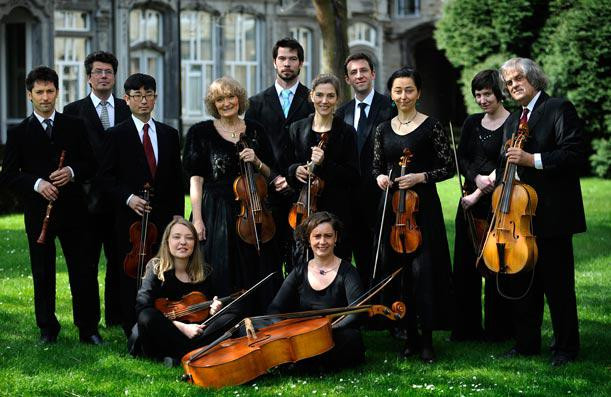
Practitioners typically use period or replica instruments, such as gut-string violins with narrower bows, baroque and classical flutes, natural horns, the theorbo or lute, and keyboard instruments like the harpsichord, clavichord, and fortepiano. They also employ original or suggested tunings and temperaments—often around A=415 Hz for Baroque repertoire—along with historically grounded articulation, phrasing, articulation of ornaments, and tempo choices that reflect period treatises and stylistic etiquette. The goal is not to “modernize” the music, but to illuminate how it would have been heard in its own time, while preserving vivid, emotionally compelling interpretation for today’s concertgoers.
Key ambassadors and pillars of HIP include Nikolaus Harnoncourt and the Concentus Musicus Wien; Gustav Leonhardt, whose pioneering work on Bach keyboard and vocal music helped codify historical practice; Ton Koopman, renowned for his Bach cycles with the Amsterdam Baroque Orchestra & Choir; John Eliot Gardiner and Trevor Pinnock, who popularized HIP through the English Baroque Soloists and The English Concert; William Christie and his Les Arts Florissants, who revived French Baroque repertoires with historically informed instruments and style; Jordi Savall, whose ensembles Hespèrion XL and Le Concert des Nations have brought global attention to period performance; and René Jacobs, among others. These artists and ensembles—alongside groups such as the Academy of Ancient Music, Akademie für Alte Musik Berlin, and Le Concert des Nations—have become ambassadors whose recordings and performances define HIP for new audiences.
Repertoire within HIP has grown from core Baroque works by Bach, Handel, Vivaldi, Monteverdi, and Purcell to include Classical-era composers like Haydn and Mozart, performed with period instruments and fortepianos when appropriate. The movement spread beyond its cradle in Germany, Austria, the Netherlands, the United Kingdom, and France to North America, and later to many parts of the world, including Japan and parts of Asia, where curiosity about historical performance practices continues to expand.
For music enthusiasts, HIP offers a doorway into sound-worlds that feel more connected to a work’s original context—sound that invites closer listening to tempo, touch, and color, and reshapes questions about rhythm, expression, and intimacy in performances of Bach, Handel, Monteverdi, and beyond.
The birth and rise of HIP began in the mid-20th century, with a wave of enthusiasm for early music that challenged the polished, late-19th/early-20th‑century interpretations of Baroque and Classical repertories. A pivotal spark came from Nikolaus Harnoncourt and his ensemble Concentus Musicus Wien, founded in the 1950s, who performed Bach and Handel on period instruments. Around the same era, Dutch keyboardist Gustav Leonhardt helped establish the revival of authentic keyboard practice. The 1960s–1970s saw countless ensembles and scholars exploring new methods, from continuo playing to historically informed approach to vocal ornamentation, slowly turning HIP into a global movement rather than a niche research topic.
Practitioners typically use period or replica instruments, such as gut-string violins with narrower bows, baroque and classical flutes, natural horns, the theorbo or lute, and keyboard instruments like the harpsichord, clavichord, and fortepiano. They also employ original or suggested tunings and temperaments—often around A=415 Hz for Baroque repertoire—along with historically grounded articulation, phrasing, articulation of ornaments, and tempo choices that reflect period treatises and stylistic etiquette. The goal is not to “modernize” the music, but to illuminate how it would have been heard in its own time, while preserving vivid, emotionally compelling interpretation for today’s concertgoers.
Key ambassadors and pillars of HIP include Nikolaus Harnoncourt and the Concentus Musicus Wien; Gustav Leonhardt, whose pioneering work on Bach keyboard and vocal music helped codify historical practice; Ton Koopman, renowned for his Bach cycles with the Amsterdam Baroque Orchestra & Choir; John Eliot Gardiner and Trevor Pinnock, who popularized HIP through the English Baroque Soloists and The English Concert; William Christie and his Les Arts Florissants, who revived French Baroque repertoires with historically informed instruments and style; Jordi Savall, whose ensembles Hespèrion XL and Le Concert des Nations have brought global attention to period performance; and René Jacobs, among others. These artists and ensembles—alongside groups such as the Academy of Ancient Music, Akademie für Alte Musik Berlin, and Le Concert des Nations—have become ambassadors whose recordings and performances define HIP for new audiences.
Repertoire within HIP has grown from core Baroque works by Bach, Handel, Vivaldi, Monteverdi, and Purcell to include Classical-era composers like Haydn and Mozart, performed with period instruments and fortepianos when appropriate. The movement spread beyond its cradle in Germany, Austria, the Netherlands, the United Kingdom, and France to North America, and later to many parts of the world, including Japan and parts of Asia, where curiosity about historical performance practices continues to expand.
For music enthusiasts, HIP offers a doorway into sound-worlds that feel more connected to a work’s original context—sound that invites closer listening to tempo, touch, and color, and reshapes questions about rhythm, expression, and intimacy in performances of Bach, Handel, Monteverdi, and beyond.