Genre
hurdy-gurdy
Top Hurdy-gurdy Artists
Showing 8 of 8 artists



About Hurdy-gurdy
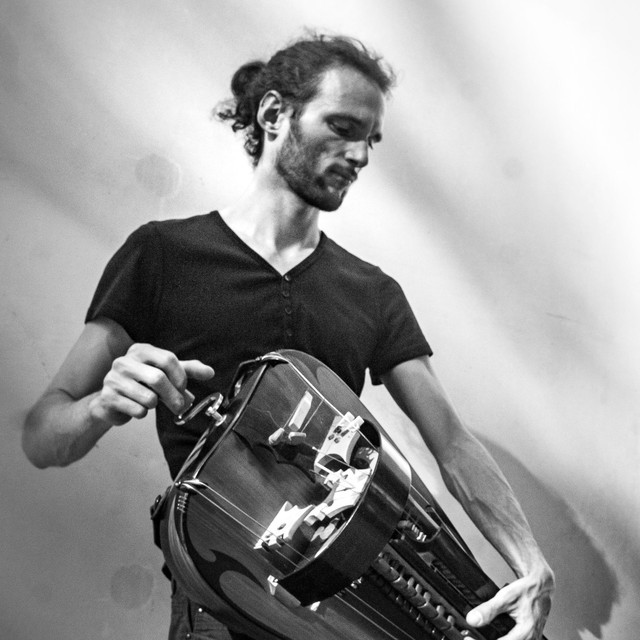
The hurdy-gurdy, or vielle à roue, is a wheel-turned string instrument that produces its sound by a constantly rotating wooden wheel rubbed against the strings, like an old-fashioned violin in a mechanical cradle. Its distinctive, buzzing drone and bright, singing melody strings give it an instantly recognisable, almost organ-like character. Played by turning a crank with one hand while pressing wooden tangents on a keyboard with the other, the instrument blends the tactile craft of lutherie with the ingenuity of mechanism, offering a sonic window into Europe’s medieval and folk-rich past.
Its birth is wrapped in the mists of the Middle Ages. The first reasonably well-attested hurdy-gurdies appear in the 12th to 13th centuries across Western Europe, with the French and Central European traditions establishing the instrument as a staple of both courtly and itinerant music. Over the centuries, it found a home in dance tunes, liturgical contexts, and courtly entertainment. Its long history means many regional variants—different numbers of drone strings, variations in the wheel tension, and diverse keyboard configurations—each contributing a distinct shade to the instrument’s palette.
What makes the hurdy-gurdy so compelling to enthusiasts is not only its historical weight but also its expressive potential. The wheel creates a continuous, singing drone that underpins the melody, while the keyboard apparatus allows precise pitch control and complex counter melodies. Techniques such as tremolo on the melody strings, drone manipulation, and percussive “soundboard” accenting give players a wide dynamic and textural range. Because the instrument relies on centrifugal motion and mechanical lugs, the player’s touch—crank speed, wheel pressure, and tangential stops—translates into a subtler degree of phrasing than most plucked or bowed strings.
Traditionally rooted in Europe, the hurdy-gurdy reached its strongest folk and early-music footprints in France—especially in regions like Brittany, the central plateaus, and Alpine zones—and in Central Europe, where it threaded its way into courtly and rural repertoires. In modern times, it has enjoyed a revival beyond its cradlelands, finding audiences in folk festivals, early-music circuits, and contemporary world-music collaborations across North America, the United Kingdom, and Japan. The instrument’s adaptability to both historical reconstruction and inventive contemporary writing has helped it cross genre boundaries, from rustic dance tunes to experimental collaborations.
Key artists and ambassadors illustrate the instrument’s historical lineage and modern vitality. On the historical side, the hurdy-gurdy was carried by medieval and Renaissance troubadours and jongleurs, whose repertoire and performance practices helped spread its fame. In the 20th century, French players such as Pierre Hamon emerged as pivotal figures in the revival, bringing virtuosity and scholarly interest back into the instrument. In contemporary scenes, ensembles like Malicorne (France) and La Nef (Canada) have showcased the hurdy-gurdy in folk and early-music contexts, expanding the instrument’s reach and demonstrating its compatibility with both traditional tunes and modern arrangements.
For the listening enthusiast, the hurdy-gurdy remains a bridge between time periods: a medieval sound refined through the hands of modern players, continually evolving while remaining unmistakably tied to the ancient wheel that spins its soul.
Its birth is wrapped in the mists of the Middle Ages. The first reasonably well-attested hurdy-gurdies appear in the 12th to 13th centuries across Western Europe, with the French and Central European traditions establishing the instrument as a staple of both courtly and itinerant music. Over the centuries, it found a home in dance tunes, liturgical contexts, and courtly entertainment. Its long history means many regional variants—different numbers of drone strings, variations in the wheel tension, and diverse keyboard configurations—each contributing a distinct shade to the instrument’s palette.
What makes the hurdy-gurdy so compelling to enthusiasts is not only its historical weight but also its expressive potential. The wheel creates a continuous, singing drone that underpins the melody, while the keyboard apparatus allows precise pitch control and complex counter melodies. Techniques such as tremolo on the melody strings, drone manipulation, and percussive “soundboard” accenting give players a wide dynamic and textural range. Because the instrument relies on centrifugal motion and mechanical lugs, the player’s touch—crank speed, wheel pressure, and tangential stops—translates into a subtler degree of phrasing than most plucked or bowed strings.
Traditionally rooted in Europe, the hurdy-gurdy reached its strongest folk and early-music footprints in France—especially in regions like Brittany, the central plateaus, and Alpine zones—and in Central Europe, where it threaded its way into courtly and rural repertoires. In modern times, it has enjoyed a revival beyond its cradlelands, finding audiences in folk festivals, early-music circuits, and contemporary world-music collaborations across North America, the United Kingdom, and Japan. The instrument’s adaptability to both historical reconstruction and inventive contemporary writing has helped it cross genre boundaries, from rustic dance tunes to experimental collaborations.
Key artists and ambassadors illustrate the instrument’s historical lineage and modern vitality. On the historical side, the hurdy-gurdy was carried by medieval and Renaissance troubadours and jongleurs, whose repertoire and performance practices helped spread its fame. In the 20th century, French players such as Pierre Hamon emerged as pivotal figures in the revival, bringing virtuosity and scholarly interest back into the instrument. In contemporary scenes, ensembles like Malicorne (France) and La Nef (Canada) have showcased the hurdy-gurdy in folk and early-music contexts, expanding the instrument’s reach and demonstrating its compatibility with both traditional tunes and modern arrangements.
For the listening enthusiast, the hurdy-gurdy remains a bridge between time periods: a medieval sound refined through the hands of modern players, continually evolving while remaining unmistakably tied to the ancient wheel that spins its soul.