Genre
indian classical
Top Indian classical Artists
Showing 25 of 144 artists




About Indian classical
Indian classical music is one of the world’s oldest continuous musical traditions, defined today by two main streams: Hindustani in the North and Carnatic in the South. At its core are ragas, melodic frameworks that determine scale, ascent and descent, and the emotional color of aPerformance over a rich rhythmic tapestry known as talas. A steady drone—usually from a tanpura—grounds a performance, enabling long explorations of tone, ornamentation, and microtonal nuance (shruti). The genre thrives on improvisation, dialogue between singer or instrumentalist and accompanists, and a seasoned ear for subtle mood shifts.
Its origins lie in the ancient, layered culture of India. Elements of Indian classical music trace back to Vedic chant, temple music, and the dramatic arts described in the Natya Shastra, an influential treatise attributed to Bharata Muni. Over centuries, the system of ragas and talas was refined through courtly patronage, temple ensembles, and evolving performance practices. Hindustani music began to crystallize in the Mughal era of North India, absorbing Persian and Central Asian influences and giving rise to prolific vocal forms such as the khayal and a lineage of instrumental styles. Carnatic music, developed largely in the dense patronage networks of the South, remained deeply rooted in devotional songs (bhakti), temple traditions, and a rigorous pedagogy centered on composed kritis and set rhythmic cycles.
The Hindustani tradition is marked by gharanas or stylistic schools—Gwalior, Kirana, Ajrada, and Jaipur-Atrauli among the most influential—each offering a distinct approach to raga development, ornamentation, and poetic repertoire. Dhrupad, khayal, instrumental, and folk-inflected expressions coexist, with legendary vocalists and instrumental virtuosi shaping its modern voice. The Carnatic stream is renowned for its samaṅkalpanā of kritis (pre-composed pieces), ragam-tanam-pattu (improvised melodic and rhythmic exploration), varnams, and the close bond between composer and performer. The “Trinity” of Carnatic music—Tyagaraja, Muthuswami Dikshitar, and Syama Sastri—are celebrated for landmark kritis that continue to anchor concerts, while later masters like M. Balamuralikrishna, Semmangudi Srinivasa Iyer, and Lalgudi Jayaraman greatly expanded both repertoire and technique.
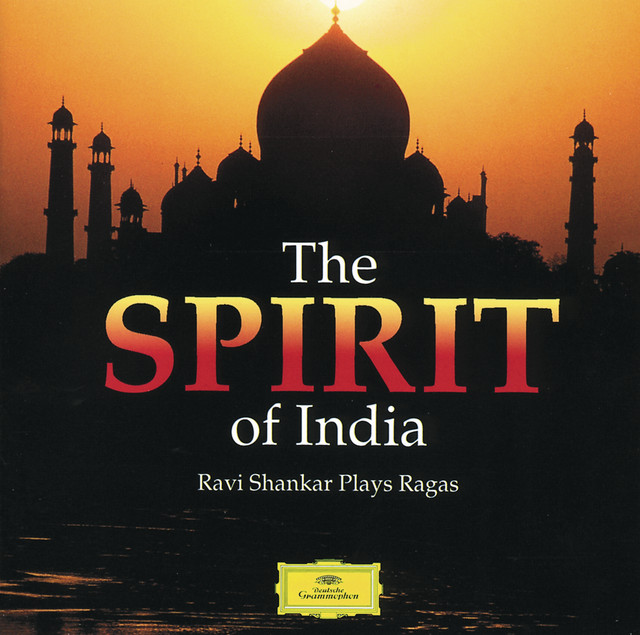
Among the most influential ambassadors are Pandit Ravi Shankar, who popularized the sitar on global stages and bridged Indian classical music with Western jazz and cinema; Ali Akbar Khan and Vilayat Khan, masters of the sarod and sitar; Zakir Hussain, a virtuoso of the tabla; and vocal luminaries such as Kishori Amonkar and Jasraj from the Hindustani line. In Carnatic music, M. S. Subbulakshmi and Semmangudi Srinivasa Iyer became household names, alongside instrumentalists like L. Subramaniam and Veena Dhanammal, who extended the tradition into new tonal and technical frontiers.
Today Indian classical music enjoys a worldwide footprint. It is deeply cherished in India, Nepal, Sri Lanka, and among the global Indian and South Asian diasporas. Beyond borders, enthusiasts in the United States, United Kingdom, Canada, Australia, and several European and Gulf nations study, perform, and innovate—often blending raga concepts with jazz, film music, or contemporary art forms. The genre remains a living, breathing dialogue between ancient tradition and modern curiosity, inviting listeners to taste the subtle genius of melody, rhythm, and emotion.
Its origins lie in the ancient, layered culture of India. Elements of Indian classical music trace back to Vedic chant, temple music, and the dramatic arts described in the Natya Shastra, an influential treatise attributed to Bharata Muni. Over centuries, the system of ragas and talas was refined through courtly patronage, temple ensembles, and evolving performance practices. Hindustani music began to crystallize in the Mughal era of North India, absorbing Persian and Central Asian influences and giving rise to prolific vocal forms such as the khayal and a lineage of instrumental styles. Carnatic music, developed largely in the dense patronage networks of the South, remained deeply rooted in devotional songs (bhakti), temple traditions, and a rigorous pedagogy centered on composed kritis and set rhythmic cycles.
The Hindustani tradition is marked by gharanas or stylistic schools—Gwalior, Kirana, Ajrada, and Jaipur-Atrauli among the most influential—each offering a distinct approach to raga development, ornamentation, and poetic repertoire. Dhrupad, khayal, instrumental, and folk-inflected expressions coexist, with legendary vocalists and instrumental virtuosi shaping its modern voice. The Carnatic stream is renowned for its samaṅkalpanā of kritis (pre-composed pieces), ragam-tanam-pattu (improvised melodic and rhythmic exploration), varnams, and the close bond between composer and performer. The “Trinity” of Carnatic music—Tyagaraja, Muthuswami Dikshitar, and Syama Sastri—are celebrated for landmark kritis that continue to anchor concerts, while later masters like M. Balamuralikrishna, Semmangudi Srinivasa Iyer, and Lalgudi Jayaraman greatly expanded both repertoire and technique.
Among the most influential ambassadors are Pandit Ravi Shankar, who popularized the sitar on global stages and bridged Indian classical music with Western jazz and cinema; Ali Akbar Khan and Vilayat Khan, masters of the sarod and sitar; Zakir Hussain, a virtuoso of the tabla; and vocal luminaries such as Kishori Amonkar and Jasraj from the Hindustani line. In Carnatic music, M. S. Subbulakshmi and Semmangudi Srinivasa Iyer became household names, alongside instrumentalists like L. Subramaniam and Veena Dhanammal, who extended the tradition into new tonal and technical frontiers.
Today Indian classical music enjoys a worldwide footprint. It is deeply cherished in India, Nepal, Sri Lanka, and among the global Indian and South Asian diasporas. Beyond borders, enthusiasts in the United States, United Kingdom, Canada, Australia, and several European and Gulf nations study, perform, and innovate—often blending raga concepts with jazz, film music, or contemporary art forms. The genre remains a living, breathing dialogue between ancient tradition and modern curiosity, inviting listeners to taste the subtle genius of melody, rhythm, and emotion.