Genre
japanese celtic
Top Japanese celtic Artists
Showing 14 of 14 artists



7

ネルマーレ
18
13 listeners
8

イギリス人
60
13 listeners

10

中尾 淳乙
9
9 listeners

About Japanese celtic
Japanese Celtic is a niche yet rapidly rewarding fusion that threads the buoyant melodies and rustic textures of Celtic folk with the refined timbres and aesthetic of Japanese traditional and contemporary music. It isn’t a single, rigid style, but a family of projects that share a core idea: traditional Celtic speech in a voice filtered through Japanese melodic sense, instrumentation, and production values. The result can feel both sunlit and meditative, eagerly dancing in reels one moment and opening into cinematic, contemplative soundscapes the next.
Origins and development
The genre grew from the late 1990s world-music wave that broadened Japan’s musical palate far beyond its borders. As Japanese indie folk, ambient, and electronic scenes embraced cross-cultural collaboration, artists began pairing Celtic forms—jigs, reels, modal melodies, and horn- and string-led textures—with Japanese instruments and sensibilities. Rather than adopting a single “Japanese Celtic” sound, the scene embraced hybridity: it can be intimate and unplugged, or expansive and electronically lush; it can hinge on a fiddle line, a shamisen figure, or a shakuhachi breath in the same passage.
Key instrumental conversations
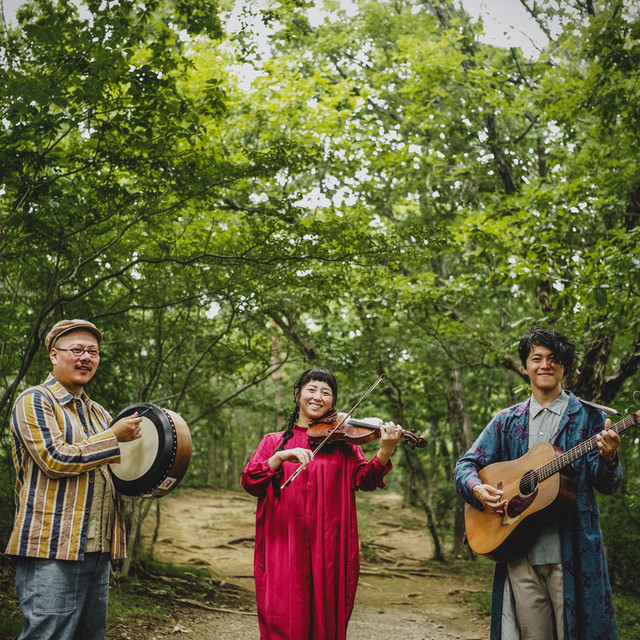
Instrument choice is telling: Celtic elements bring fiddle, tin whistles, bodhrán, bouzouki, uilleann pipes, and flute, while Japanese elements contribute shamisen, koto, shakuhachi, taiko, and various stringed or plucked textures. In many recordings, you’ll hear modal Celtic melodies braided with pentatonic or scale-based color from Japanese instruments. The textures range from sparse, meditative tunes to lively, danceable pieces that could anchor a concert set or a festival stage. Production often embraces both organic acoustic warmth and digital processing—reverb-drenched spaces, field recordings, and subtle electronics that widen the sonic landscape without erasing traditional color.
Ambassadors and navigators
There isn’t a fixed canon of “Japanese Celtic” ambassadors, since the scene thrives on collaborations and evolving ensembles. What enthusiasts reliably cite are two things: (1) the broader Celtic tradition’s global ambassadors—artists and groups such as The Chieftains, Loreena McKennitt, Altan, Capercaillie, and Clannad—whose work has inspired cross-cultural reinterpretations; and (2) a generation of Japanese musicians and collectives who actively seek out collaborations with Celtic players and who tour Europe and North America, sharing stages and ideas with Celtic folk communities. These cross-border exchanges are the engine of the genre, turning local experimentation into international dialogue.
Geography and popularity
Japan is the central hub for Japanese Celtic, with Japan-based ensembles and performances regularly featuring in clubs, folk venues, and world-music festivals. Outside Japan, the fusion attracts curious listeners and dedicated world-music fans in parts of Europe, North America, and Australia, especially among audiences already tuned to Celtic revival acts and the broader folk-electronica continuum. The scene also finds lifeblood in film and game soundtracks, where cinematic textures and folk motifs meet a modern, globe-spanning sensibility.
What to listen for
If you’re exploring, listen for melodic lines that feel intimate and lyrical, often carried by fiddle or shamisen; harmonies that blur the line between modal Celtic moodiness and Japanese tonal color; and production choices that blend acoustic warmth with spacious reverb or subtle synthesis. Japanese Celtic invites you to hear nature-inflected storytelling through two ancient undeadicated tongues—Celtic and Japanese—speaking in a shared contemporary voice.
If you want, I can suggest concrete artist names and albums that fit this description, or tailor a listening list to a specific mood or tempo you enjoy.
Origins and development
The genre grew from the late 1990s world-music wave that broadened Japan’s musical palate far beyond its borders. As Japanese indie folk, ambient, and electronic scenes embraced cross-cultural collaboration, artists began pairing Celtic forms—jigs, reels, modal melodies, and horn- and string-led textures—with Japanese instruments and sensibilities. Rather than adopting a single “Japanese Celtic” sound, the scene embraced hybridity: it can be intimate and unplugged, or expansive and electronically lush; it can hinge on a fiddle line, a shamisen figure, or a shakuhachi breath in the same passage.
Key instrumental conversations
Instrument choice is telling: Celtic elements bring fiddle, tin whistles, bodhrán, bouzouki, uilleann pipes, and flute, while Japanese elements contribute shamisen, koto, shakuhachi, taiko, and various stringed or plucked textures. In many recordings, you’ll hear modal Celtic melodies braided with pentatonic or scale-based color from Japanese instruments. The textures range from sparse, meditative tunes to lively, danceable pieces that could anchor a concert set or a festival stage. Production often embraces both organic acoustic warmth and digital processing—reverb-drenched spaces, field recordings, and subtle electronics that widen the sonic landscape without erasing traditional color.
Ambassadors and navigators
There isn’t a fixed canon of “Japanese Celtic” ambassadors, since the scene thrives on collaborations and evolving ensembles. What enthusiasts reliably cite are two things: (1) the broader Celtic tradition’s global ambassadors—artists and groups such as The Chieftains, Loreena McKennitt, Altan, Capercaillie, and Clannad—whose work has inspired cross-cultural reinterpretations; and (2) a generation of Japanese musicians and collectives who actively seek out collaborations with Celtic players and who tour Europe and North America, sharing stages and ideas with Celtic folk communities. These cross-border exchanges are the engine of the genre, turning local experimentation into international dialogue.
Geography and popularity
Japan is the central hub for Japanese Celtic, with Japan-based ensembles and performances regularly featuring in clubs, folk venues, and world-music festivals. Outside Japan, the fusion attracts curious listeners and dedicated world-music fans in parts of Europe, North America, and Australia, especially among audiences already tuned to Celtic revival acts and the broader folk-electronica continuum. The scene also finds lifeblood in film and game soundtracks, where cinematic textures and folk motifs meet a modern, globe-spanning sensibility.
What to listen for
If you’re exploring, listen for melodic lines that feel intimate and lyrical, often carried by fiddle or shamisen; harmonies that blur the line between modal Celtic moodiness and Japanese tonal color; and production choices that blend acoustic warmth with spacious reverb or subtle synthesis. Japanese Celtic invites you to hear nature-inflected storytelling through two ancient undeadicated tongues—Celtic and Japanese—speaking in a shared contemporary voice.
If you want, I can suggest concrete artist names and albums that fit this description, or tailor a listening list to a specific mood or tempo you enjoy.