Genre
japanese math rock
Top Japanese math rock Artists
Showing 6 of 6 artists
1
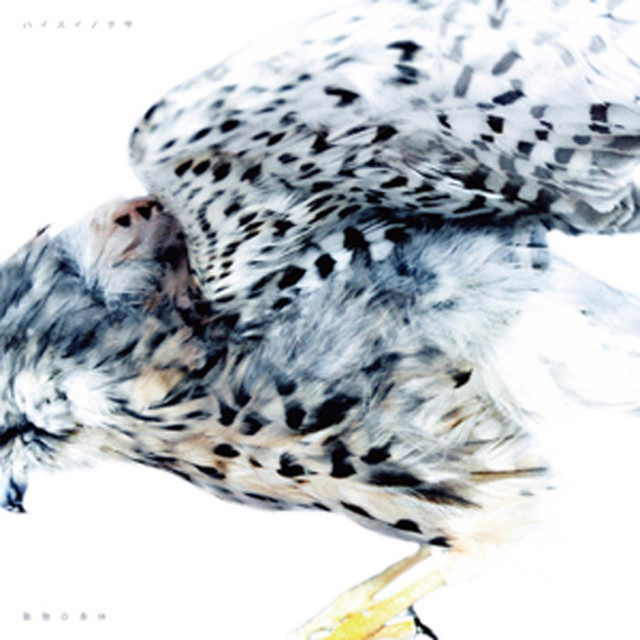
ハイスイノナサ
9,157
3,051 listeners



About Japanese math rock
Japanese math rock is a precision-driven, rhythm-forward branch of the broader math rock family, anchored in Japan and celebrated by enthusiasts for its nimble guitar work, intricate drumming, and restless sense of timing. It’s not about speed for speed’s sake so much as about the dance between pulse and pattern: bursts of melodic logic stitched together with polyrhythms, odd meters, and tight, interlocking parts.
Origins-wise, math rock as a whole emerged in the United States in the late 1980s and early 1990s, with bands that challenged conventional rock rhythms and structures. Japanese players picked up the thread and, by the early 2000s, began developing their own city-sharp takes on the idea—more restrained in some cases, more exuberant in others, but consistently precise. The Japanese scene quickly differentiated itself with a penchant for live, instrument-driven propulsion, a fondness for clean, almost mathematical guitar lines, and a willingness to fuse influences from jazz, post-rock, and indie pop.
Among the country’s most influential ambassadors are Toe, Lite, Tricot, and Mouse on the Keys. Toe, formed in Tokyo around the turn of the century, became one of the genre’s most widely recognized torchbearers internationally: crisp, tasteful guitar work paired with economical, powerful drumming and often instrumental textures that push the music forward without shouting. Lite, another Tokyo-based act, is renowned for high-velocity, interlocking guitar riffs and a propulsion that can feel almost mechanical in its precision. Tricot, a standout from the Osaka corridor, brought a distinctly melodic, vocal-driven approach to math rock, weaving singable lines through complex rhythmic structures and expanding the audience beyond strictly instrumental circles. Mouse on the Keys adds a jazz-inflected, piano-driven layer to the mix, delivering kinetic, groove-forward pieces that sit at the intersection of improvisation and meticulously composed math rock.
Instrumentally, Japanese math rock tends to foreground tight ensemble playing: guitar, bass, drums (and sometimes keyboards) exchange roles rapidly, with ostinatos giving way to sudden, sparing melodic bursts. Techniques like tapping, rapid alternate picking, intricate pick scrapes, and layered polyrhythms create a sense of clockwork motion. Some bands tilt toward a more vocal, song-oriented approach (as with Tricot), while others stay predominantly instrumental (as with Toe and Mouse on the Keys). The genre often embraces brevity and propulsion—songs that feel engineered for the ears of a live room as much as they are for headphones.
Geographically, Japan remains the birthplace and strongest hub of the scene, with a loyal following in Europe and North America among indie and experimental listeners. Festivals, niche labels, and touring circuits have helped Japanese math rock enthusiasts connect with like-minded players worldwide, while fans in cities from Paris to Seattle pack small rooms to hear the music that folds time rather than bending it.
For listeners new to the scene, start with Toe for a gateway into the clean, capable precision of the style, then explore Tricot for melody-driven math rock and Lite for a punchy, angular edge. Mouse on the Keys offers a different flavor—rhythmic flair with a jazz pulse. In any case, Japanese math rock rewards repeated listens, revealing new rhythms and conversations in the space between notes.
Origins-wise, math rock as a whole emerged in the United States in the late 1980s and early 1990s, with bands that challenged conventional rock rhythms and structures. Japanese players picked up the thread and, by the early 2000s, began developing their own city-sharp takes on the idea—more restrained in some cases, more exuberant in others, but consistently precise. The Japanese scene quickly differentiated itself with a penchant for live, instrument-driven propulsion, a fondness for clean, almost mathematical guitar lines, and a willingness to fuse influences from jazz, post-rock, and indie pop.
Among the country’s most influential ambassadors are Toe, Lite, Tricot, and Mouse on the Keys. Toe, formed in Tokyo around the turn of the century, became one of the genre’s most widely recognized torchbearers internationally: crisp, tasteful guitar work paired with economical, powerful drumming and often instrumental textures that push the music forward without shouting. Lite, another Tokyo-based act, is renowned for high-velocity, interlocking guitar riffs and a propulsion that can feel almost mechanical in its precision. Tricot, a standout from the Osaka corridor, brought a distinctly melodic, vocal-driven approach to math rock, weaving singable lines through complex rhythmic structures and expanding the audience beyond strictly instrumental circles. Mouse on the Keys adds a jazz-inflected, piano-driven layer to the mix, delivering kinetic, groove-forward pieces that sit at the intersection of improvisation and meticulously composed math rock.
Instrumentally, Japanese math rock tends to foreground tight ensemble playing: guitar, bass, drums (and sometimes keyboards) exchange roles rapidly, with ostinatos giving way to sudden, sparing melodic bursts. Techniques like tapping, rapid alternate picking, intricate pick scrapes, and layered polyrhythms create a sense of clockwork motion. Some bands tilt toward a more vocal, song-oriented approach (as with Tricot), while others stay predominantly instrumental (as with Toe and Mouse on the Keys). The genre often embraces brevity and propulsion—songs that feel engineered for the ears of a live room as much as they are for headphones.
Geographically, Japan remains the birthplace and strongest hub of the scene, with a loyal following in Europe and North America among indie and experimental listeners. Festivals, niche labels, and touring circuits have helped Japanese math rock enthusiasts connect with like-minded players worldwide, while fans in cities from Paris to Seattle pack small rooms to hear the music that folds time rather than bending it.
For listeners new to the scene, start with Toe for a gateway into the clean, capable precision of the style, then explore Tricot for melody-driven math rock and Lite for a punchy, angular edge. Mouse on the Keys offers a different flavor—rhythmic flair with a jazz pulse. In any case, Japanese math rock rewards repeated listens, revealing new rhythms and conversations in the space between notes.