Genre
jazz flute
Top Jazz flute Artists
Showing 16 of 16 artists





About Jazz flute
Jazz flute is the voice of the flute inside jazz—bright, agile, and capable of shimmering lyricism or piercing improvisation. It is not a separate genre so much as a recurring thread within postwar jazz that places the flute at the center of the solo voice, often in conversation with piano, bass, drums, and percussion.
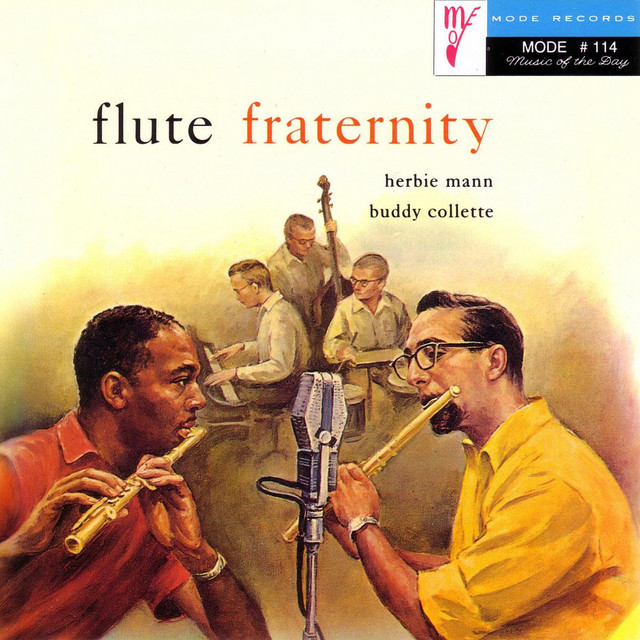
Origins: The flute existed in early jazz but did not become a leading vehicle until the 1950s and 60s, when players began writing and improvising to exploit its smooth legato and wide range. Among the first to elevate the instrument in modern jazz were Sam Most, whose late-1950s recordings helped demonstrate the flute’s versatility beyond stereotypes, and Herbie Mann, who made the flute a front-line voice. Mann’s work brought world music textures—Latin, Afro-Cuban, Brazilian—into mainstream jazz, expanding the possibilities of what a flute could articulate in rhythmically charged settings. The instrument’s seductive tone in modal, hard-bop, and groove-based contexts quickly found an audience.
Ambassadors and key artists: Hubert Laws remains one of the most influential jazz flutists, celebrated for immaculate technique, classical training, and seamless fusion of jazz, R&B, and orchestral color. Yusef Lateef expanded the horizon further by treating the flute as a vehicle for cross-cultural improvisation, incorporating Middle Eastern, Asian, and African influences into his improvisations. James Moody, though renowned for his saxophone, also demonstrated virtuosity on the flute, proving that a horn-led language could be reinterpreted through the flute’s voice. In the Latin-jazz continuum, Nestor Torres has helped sustain a vibrant flute-led tradition, while Canadian-born Moe Koffman’s Swinging Shepherd Blues helped popularize the instrument’s bright timbre with a broader audience. Today, players such as Nicole Mitchell, Jamie Baum, and a new generation of improvisers push the flute’s role in contemporary jazz and free improvisation, widening the spectrum of possible sounds.
Geography and popularity: Jazz flute has its strongest footprint in the United States, especially within New York’s postwar scene and in the fusion and Latin camps of the 1960s and 70s. It has also found welcoming homes in Europe and Japan, where dedicated flute communities embrace both traditional and avant-garde approaches. In Latin America, the flute blends naturally with Afro-C Cuban and Brazilian rhythms, while in France, the United Kingdom, and Germany, contemporary flutists fuse classical fluency with improvisational daring. The repertoire ranges from straight-ahead improvisation to modal explorations, from lush balladry to high-velocity lines, and from acoustic ensembles to electric, hybrid setups.
For listeners seeking a refined, expressive voice within jazz, the jazz flute offers a bright, versatile instrument with a storied past and a restless, forward-looking present. Whether chasing melodic clarity, rhythmic invention, or cross-genre fusion, the flute’s role in jazz remains a living, evolving conversation.
Origins: The flute existed in early jazz but did not become a leading vehicle until the 1950s and 60s, when players began writing and improvising to exploit its smooth legato and wide range. Among the first to elevate the instrument in modern jazz were Sam Most, whose late-1950s recordings helped demonstrate the flute’s versatility beyond stereotypes, and Herbie Mann, who made the flute a front-line voice. Mann’s work brought world music textures—Latin, Afro-Cuban, Brazilian—into mainstream jazz, expanding the possibilities of what a flute could articulate in rhythmically charged settings. The instrument’s seductive tone in modal, hard-bop, and groove-based contexts quickly found an audience.
Ambassadors and key artists: Hubert Laws remains one of the most influential jazz flutists, celebrated for immaculate technique, classical training, and seamless fusion of jazz, R&B, and orchestral color. Yusef Lateef expanded the horizon further by treating the flute as a vehicle for cross-cultural improvisation, incorporating Middle Eastern, Asian, and African influences into his improvisations. James Moody, though renowned for his saxophone, also demonstrated virtuosity on the flute, proving that a horn-led language could be reinterpreted through the flute’s voice. In the Latin-jazz continuum, Nestor Torres has helped sustain a vibrant flute-led tradition, while Canadian-born Moe Koffman’s Swinging Shepherd Blues helped popularize the instrument’s bright timbre with a broader audience. Today, players such as Nicole Mitchell, Jamie Baum, and a new generation of improvisers push the flute’s role in contemporary jazz and free improvisation, widening the spectrum of possible sounds.
Geography and popularity: Jazz flute has its strongest footprint in the United States, especially within New York’s postwar scene and in the fusion and Latin camps of the 1960s and 70s. It has also found welcoming homes in Europe and Japan, where dedicated flute communities embrace both traditional and avant-garde approaches. In Latin America, the flute blends naturally with Afro-C Cuban and Brazilian rhythms, while in France, the United Kingdom, and Germany, contemporary flutists fuse classical fluency with improvisational daring. The repertoire ranges from straight-ahead improvisation to modal explorations, from lush balladry to high-velocity lines, and from acoustic ensembles to electric, hybrid setups.
For listeners seeking a refined, expressive voice within jazz, the jazz flute offers a bright, versatile instrument with a storied past and a restless, forward-looking present. Whether chasing melodic clarity, rhythmic invention, or cross-genre fusion, the flute’s role in jazz remains a living, evolving conversation.