Genre
karelian folk
Top Karelian folk Artists
Showing 16 of 16 artists




About Karelian folk
Karelian folk is the music of a borderland Finnic culture, rooted in centuries of oral tradition that straddles the forested landscapes of both Finland's Karelia and Russia's Republic of Karelia. It is not a single fixed style but a family of sounds built on a shared heritage: epic storytelling, chant-like vocal lines, and a close weaving of voice with traditional instruments. The genre carries the atmosphere of lakes and pines, of long winters and seasonal rites, while also morphing in conversation with modern world music.
The “birth” of Karelian folk as a defined tradition is best understood as a convergence of older runo singing and later nationalist-era preservation. Karelia’s songs fed the Kalevala, the Finnish epic compiled in the 1830s by Elias Lönnrot from oral poems gathered across the region. That collection helped crystallize a political and cultural memory around Karelia’s sound—its musical syntax, scales, and cadence—into a recognizable Finnic voice. In the 19th and early 20th centuries, folklorists and composers formalized, transcribed, and promoted these tunes, while local singers kept the repertoire alive in villages, villages, and church gatherings. A broader revival of regional folk music in the 1960s–70s connected traditional Karelia to today’s world-music networks, giving the genre a fresh audience without sacrificing its roots.
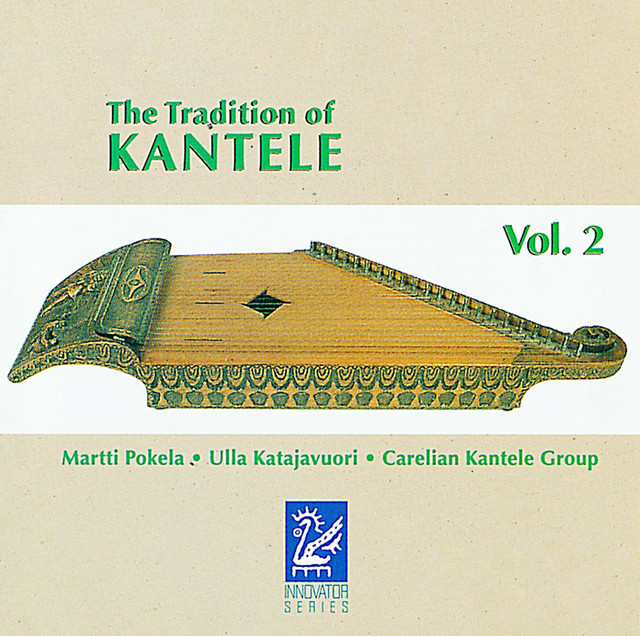
A defining characteristic of Karelian folk is its emphasis on the human voice, often featured in intimate, small-scale performances. Runo-like vocal lines—bold, earthy, and elastic—are frequently layered with drone-like accompaniment and modal colorings, creating a sound that can feel ancient and immediate at once. The kantele, a traditional Finnic zither, is one of the central instruments; its bright, resonant plucked tones often carry the melody or provide a shimmering texture alongside fiddle, drum, and other rustic timbres. Performances can be solo, intimate duos, or small ensembles, sometimes with polyphonic singing that echoes the region’s long-standing choral and call-and-response traditions.
Key artists and ambassadors help anchor the genre for new audiences. In Finland, contemporary groups and soloists have become synonymous with the Karelia sound. Värttinä, a landmark Finnish ensemble formed in the 1980s, has helped popularize traditional Finnish and Karelian-inflected material worldwide through energetic songs, tight vocal harmonies, and innovative arrangements. Another luminary is Maria Kalaniemi, a renowned kantele player who has expanded the instrument’s repertoire and visibility, collaborating across folk and world-music scenes and bringing Karelian sensibilities to a broad audience. Together, these artists serve as touchstones for listeners encountering the living thread of Karelian folk.
Geographically, the genre remains strongest in Finland and Russia, particularly in regions adjacent to Karelia, where the tradition continues to be performed, collected, and taught. It also maintains a presence across Scandinavia and the Baltic states, with enthusiasts in Europe and North America engaging through festivals, recordings, and educational workshops.
For the devoted listener, Karelian folk offers a direct line to a storied past while inviting contemporary interpretation. Expect stark beauty in a voice-centered soundscape, textures painted by the kantele and drones, and a musical narrative that can feel both ritualistic and warmly human. If you seek music that carries landscape in its heartbeat, Karelia’s folk traditions remain a compelling beacon.
The “birth” of Karelian folk as a defined tradition is best understood as a convergence of older runo singing and later nationalist-era preservation. Karelia’s songs fed the Kalevala, the Finnish epic compiled in the 1830s by Elias Lönnrot from oral poems gathered across the region. That collection helped crystallize a political and cultural memory around Karelia’s sound—its musical syntax, scales, and cadence—into a recognizable Finnic voice. In the 19th and early 20th centuries, folklorists and composers formalized, transcribed, and promoted these tunes, while local singers kept the repertoire alive in villages, villages, and church gatherings. A broader revival of regional folk music in the 1960s–70s connected traditional Karelia to today’s world-music networks, giving the genre a fresh audience without sacrificing its roots.
A defining characteristic of Karelian folk is its emphasis on the human voice, often featured in intimate, small-scale performances. Runo-like vocal lines—bold, earthy, and elastic—are frequently layered with drone-like accompaniment and modal colorings, creating a sound that can feel ancient and immediate at once. The kantele, a traditional Finnic zither, is one of the central instruments; its bright, resonant plucked tones often carry the melody or provide a shimmering texture alongside fiddle, drum, and other rustic timbres. Performances can be solo, intimate duos, or small ensembles, sometimes with polyphonic singing that echoes the region’s long-standing choral and call-and-response traditions.
Key artists and ambassadors help anchor the genre for new audiences. In Finland, contemporary groups and soloists have become synonymous with the Karelia sound. Värttinä, a landmark Finnish ensemble formed in the 1980s, has helped popularize traditional Finnish and Karelian-inflected material worldwide through energetic songs, tight vocal harmonies, and innovative arrangements. Another luminary is Maria Kalaniemi, a renowned kantele player who has expanded the instrument’s repertoire and visibility, collaborating across folk and world-music scenes and bringing Karelian sensibilities to a broad audience. Together, these artists serve as touchstones for listeners encountering the living thread of Karelian folk.
Geographically, the genre remains strongest in Finland and Russia, particularly in regions adjacent to Karelia, where the tradition continues to be performed, collected, and taught. It also maintains a presence across Scandinavia and the Baltic states, with enthusiasts in Europe and North America engaging through festivals, recordings, and educational workshops.
For the devoted listener, Karelian folk offers a direct line to a storied past while inviting contemporary interpretation. Expect stark beauty in a voice-centered soundscape, textures painted by the kantele and drones, and a musical narrative that can feel both ritualistic and warmly human. If you seek music that carries landscape in its heartbeat, Karelia’s folk traditions remain a compelling beacon.