Genre
klapa
Top Klapa Artists
Showing 25 of 37 artists




About Klapa
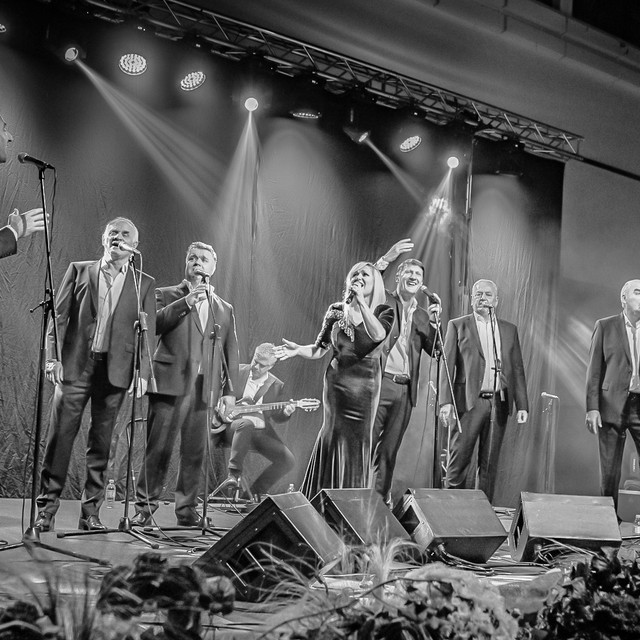
Klapa is a distinctive Croatian vocal tradition, performed a cappella by small male ensembles and grounded in the coastal culture of Dalmatia along the Adriatic Sea. The word klapa literally means “group” or “band” in the vernacular, and the practice is built on close, lush harmonies delivered without instrumental accompaniment. Its roots lie in the 19th century, when Dalmatian seafaring communities gathered in taverns, churches, and open squares to sing, socialize, and preserve language, memory, and identity. Over time, these informal gatherings hardened into organized groups that could perform on festivals, at weddings, and during religious feasts, giving rise to a recognizably disciplined, four- to six-voice choral texture.
Traditionally, klapa is male-voiced, emphasizing the blend of voices—often categorized as first tenor, second tenor, baritone, and bass. The sound aims for warmth, resonance, and a sense of communal breath; the voices weave together in tight harmonies, with occasional shared runs, subtle micro-phrasing, and precise entrances that reward attentive listening. In recent decades, women’s and mixed-voice klapas have emerged, expanding the repertoire and performance contexts, but the classic sound—a cappella, with an emphasis on balance and unity—remains the core identity of the genre.
Repertoire spans a wide spectrum of Dalmatian life: romantic ballads about love and longing, sea shanties and maritime tales, and songs that celebrate olive groves, harvests, and village life. The material is often in the Dalmatian dialects of Croatian, and performance is as much about storytelling as it is about vocal color. A typical klapa concert weaves historical songs with newer arrangements, and the best ensembles craft programmatic arcs that feel like miniature musical narratives rather than a random song set.
In the modern era, klapa has grown from a regional pastime into an internationally recognized tradition. It is widely associated with the Dalmatian coast’s cultural identity and has served as an ambassador for Croatian folk music abroad. Its global reach has strengthened through music festivals, world-music circuits, and diaspora communities in North America, Western Europe, and Australasia, where Croatian clubs and cultural centers host concerts that introduce klapa to curious enthusiasts. In Croatia itself, klapa enjoys institutional support, with festivals such as the Dalmatia Klapa Festival and regional competitions helping to sustain high performance standards and to nurture new groups.
A landmark moment for the genre's standing came in 2012, when UNESCO inscribed Croatian klapa singing on its Representative List of the Intangible Cultural Heritage of Humanity, recognizing its living, communal character and its role in transmitting cultural memory. This acknowledgement has helped frame klapa not merely as folk music but as a living art form that continues to adapt—exploring contemporary arrangements, cross-genre collaborations, and cross-cultural exchanges—without losing its core sense of belonging and shared voice.
Prominent contemporary ensembles, such as Klapa Cambi, Klapa Intrade, and Klapa s Mora, have carried the tradition beyond local halls, while teachable moments in schools and music programs ensure that new generations learn the craft. For the enthusiast, klapa is a doorway into a sound of the Adriatic—an intimate, communal voice that turns listening into a shared experience and listening again into memory.
Traditionally, klapa is male-voiced, emphasizing the blend of voices—often categorized as first tenor, second tenor, baritone, and bass. The sound aims for warmth, resonance, and a sense of communal breath; the voices weave together in tight harmonies, with occasional shared runs, subtle micro-phrasing, and precise entrances that reward attentive listening. In recent decades, women’s and mixed-voice klapas have emerged, expanding the repertoire and performance contexts, but the classic sound—a cappella, with an emphasis on balance and unity—remains the core identity of the genre.
Repertoire spans a wide spectrum of Dalmatian life: romantic ballads about love and longing, sea shanties and maritime tales, and songs that celebrate olive groves, harvests, and village life. The material is often in the Dalmatian dialects of Croatian, and performance is as much about storytelling as it is about vocal color. A typical klapa concert weaves historical songs with newer arrangements, and the best ensembles craft programmatic arcs that feel like miniature musical narratives rather than a random song set.
In the modern era, klapa has grown from a regional pastime into an internationally recognized tradition. It is widely associated with the Dalmatian coast’s cultural identity and has served as an ambassador for Croatian folk music abroad. Its global reach has strengthened through music festivals, world-music circuits, and diaspora communities in North America, Western Europe, and Australasia, where Croatian clubs and cultural centers host concerts that introduce klapa to curious enthusiasts. In Croatia itself, klapa enjoys institutional support, with festivals such as the Dalmatia Klapa Festival and regional competitions helping to sustain high performance standards and to nurture new groups.
A landmark moment for the genre's standing came in 2012, when UNESCO inscribed Croatian klapa singing on its Representative List of the Intangible Cultural Heritage of Humanity, recognizing its living, communal character and its role in transmitting cultural memory. This acknowledgement has helped frame klapa not merely as folk music but as a living art form that continues to adapt—exploring contemporary arrangements, cross-genre collaborations, and cross-cultural exchanges—without losing its core sense of belonging and shared voice.
Prominent contemporary ensembles, such as Klapa Cambi, Klapa Intrade, and Klapa s Mora, have carried the tradition beyond local halls, while teachable moments in schools and music programs ensure that new generations learn the craft. For the enthusiast, klapa is a doorway into a sound of the Adriatic—an intimate, communal voice that turns listening into a shared experience and listening again into memory.