Genre
kodomo no ongaku
Top Kodomo no ongaku Artists
Showing 25 of 147 artists


3

おかあさんといっしょ
29,015
142,640 listeners
4
神崎ゆう子
1,259
123,852 listeners
6
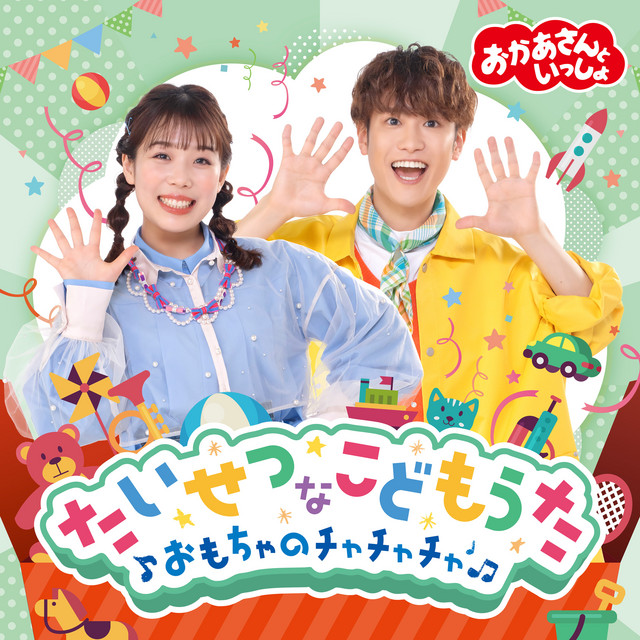
ながた まや(おかあさんといっしょ)
3,248
105,059 listeners
7

うたスタ
4,047
96,275 listeners

9

しまじろう
6,743
89,087 listeners

11

みみりん
353
78,698 listeners
13

サボさん
3,367
63,862 listeners
14

ののちゃん(村方乃々佳)
25,543
60,260 listeners
15

出口たかし
Japan
1,286
52,703 listeners

18

オフロスキー
4,050
49,236 listeners
19

しまじろうのわお!
2,585
47,519 listeners
20
ヤング・フレッシュ
1,057
47,081 listeners

22

いっちー&なる(ボンボンアカデミー)
3,496
45,160 listeners
23

ことのみ児童合唱団
1,038
42,017 listeners

About Kodomo no ongaku
Kodomo no ongaku, literally “music for children,” is a broad umbrella that groups a wide range of kid-friendly sounds, from lullabies and sing-alongs to playful pop-inflected tunes and pedagogical ditties. For enthusiasts, it is less a fixed style and more a philosophy: music that invites participation, curiosity, and shared joy, while speaking in rhythms and melodies that a developing ear can grasp. its aim is to be accessible without talking down, emotionally resonant without being precious, and cognitively engaging without turning into a lecture.
The modern sense of kodomo no ongaku as a recognizable field began to take shape in the 20th century, parallel to changes in education, media, and parenting culture. In Japan, one of the most influential engines of the genre is NHK’s Minna no Uta (Everyone’s Songs), a program launched in 1961 that pairs short, memorable songs with animated or live-action videos. Minna no Uta became a cultural touchstone, a factory of ideas and a showcase for hundreds of composers and performers. It established a template for child-focused writing—clear melodic lines, cheerful tempos, and lyrics that celebrate daily life, imagination, friendship, and natural wonder—while allowing room for experimentation in arrangement and production. The result is a lineage of songs that many Japanese families grew up with and still recognize today.
Globally, the genre began to flourish in earnest with the rise of dedicated children’s musicians who treated kids as a legitimate audience. Raffi, a Canadian troubadour of the living-room and playground, became a touchstone in the 1970s and beyond with gentle guitar-based folk and cradle-to-cradle lyrics that emphasize empathy, simplicity, and wonder. In the United States, Laurie Berkner helped shape a contemporary, pop-flavored strand of children’s music that appeals to both kids and their parents through catchy hooks and interactive performance energy. They Might Be Giants expanded the field with albums that blend whimsy, clever wordplay, and smarter-than-average pop sensibilities, while The Wiggles built a global franchise around accessible, dance-ready tunes and exuberant stage presence. Across genres and borders, many artists now release music that can be enjoyed by siblings and adults alike, while still serving the needs and ears of younger listeners.
In terms of reach, kodomo no ongaku is especially strong in countries with robust family-media ecosystems: the United States, Canada, and parts of Europe have long embraced child-centered pop and folk, while Australia’s The Wiggles helped set a template for broadcast-driven kid entertainment. In Japan, the genre remains deeply embedded in daily life through Minna no Uta, school songs, and anime-derived soundtrack culture; in East Asia and beyond, bilingual or multilingual releases are increasingly common, reflecting the globalized nature of childhood listening today.
Today, the genre continues to evolve, with independent artists and experimental producers crafting playful, genre-mashing work that remains accessible to children while inviting adult listeners to reminisce or discover. It’s a field that rewards curiosity: track down a Raffi classic, a modern Laurie Berkner cut, a Giants’ kids’ album, or a Minna no Uta favorite, and you’ll hear how kodomo no ongaku remains a vibrant bridge between childhood and the wider musical world.
The modern sense of kodomo no ongaku as a recognizable field began to take shape in the 20th century, parallel to changes in education, media, and parenting culture. In Japan, one of the most influential engines of the genre is NHK’s Minna no Uta (Everyone’s Songs), a program launched in 1961 that pairs short, memorable songs with animated or live-action videos. Minna no Uta became a cultural touchstone, a factory of ideas and a showcase for hundreds of composers and performers. It established a template for child-focused writing—clear melodic lines, cheerful tempos, and lyrics that celebrate daily life, imagination, friendship, and natural wonder—while allowing room for experimentation in arrangement and production. The result is a lineage of songs that many Japanese families grew up with and still recognize today.
Globally, the genre began to flourish in earnest with the rise of dedicated children’s musicians who treated kids as a legitimate audience. Raffi, a Canadian troubadour of the living-room and playground, became a touchstone in the 1970s and beyond with gentle guitar-based folk and cradle-to-cradle lyrics that emphasize empathy, simplicity, and wonder. In the United States, Laurie Berkner helped shape a contemporary, pop-flavored strand of children’s music that appeals to both kids and their parents through catchy hooks and interactive performance energy. They Might Be Giants expanded the field with albums that blend whimsy, clever wordplay, and smarter-than-average pop sensibilities, while The Wiggles built a global franchise around accessible, dance-ready tunes and exuberant stage presence. Across genres and borders, many artists now release music that can be enjoyed by siblings and adults alike, while still serving the needs and ears of younger listeners.
In terms of reach, kodomo no ongaku is especially strong in countries with robust family-media ecosystems: the United States, Canada, and parts of Europe have long embraced child-centered pop and folk, while Australia’s The Wiggles helped set a template for broadcast-driven kid entertainment. In Japan, the genre remains deeply embedded in daily life through Minna no Uta, school songs, and anime-derived soundtrack culture; in East Asia and beyond, bilingual or multilingual releases are increasingly common, reflecting the globalized nature of childhood listening today.
Today, the genre continues to evolve, with independent artists and experimental producers crafting playful, genre-mashing work that remains accessible to children while inviting adult listeners to reminisce or discover. It’s a field that rewards curiosity: track down a Raffi classic, a modern Laurie Berkner cut, a Giants’ kids’ album, or a Minna no Uta favorite, and you’ll hear how kodomo no ongaku remains a vibrant bridge between childhood and the wider musical world.