Genre
korean contemporary classical
Top Korean contemporary classical Artists
Showing 25 of 35 artists



About Korean contemporary classical
Korean contemporary classical is the living, evolving voice of Korea’s modern art-music scene. It is not a single style but a vibrant field where composers mix reverence for traditional sound with the freedoms of Western contemporary technique. The genre took shape in the late 20th century, nourished by globalization, cross-cultural exchanges, and a generation of musicians trained in both Korean conservatories and European or North American institutions. It has matured into a sophisticated, timbre-rich language that prizes color, texture, and structural curiosity as much as narrative or form.
Origins and development
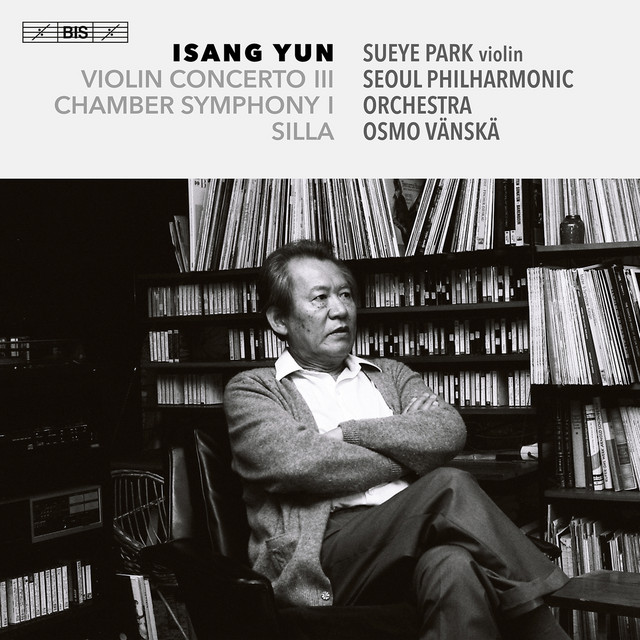
The birth of Korean contemporary classical music is often traced to the mid-20th century, when composers who had studied abroad began integrating Korean musical sensibilities with Western avant-garde methods. Isang Yun (1917–1995) stands as a foundational figure in this bridge between East and West. His work frequently juxtaposed Korean timbres and rhythmic sensibilities with Western modernist techniques, paving a path for subsequent generations to explore new sonic possibilities without discarding their cultural roots. In the following decades, Korean composers continued to expand the palette by embracing serialism, spectral approaches, minimalism, electronics, and collaborative practices with performers. Unsuk Chin (b. 1961), perhaps the most internationally visible voice of the new generation, has written orchestral and chamber music of astonishing color and precision. Her operatic project Alice in Wonderland (premiered in the 2000s) showcased Korean contemporary music on a global stage and demonstrated the genre’s capacity for operatic scale and drama. Together, Yun and Chin illustrate a trajectory from cultural synthesis to international harmony of voices.
Aesthetic and practice
Korean contemporary classical often centers on timbre as a primary material. Composers experiment with microtonality, glissandi, rapid timbral shifts, and dense, glassy textures. Traditional Korean instruments—gayageum, geomungo, daegeum, janggu, and other regional timbres—appear in new contexts, sometimes amplified or electronically processed, sometimes integrated within Western acoustic ensembles. Rhythm can be elastic and intricate, blending Eastern cyclic patterns with Western metric play. Electronic sound, live processing, and multimedia collaboration are common, allowing composers to expand the listening palette beyond pure acoustic sound. The music frequently emphasizes atmosphere and process, inviting listeners into sculpted sound-worlds rather than relying solely on conventional melodic development.
Global reach and reception
While rooted in Korea—primarily Seoul, Busan, and the coastlines of the archipelago—Korean contemporary classical has found receptive audiences across Europe and North America as well as in Japan and other East Asian centers. European capitals, North American university programs, and international festivals have produced premieres and residencies, helping to cultivate a global audience for Korean composers. Festivals such as the Tongyeong International Music Festival have become important platforms for premieres and cross-cultural exchange, drawing ensembles and soloists from around the world to engage with living Korean repertoire.
Listening pointers
Key ambassadors to start with are Isang Yun and Unsuk Chin, whose works span fierce energy, exquisite color, and conceptually ambitious ideas. For a sense of the broader landscape, explore Chin’s orchestral and chamber music, and Yun’s string writing and instrumental combinations. Contemporary Korean music may be encountered in concert halls, festivals, and increasingly through online recordings, inviting listeners to hear how tradition and modernism converse in a distinctly Korean voice.
In short, Korean contemporary classical is a field of daring timbre, cross-cultural dialogue, and inventive forms—a rich area for enthusiasts who relish music that challenges conventions while remaining deeply human in its expressive goals.
Origins and development
The birth of Korean contemporary classical music is often traced to the mid-20th century, when composers who had studied abroad began integrating Korean musical sensibilities with Western avant-garde methods. Isang Yun (1917–1995) stands as a foundational figure in this bridge between East and West. His work frequently juxtaposed Korean timbres and rhythmic sensibilities with Western modernist techniques, paving a path for subsequent generations to explore new sonic possibilities without discarding their cultural roots. In the following decades, Korean composers continued to expand the palette by embracing serialism, spectral approaches, minimalism, electronics, and collaborative practices with performers. Unsuk Chin (b. 1961), perhaps the most internationally visible voice of the new generation, has written orchestral and chamber music of astonishing color and precision. Her operatic project Alice in Wonderland (premiered in the 2000s) showcased Korean contemporary music on a global stage and demonstrated the genre’s capacity for operatic scale and drama. Together, Yun and Chin illustrate a trajectory from cultural synthesis to international harmony of voices.
Aesthetic and practice
Korean contemporary classical often centers on timbre as a primary material. Composers experiment with microtonality, glissandi, rapid timbral shifts, and dense, glassy textures. Traditional Korean instruments—gayageum, geomungo, daegeum, janggu, and other regional timbres—appear in new contexts, sometimes amplified or electronically processed, sometimes integrated within Western acoustic ensembles. Rhythm can be elastic and intricate, blending Eastern cyclic patterns with Western metric play. Electronic sound, live processing, and multimedia collaboration are common, allowing composers to expand the listening palette beyond pure acoustic sound. The music frequently emphasizes atmosphere and process, inviting listeners into sculpted sound-worlds rather than relying solely on conventional melodic development.
Global reach and reception
While rooted in Korea—primarily Seoul, Busan, and the coastlines of the archipelago—Korean contemporary classical has found receptive audiences across Europe and North America as well as in Japan and other East Asian centers. European capitals, North American university programs, and international festivals have produced premieres and residencies, helping to cultivate a global audience for Korean composers. Festivals such as the Tongyeong International Music Festival have become important platforms for premieres and cross-cultural exchange, drawing ensembles and soloists from around the world to engage with living Korean repertoire.
Listening pointers
Key ambassadors to start with are Isang Yun and Unsuk Chin, whose works span fierce energy, exquisite color, and conceptually ambitious ideas. For a sense of the broader landscape, explore Chin’s orchestral and chamber music, and Yun’s string writing and instrumental combinations. Contemporary Korean music may be encountered in concert halls, festivals, and increasingly through online recordings, inviting listeners to hear how tradition and modernism converse in a distinctly Korean voice.
In short, Korean contemporary classical is a field of daring timbre, cross-cultural dialogue, and inventive forms—a rich area for enthusiasts who relish music that challenges conventions while remaining deeply human in its expressive goals.