Genre
kosovan folk
Top Kosovan folk Artists
Showing 25 of 35 artists



About Kosovan folk
Kosovan folk is the living thread of Kosovo’s musical identity, a genre that threads together centuries of Albanian folk practice with Balkan rhythms and the complex history of the region. It encompasses both the traditional songs carried by rural communities and the contemporary revivals that fuse ancient melodies with modern production. In sound, it tends toward modal scales, emotive vocal lines, and communal energy, often anchored by staple instruments and dense, expressive storytelling.
The roots of Kosovan folk run deep in the wider Albanian musical world and the broader Balkan arc. Rural communities long preserved oral repertoires—epic ballads, love laments, farming laments, and seasonal celebrations—while urban centers such as Pristina, Prizren, and Peć became crucibles where traditional melodies met church, mosque, and marketplace sounds, Ottoman-era influences, and later European harmonies. The genre took on distinct local flavors from different neighboring regions, producing a spectrum that ranges from austere field recordings of shepherds to orchestral folk ensembles. The late 20th century, marked by political upheavals and waves of migration, catalyzed a revival: musicians reimagined traditional material for marble halls and festival stages, while diaspora communities carried Kosovan folk across borders.
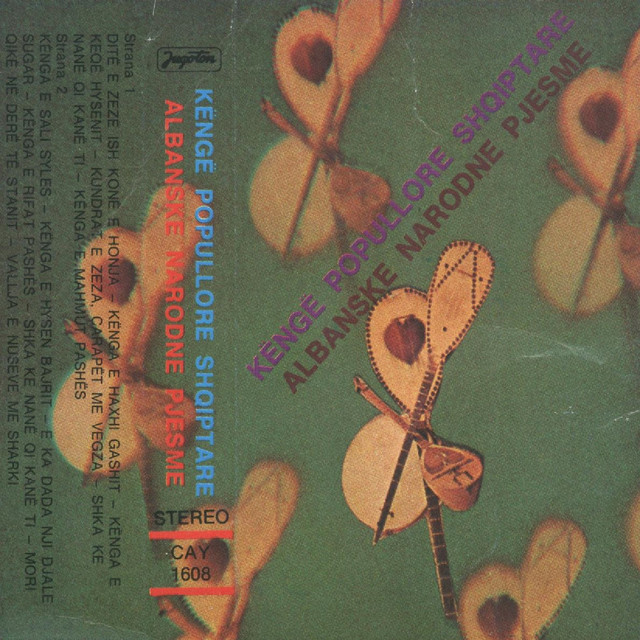
Musically, Kosovan folk is characterized by vocal storytelling, often featuring a lead singer supported by choirs or responsive vocal groups. The timbres favor warm, gritty voices that convey longing and pride, phrased with melodies that bend and release with a rugged expressiveness. Instrumentally, the genre leans on staples such as the çifteli (a traditional two-stringed lute), the kaval (flute), the lahuta (a long, carved string instrument in some Balkan variants), and the gajde or other regional bagpipes. In addition, we hear the occasional accordion, bouzouki-like lutes, and other Western hybrids in contemporary arrangements. Percussion is typically understated in older tunes but can be emphatically martial or dance-driven in festival settings. A strong sense of collective singing—call-and-response, antiphonal choirs, and polyphonic textures—gives Kosovan folk its communal heartbeat.
In recent decades, the scene has expanded beyond strictly traditional performance. Contemporary Kosovan folk and folk-infused artists blend ancestral motifs with electronic, world music, and pop textures, allowing the genre to travel to stages from ethnographic concerts to international world-music networks. Shkurte Bajrami, one of Kosovo’s most celebrated traditional vocalists, is often hailed as a leading ambassador of the genre, drawing listeners who might otherwise overlook regional folk into the kaleidoscope of Kosovan sound. The diaspora has also played a crucial ambassadorial role, bringing Kosovan folk to audiences in Germany, Switzerland, Sweden, the United States, and the broader Albanian-speaking world through festivals, radio, and online platforms.
Kosovan folk remains popular in Kosovo and Albania, with strong presences in North Macedonia and Montenegro, especially among Albanian-speaking communities. It also finds appreciative ears in the broader Balkan region and in European and North American diasporas that seek a direct line to the music of Kosovo’s landscapes, villages, and cities. For listeners, it offers a doorway into a living tradition: rooted in history, performed with passion, and continually reimagined for new generations.
The roots of Kosovan folk run deep in the wider Albanian musical world and the broader Balkan arc. Rural communities long preserved oral repertoires—epic ballads, love laments, farming laments, and seasonal celebrations—while urban centers such as Pristina, Prizren, and Peć became crucibles where traditional melodies met church, mosque, and marketplace sounds, Ottoman-era influences, and later European harmonies. The genre took on distinct local flavors from different neighboring regions, producing a spectrum that ranges from austere field recordings of shepherds to orchestral folk ensembles. The late 20th century, marked by political upheavals and waves of migration, catalyzed a revival: musicians reimagined traditional material for marble halls and festival stages, while diaspora communities carried Kosovan folk across borders.
Musically, Kosovan folk is characterized by vocal storytelling, often featuring a lead singer supported by choirs or responsive vocal groups. The timbres favor warm, gritty voices that convey longing and pride, phrased with melodies that bend and release with a rugged expressiveness. Instrumentally, the genre leans on staples such as the çifteli (a traditional two-stringed lute), the kaval (flute), the lahuta (a long, carved string instrument in some Balkan variants), and the gajde or other regional bagpipes. In addition, we hear the occasional accordion, bouzouki-like lutes, and other Western hybrids in contemporary arrangements. Percussion is typically understated in older tunes but can be emphatically martial or dance-driven in festival settings. A strong sense of collective singing—call-and-response, antiphonal choirs, and polyphonic textures—gives Kosovan folk its communal heartbeat.
In recent decades, the scene has expanded beyond strictly traditional performance. Contemporary Kosovan folk and folk-infused artists blend ancestral motifs with electronic, world music, and pop textures, allowing the genre to travel to stages from ethnographic concerts to international world-music networks. Shkurte Bajrami, one of Kosovo’s most celebrated traditional vocalists, is often hailed as a leading ambassador of the genre, drawing listeners who might otherwise overlook regional folk into the kaleidoscope of Kosovan sound. The diaspora has also played a crucial ambassadorial role, bringing Kosovan folk to audiences in Germany, Switzerland, Sweden, the United States, and the broader Albanian-speaking world through festivals, radio, and online platforms.
Kosovan folk remains popular in Kosovo and Albania, with strong presences in North Macedonia and Montenegro, especially among Albanian-speaking communities. It also finds appreciative ears in the broader Balkan region and in European and North American diasporas that seek a direct line to the music of Kosovo’s landscapes, villages, and cities. For listeners, it offers a doorway into a living tradition: rooted in history, performed with passion, and continually reimagined for new generations.