Genre
lagu bugis
Top Lagu bugis Artists
Showing 25 of 37 artists


About Lagu bugis
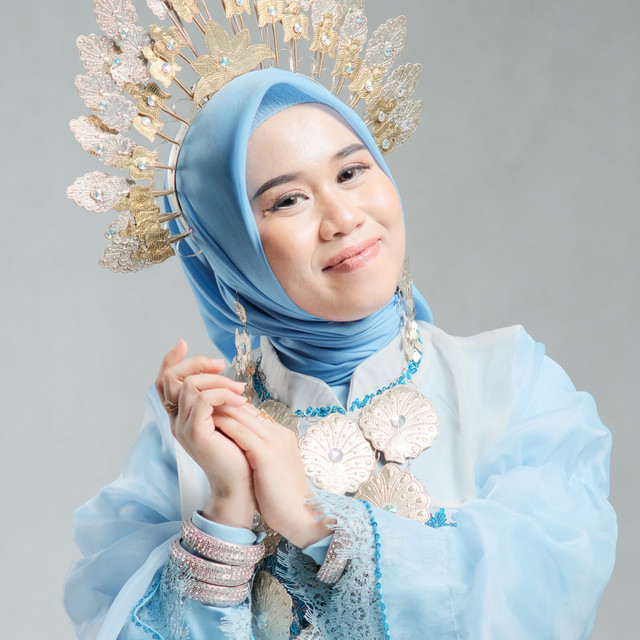
Lagu Bugis is the musical voice of the Bugis people of South Sulawesi, Indonesia, a tradition carried through centuries by coastal traders, fishermen, and community storytellers. Rooted in an oral culture that used song to mark rites, migrations, and everyday life, this genre grew alongside the social networks of Bugis clans and their diasporas. Rather than a single fixed form, lagu Bugis describes a family of songs that vary by village, occasion, and era, yet share a common linguistic flow and a strong sense of place.
Musically, lagu Bugis is characteristically vocal-centered. The human voice carries the weight of meaning, delivering lyrics in the Bugis language with expressive ornamentation and a distinctive melodic bend that invites listening and participation. The songs are often performed in call-and-response or cyclical formats, weaving communal participation into the performance. Percussion forms the backbone of the accompaniment; traditional ensembles rely on drums, wooden idiophones, and metallic percussion that punctuate phrases and rhythms. In more contemporary renderings, these traditional timbres are sometimes paired with modern backing tracks, acoustic guitar, or electronic elements, creating a bridge between ancestral forms and current listening habits.
Thematic content in lagu Bugis frequently revisits sea travel, migration, family lineage, love and longing, and valor or historical memory. The sea itself is a frequent metaphor, reflecting an identity forged through seafaring trade and long-distance connections across the archipelago and beyond. Performances occur in a range of social settings—weddings, harvest celebrations, community gatherings, and ritual ceremonies—where music serves to strengthen communal bonds and to transmit cultural memory to younger generations.
Historically, lagu Bugis evolved in tandem with the Bugis kingdoms and maritime networks that flourished in Sulawesi. It survived periods of upheaval and reform by adapting in form and repertoire while preserving core linguistic and melodic traits. In the modern era, the genre has seen revival and reinvention: seasoned elders maintain traditional repertoires, while younger musicians experiment with fusion styles, incorporating pop, hip-hop, and world-music sensibilities. This branching ensures that lagu Bugis remains legible to new audiences without surrendering its distinctive voice.
Geographically, lagu Bugis is most deeply rooted in Indonesia, particularly in South Sulawesi and among Bugis communities throughout the archipelago. It also resonates within Bugis diaspora communities in neighboring countries such as Malaysia and Singapore, where cultural festivals and community programs create spaces for linguistic and musical exchange. In recent years, online platforms and world-music networks have helped international audiences discover Bugis-language songs and cross-cultural collaborations, broadening the genre’s footprint beyond its traditional heartland.
For enthusiasts, exploring lagu Bugis offers a window into history and modern life simultaneously: a sound that is at once intimate, ceremonial, and exploratory. While I’ve sketched the outlines here, the most vivid appreciation comes from listening to recordings of traditional performances and contemporary fusions alike. If you’d like, I can add specific artists, tracks, and performances that exemplify traditional manteners and contemporary ambassadors—just say the word and I’ll tailor examples to your interests.
Musically, lagu Bugis is characteristically vocal-centered. The human voice carries the weight of meaning, delivering lyrics in the Bugis language with expressive ornamentation and a distinctive melodic bend that invites listening and participation. The songs are often performed in call-and-response or cyclical formats, weaving communal participation into the performance. Percussion forms the backbone of the accompaniment; traditional ensembles rely on drums, wooden idiophones, and metallic percussion that punctuate phrases and rhythms. In more contemporary renderings, these traditional timbres are sometimes paired with modern backing tracks, acoustic guitar, or electronic elements, creating a bridge between ancestral forms and current listening habits.
Thematic content in lagu Bugis frequently revisits sea travel, migration, family lineage, love and longing, and valor or historical memory. The sea itself is a frequent metaphor, reflecting an identity forged through seafaring trade and long-distance connections across the archipelago and beyond. Performances occur in a range of social settings—weddings, harvest celebrations, community gatherings, and ritual ceremonies—where music serves to strengthen communal bonds and to transmit cultural memory to younger generations.
Historically, lagu Bugis evolved in tandem with the Bugis kingdoms and maritime networks that flourished in Sulawesi. It survived periods of upheaval and reform by adapting in form and repertoire while preserving core linguistic and melodic traits. In the modern era, the genre has seen revival and reinvention: seasoned elders maintain traditional repertoires, while younger musicians experiment with fusion styles, incorporating pop, hip-hop, and world-music sensibilities. This branching ensures that lagu Bugis remains legible to new audiences without surrendering its distinctive voice.
Geographically, lagu Bugis is most deeply rooted in Indonesia, particularly in South Sulawesi and among Bugis communities throughout the archipelago. It also resonates within Bugis diaspora communities in neighboring countries such as Malaysia and Singapore, where cultural festivals and community programs create spaces for linguistic and musical exchange. In recent years, online platforms and world-music networks have helped international audiences discover Bugis-language songs and cross-cultural collaborations, broadening the genre’s footprint beyond its traditional heartland.
For enthusiasts, exploring lagu Bugis offers a window into history and modern life simultaneously: a sound that is at once intimate, ceremonial, and exploratory. While I’ve sketched the outlines here, the most vivid appreciation comes from listening to recordings of traditional performances and contemporary fusions alike. If you’d like, I can add specific artists, tracks, and performances that exemplify traditional manteners and contemporary ambassadors—just say the word and I’ll tailor examples to your interests.