Genre
tuareg guitar
Top Tuareg guitar Artists
Showing 13 of 13 artists


About Tuareg guitar
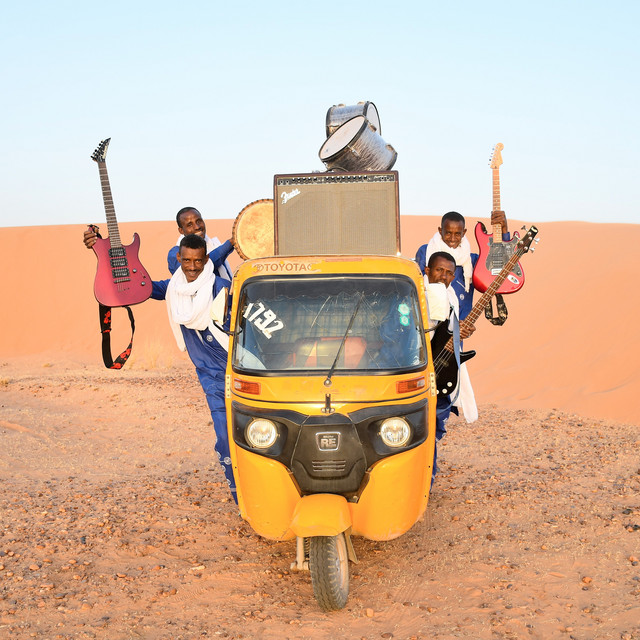
Tuareg guitar is a distinctive branch of desert blues built around electric guitars, hypnotic grooves, and the poetry of the Tuareg people who roam the Sahara. It’s a music of vast spaces, where the sound of string and voice travels across dunes, markets, and exile camps. The guitar is the vehicle for memory and resistance, often deployed in modal patterns that feel both ancient and newly electric. Lyrics, usually in Tamashek and other Tuareg languages, speak of homeland, exile, love, and endurance, carried by a steady, trance-like rhythm that invites long listening.
The genre comes into being with the Tuareg diaspora of the late 20th century. In the 1970s and 1980s, Tuareg communities fled conflicts and droughts across the Sahara—especially in Mali, Niger, Algeria, and Libya—and guitars smuggled into camps became a lifeline for political voice and cultural identity. Musicians fused traditional Tuareg scales and poetry with Western blues-rock riffs, creating a sound that was at once rebellious and comfortingly familiar to fans of guitar-driven music. The result is often categorized under “desert blues,” but Tuareg guitar remains rooted in a distinct nomadic ethos: a music made for long journeys, for shared camps, for the feeling of belonging nowhere and everywhere at once.
No single act defines the genre more than Tinariwen, the quintessential ambassadors of Tuareg guitar. Formed in the 1980s by Tuareg exiles in the Libyan and Saharan milieu, Tinariwen popularized a sound built on ringing, spare electric guitar lines that weave through rugged rhythms and impassioned vocal harmonies. Their 2011 album Tassili earned them the Grammy for Best World Music Album in 2012, a milestone that brought Tuareg guitar to a global audience while underscoring its political and poetic potency. Since then, the band has remained a touchstone for authenticity and craft within the scene.
Other essential voices have broadened the map of Tuareg guitar. Bombino (Omara Moctar) from Niger became an international ambassador with a lean, driving desert-rock style that bridges Tuareg root music and broader rock currents; Mdou Moctar, also from Niger, has pushed the format further into modern experimentation with DIY recordings, fiery solos, and acclaimed releases like Ilana: The Creator (2019) and Afrique Victime (2021). Imarhan (Mali) and Tamikrest (Mali) joined Tinariwen in keeping the flame alive in the 2000s and 2010s, while Etran Finatawa (Niger) blended Tuareg guitars with Wodaabe rhythms to striking effect.
Tuareg guitar finds a curious and vibrant life beyond West Africa, flourishing in France, Germany, the United States, and other destinations where world music audiences seek meditative, spiritually charged guitar work. It’s popular in festivals and clubs that celebrate contemporary African music, as well as in the broader rock, folk, and experimental scenes that prize guitar-centric storytelling.
In short, Tuareg guitar is a movement as much about identity as sound: a musical diary of nomads and exiles that has grown into a global conversation about belonging, courage, and the power of a single electric guitar to carry a people’s story across continents.
The genre comes into being with the Tuareg diaspora of the late 20th century. In the 1970s and 1980s, Tuareg communities fled conflicts and droughts across the Sahara—especially in Mali, Niger, Algeria, and Libya—and guitars smuggled into camps became a lifeline for political voice and cultural identity. Musicians fused traditional Tuareg scales and poetry with Western blues-rock riffs, creating a sound that was at once rebellious and comfortingly familiar to fans of guitar-driven music. The result is often categorized under “desert blues,” but Tuareg guitar remains rooted in a distinct nomadic ethos: a music made for long journeys, for shared camps, for the feeling of belonging nowhere and everywhere at once.
No single act defines the genre more than Tinariwen, the quintessential ambassadors of Tuareg guitar. Formed in the 1980s by Tuareg exiles in the Libyan and Saharan milieu, Tinariwen popularized a sound built on ringing, spare electric guitar lines that weave through rugged rhythms and impassioned vocal harmonies. Their 2011 album Tassili earned them the Grammy for Best World Music Album in 2012, a milestone that brought Tuareg guitar to a global audience while underscoring its political and poetic potency. Since then, the band has remained a touchstone for authenticity and craft within the scene.
Other essential voices have broadened the map of Tuareg guitar. Bombino (Omara Moctar) from Niger became an international ambassador with a lean, driving desert-rock style that bridges Tuareg root music and broader rock currents; Mdou Moctar, also from Niger, has pushed the format further into modern experimentation with DIY recordings, fiery solos, and acclaimed releases like Ilana: The Creator (2019) and Afrique Victime (2021). Imarhan (Mali) and Tamikrest (Mali) joined Tinariwen in keeping the flame alive in the 2000s and 2010s, while Etran Finatawa (Niger) blended Tuareg guitars with Wodaabe rhythms to striking effect.
Tuareg guitar finds a curious and vibrant life beyond West Africa, flourishing in France, Germany, the United States, and other destinations where world music audiences seek meditative, spiritually charged guitar work. It’s popular in festivals and clubs that celebrate contemporary African music, as well as in the broader rock, folk, and experimental scenes that prize guitar-centric storytelling.
In short, Tuareg guitar is a movement as much about identity as sound: a musical diary of nomads and exiles that has grown into a global conversation about belonging, courage, and the power of a single electric guitar to carry a people’s story across continents.