Genre
mezmur
Top Mezmur Artists
Showing 25 of 97 artists










About Mezmur
Mezmur is the Ethiopian term for psalm, and it names a living tradition that sits at the heart of many Ethiopian and Eritrean Christian communities. It is both a liturgical practice and a popular, expressive form that can be heard in church services, religious ceremonies, and intimate concert settings. In Amharic and Tigrinya, mezmur is often used to describe sacred songs that range from solemn chants to devotional hymns sung with clear emotional intensity.
Origins and heritage
Mezmur traces its roots to the ancient Ethiopian Orthodox Church, where liturgical singing has long been a central act of worship. A watershed moment in the tradition is traditionally linked to Saint Yared, a 6th-century composer credited with shaping what Ethiopians call Zema—the sacred chant tradition of the church. Yared’s work helped codify a modal, melodic language that would govern church singing for centuries. Over the ensuing centuries, mezmur evolved through monastic choirs and lay congregations alike, blending chant, hymnody, and occasional polyphony within a distinctly Ethiopian musical idiom. The texts are often drawn from Ge’ez liturgical sources, biblical psalms, and devotional poetry, and in many communities the same repertoire is used across generations, becoming a vessel for memory and faith.
Sound and style
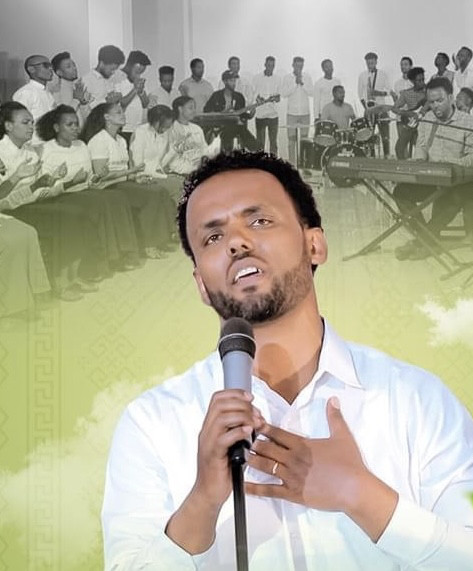
Mezmur is characterized by a solemn, spiritual atmosphere. It can be sung a cappella or with minimal accompaniment, emphasizing the human voice’s warmth and expression. Melismatic lines, careful ornamentation, and a close interplay between lead singers and choruses give mezmur its contemplative feel. The vocal tradition often relies on a modal framework known as qenet, which provides the expressive color and tension that listeners associate with Ethiopian sacred music. When instruments are used, you may hear kebero drums, krar (a five- or six-string lyre), masenqo (a single-string fiddle), and simple percussion; in contemporary recordings, keyboards and light percussion may accompany the ensemble, but the emphasis remains on the voices and their devotional delivery.
Geography and reach
Mezmur is most deeply rooted in Ethiopia and Eritrea, where Orthodox, Catholic, and some Protestant communities sustain and renew the genre. Beyond the Horn of Africa, mezmur has traveled with people who migrate or study abroad. It is heard in diaspora centers across Israel, Europe, and North America, where churches and community groups organize mezmur gatherings that keep the tradition alive while sometimes blending it with local musical influences. In this way, mezmur remains both a sacred rite and a living, evolving art form in the global world-music landscape.
Ambassadors and key figures
Historically, the most revered ambassador of mezmur is Saint Yared, whose legacy as a pioneer of Ethiopian sacred chant anchors the tradition. The broader ambassadorial role is fulfilled by church choirs, monastic musicians, and, in the modern era, diaspora ensembles that perform in churches, concerts, and cultural events. While contemporary soloists and groups may draw on mezmur’s aesthetics, the niche remains intensely community-centered: it is carried forward by congregations, educators, and singers who preserve the language, the modes, and the devotional intent of the tradition.
In sum, mezmur is a deeply rooted Ethiopian soundworld—ancient in origin, intensely spiritual, and continually refreshed by the voices of communities near and far. For music enthusiasts, it offers a doorway into a sacred, emotive practice that has shaped a culture’s sense of prayer, memory, and identity.
Origins and heritage
Mezmur traces its roots to the ancient Ethiopian Orthodox Church, where liturgical singing has long been a central act of worship. A watershed moment in the tradition is traditionally linked to Saint Yared, a 6th-century composer credited with shaping what Ethiopians call Zema—the sacred chant tradition of the church. Yared’s work helped codify a modal, melodic language that would govern church singing for centuries. Over the ensuing centuries, mezmur evolved through monastic choirs and lay congregations alike, blending chant, hymnody, and occasional polyphony within a distinctly Ethiopian musical idiom. The texts are often drawn from Ge’ez liturgical sources, biblical psalms, and devotional poetry, and in many communities the same repertoire is used across generations, becoming a vessel for memory and faith.
Sound and style
Mezmur is characterized by a solemn, spiritual atmosphere. It can be sung a cappella or with minimal accompaniment, emphasizing the human voice’s warmth and expression. Melismatic lines, careful ornamentation, and a close interplay between lead singers and choruses give mezmur its contemplative feel. The vocal tradition often relies on a modal framework known as qenet, which provides the expressive color and tension that listeners associate with Ethiopian sacred music. When instruments are used, you may hear kebero drums, krar (a five- or six-string lyre), masenqo (a single-string fiddle), and simple percussion; in contemporary recordings, keyboards and light percussion may accompany the ensemble, but the emphasis remains on the voices and their devotional delivery.
Geography and reach
Mezmur is most deeply rooted in Ethiopia and Eritrea, where Orthodox, Catholic, and some Protestant communities sustain and renew the genre. Beyond the Horn of Africa, mezmur has traveled with people who migrate or study abroad. It is heard in diaspora centers across Israel, Europe, and North America, where churches and community groups organize mezmur gatherings that keep the tradition alive while sometimes blending it with local musical influences. In this way, mezmur remains both a sacred rite and a living, evolving art form in the global world-music landscape.
Ambassadors and key figures
Historically, the most revered ambassador of mezmur is Saint Yared, whose legacy as a pioneer of Ethiopian sacred chant anchors the tradition. The broader ambassadorial role is fulfilled by church choirs, monastic musicians, and, in the modern era, diaspora ensembles that perform in churches, concerts, and cultural events. While contemporary soloists and groups may draw on mezmur’s aesthetics, the niche remains intensely community-centered: it is carried forward by congregations, educators, and singers who preserve the language, the modes, and the devotional intent of the tradition.
In sum, mezmur is a deeply rooted Ethiopian soundworld—ancient in origin, intensely spiritual, and continually refreshed by the voices of communities near and far. For music enthusiasts, it offers a doorway into a sacred, emotive practice that has shaped a culture’s sense of prayer, memory, and identity.