Genre
modern noise rock
Top Modern noise rock Artists
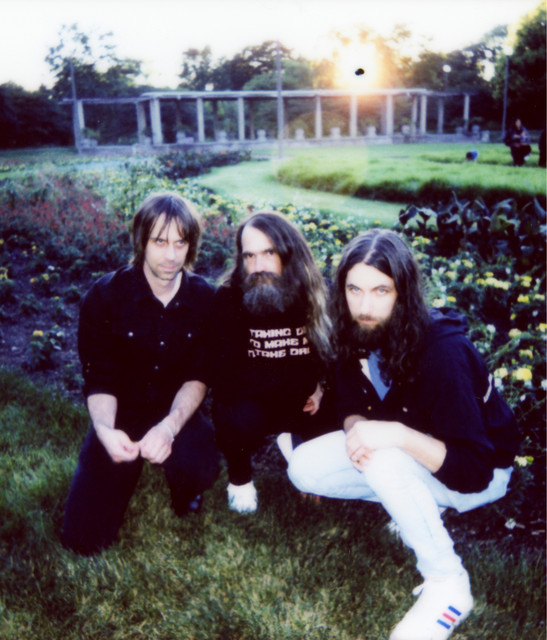
About Modern noise rock
Modern noise rock is a current-driven, boundary-pushing cousin of the broader noise rock family, trading conventional songcraft for raw timbre, sculpted distortion, and explosive dynamics. It foregrounds abrasive guitar textures, aggressive bass, feral drums, and often shouted or half-sung vocals. The result is a kinetic mix of tension and release, where structure can fracture into bursts of feedback, jagged riffs, and sudden silences. It’s not just loud; it’s precise in its chaos, balancing chaos with moments that feel meticulously prepared rather than improvised chaos for chaos’s sake.
The genre’s birth can be traced to late 1980s and early 1990s underground scenes in the United States, drawing on the heavy, dissonant ethos of earlier noise strands and the DIY spirit of post-punk and independent rock. Bands from Austin and New York, in particular, began to stretch the boundaries of what a guitar could do:Scratch Acid and The Jesus Lizard brought a raw, unhinged energy, and Sonic Youth expanded the palette with unconventional tunings, prepared guitars, and sculpted feedback. By the 1990s, a broader cohort—Unsane in New York, Shellac in Chicago, and later Providence’s Lightning Bolt—solidified a more defined modern noise rock language: aggressively loud, rhythmically unpredictable, and unapologetically aural.
Ambassadors and touchstones include several acts whose influence radiates through the scene. Sonic Youth is often cited as a foundational catalyst, showing how texture and tone can serve as composition. The Jesus Lizard epitomized ferocious, unrelenting energy and tight, punishing grooves. Shellac, with Steve Albini’s production sensibility and a minimalist, hammering approach, helped normalize noise as a disciplined, artistic discipline. Unsane carved out a relentless, industrial-tinged feel that pressed the genre toward hardcore’s speed and aggression without sacrificing texture. From there, acts like Lightning Bolt pushed the format into extreme, two-person density, delivering colossal walls of sound through lean setups. International voices—Melt-Banana from Japan and a range of European and Latin acts—have kept the conversation alive by blending speed, irregular rhythms, and cross-cultural influences.
Caracteristically, modern noise rock favors dissonant guitar tones (often with heavy distortion and tremolo), driving bass lines, and drums that can switch from machine-like precision to primal, stomping grooves. Song structures are frequently nonlinear: riffs’ll interlock with abrupt tempo shifts, abrupt tempo changes, and abrupt stops, creating a permanent sense of “live-wire” intensity. Vocals often function as another instrument— shouted, distorted, or chanted—adding to the texture rather than dictating the musical narrative.
Geographically, the scene flourishes most robustly in the United States—particularly in cities with storied DIY traditions—while maintaining fervent underground followings in the United Kingdom, Japan, and parts of continental Europe. In Japan, Melt-Banana and related acts have fused high-speed chaos with melodic glimpses, expanding what “noise” can mean within a rock framework. Across the Atlantic, thriving independent labels, zines, and clubs keep the scene intimate and focused on experimentation.
Today, modern noise rock remains a living, evolving language. It thrives on boundary-pushing collaborations, crossovers with math-rock, post-hardcore, and electronic noise, and a never-satisfied appetite for louder, stranger, more precise forms of expression. For enthusiasts, it offers a sonically uncompromising experience: music that feels like a live weather system—intense, agile, and endlessly surprising.
The genre’s birth can be traced to late 1980s and early 1990s underground scenes in the United States, drawing on the heavy, dissonant ethos of earlier noise strands and the DIY spirit of post-punk and independent rock. Bands from Austin and New York, in particular, began to stretch the boundaries of what a guitar could do:Scratch Acid and The Jesus Lizard brought a raw, unhinged energy, and Sonic Youth expanded the palette with unconventional tunings, prepared guitars, and sculpted feedback. By the 1990s, a broader cohort—Unsane in New York, Shellac in Chicago, and later Providence’s Lightning Bolt—solidified a more defined modern noise rock language: aggressively loud, rhythmically unpredictable, and unapologetically aural.
Ambassadors and touchstones include several acts whose influence radiates through the scene. Sonic Youth is often cited as a foundational catalyst, showing how texture and tone can serve as composition. The Jesus Lizard epitomized ferocious, unrelenting energy and tight, punishing grooves. Shellac, with Steve Albini’s production sensibility and a minimalist, hammering approach, helped normalize noise as a disciplined, artistic discipline. Unsane carved out a relentless, industrial-tinged feel that pressed the genre toward hardcore’s speed and aggression without sacrificing texture. From there, acts like Lightning Bolt pushed the format into extreme, two-person density, delivering colossal walls of sound through lean setups. International voices—Melt-Banana from Japan and a range of European and Latin acts—have kept the conversation alive by blending speed, irregular rhythms, and cross-cultural influences.
Caracteristically, modern noise rock favors dissonant guitar tones (often with heavy distortion and tremolo), driving bass lines, and drums that can switch from machine-like precision to primal, stomping grooves. Song structures are frequently nonlinear: riffs’ll interlock with abrupt tempo shifts, abrupt tempo changes, and abrupt stops, creating a permanent sense of “live-wire” intensity. Vocals often function as another instrument— shouted, distorted, or chanted—adding to the texture rather than dictating the musical narrative.
Geographically, the scene flourishes most robustly in the United States—particularly in cities with storied DIY traditions—while maintaining fervent underground followings in the United Kingdom, Japan, and parts of continental Europe. In Japan, Melt-Banana and related acts have fused high-speed chaos with melodic glimpses, expanding what “noise” can mean within a rock framework. Across the Atlantic, thriving independent labels, zines, and clubs keep the scene intimate and focused on experimentation.
Today, modern noise rock remains a living, evolving language. It thrives on boundary-pushing collaborations, crossovers with math-rock, post-hardcore, and electronic noise, and a never-satisfied appetite for louder, stranger, more precise forms of expression. For enthusiasts, it offers a sonically uncompromising experience: music that feels like a live weather system—intense, agile, and endlessly surprising.