Genre
montenegrin pop
Top Montenegrin pop Artists
Showing 24 of 24 artists






About Montenegrin pop
Montenegrin pop is a distinctly Balkan-flavored branch of contemporary pop that sits at the crossroads of Adriatic coast music, regional hit-making, and a modern, global pop sensibility. It blends polished, radio-friendly songwriting with the rhythmic energy of dance music and the warmth of folk-inflected melodies. The result is often bright, hook-driven songs that feel both familiar and freshly Montenegrin.
Origins and development
The sound grew out of the broader Yugoslav pop continuum and found its own voice in the post-independence era. Montenegro became independent in 2006, a moment that helped local artists foreground a Montenegrin linguistic and cultural identity within the regional market. From studios in Podgorica and the Adriatic coast to clubs and seaside festivals, a generation of singers, producers, and writers began shaping a pop sound that could travel beyond national borders while still rooted in Montenegrin language and sensibilities. Over the years, Montenegrin pop absorbed and reinterpreted global trends—electro-pop, tropical house, R&B, and EDM—without losing its melodic core and its affinity for strong choruses and memorable hooks.
Sound and characteristics
Montenegrin pop often prefers melodic lines delivered in Montenegrin (sometimes sung in other regional languages or in a bilingual mashup), with production that sits comfortably on radio playlists and festival stages. The arrangements can be glossy and club-ready, featuring shimmering synths, punchy drums, and tasteful brass accents, or more intimate and acoustic when a ballad mood takes over. A notable trait is its willingness to fuse influences: a danceable groove may ride next to a folk-flavored hook, or a contemporary beat may be paired with a plaintive vocal line. The genre tends to prize melodic immediacy and a sense of esprit—songs that are easy to hum along to, yet with a production polish that signals a modern, international outlook.
Ambassadors and key artists
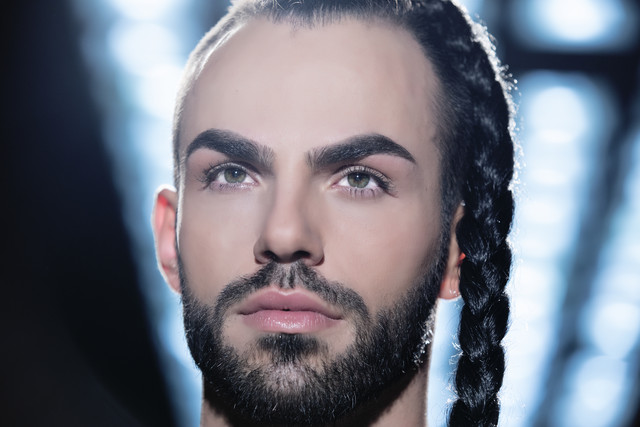
One widely acknowledged ambassador of the Montenegrin pop moment is Slavko Kalezić, who represented Montenegro at Eurovision in 2017 with his flamboyant, dance-inflected song Space. His performance-style and genre-blending approach helped bring international attention to Montenegrin pop and signaled the country’s willingness to push pop boundaries. Another important figure, albeit from an earlier wave of Montenegrin music, is Rambo Amadeus, a veteran artist whose boundary-pushing art-pop sensibility has long influenced the broader Montenegrin musical landscape and inspired younger generations to experiment. Beyond these names, the scene includes a host of rising singers and producer-led projects in Podgorica and along the coast, often collaborating with Serbian and regional teams to refine a contemporary Pop sound that remains distinctly Montenegrin.
Geography of popularity
Montenegrin pop enjoys its strongest base in Montenegro, with significant followings in neighboring Serbia, Bosnia and Herzegovina, and Croatia—countries with overlapping pop markets and shared Balkan tastes. Diaspora communities in Western Europe (Germany, Switzerland, Austria, the Netherlands) and North America also keep the sound vibrant, helping it reach new audiences through streaming, social media, and live touring.
A living, evolving scene
Today’s Montenegrin pop is less about a fixed formula and more about a living dialogue between tradition and global pop trends. It continues to evolve through collaborations, festival showcases, and the energy of coastal towns where summer stages turn songs into anthems. For enthusiasts, Montenegrin pop offers a fresh window into Montenegro’s contemporary cultural identity—rooted in memory, yet relentlessly forward-looking.
Origins and development
The sound grew out of the broader Yugoslav pop continuum and found its own voice in the post-independence era. Montenegro became independent in 2006, a moment that helped local artists foreground a Montenegrin linguistic and cultural identity within the regional market. From studios in Podgorica and the Adriatic coast to clubs and seaside festivals, a generation of singers, producers, and writers began shaping a pop sound that could travel beyond national borders while still rooted in Montenegrin language and sensibilities. Over the years, Montenegrin pop absorbed and reinterpreted global trends—electro-pop, tropical house, R&B, and EDM—without losing its melodic core and its affinity for strong choruses and memorable hooks.
Sound and characteristics
Montenegrin pop often prefers melodic lines delivered in Montenegrin (sometimes sung in other regional languages or in a bilingual mashup), with production that sits comfortably on radio playlists and festival stages. The arrangements can be glossy and club-ready, featuring shimmering synths, punchy drums, and tasteful brass accents, or more intimate and acoustic when a ballad mood takes over. A notable trait is its willingness to fuse influences: a danceable groove may ride next to a folk-flavored hook, or a contemporary beat may be paired with a plaintive vocal line. The genre tends to prize melodic immediacy and a sense of esprit—songs that are easy to hum along to, yet with a production polish that signals a modern, international outlook.
Ambassadors and key artists
One widely acknowledged ambassador of the Montenegrin pop moment is Slavko Kalezić, who represented Montenegro at Eurovision in 2017 with his flamboyant, dance-inflected song Space. His performance-style and genre-blending approach helped bring international attention to Montenegrin pop and signaled the country’s willingness to push pop boundaries. Another important figure, albeit from an earlier wave of Montenegrin music, is Rambo Amadeus, a veteran artist whose boundary-pushing art-pop sensibility has long influenced the broader Montenegrin musical landscape and inspired younger generations to experiment. Beyond these names, the scene includes a host of rising singers and producer-led projects in Podgorica and along the coast, often collaborating with Serbian and regional teams to refine a contemporary Pop sound that remains distinctly Montenegrin.
Geography of popularity
Montenegrin pop enjoys its strongest base in Montenegro, with significant followings in neighboring Serbia, Bosnia and Herzegovina, and Croatia—countries with overlapping pop markets and shared Balkan tastes. Diaspora communities in Western Europe (Germany, Switzerland, Austria, the Netherlands) and North America also keep the sound vibrant, helping it reach new audiences through streaming, social media, and live touring.
A living, evolving scene
Today’s Montenegrin pop is less about a fixed formula and more about a living dialogue between tradition and global pop trends. It continues to evolve through collaborations, festival showcases, and the energy of coastal towns where summer stages turn songs into anthems. For enthusiasts, Montenegrin pop offers a fresh window into Montenegro’s contemporary cultural identity—rooted in memory, yet relentlessly forward-looking.