Genre
musica sammarinese
Top Musica sammarinese Artists
Showing 25 of 30 artists





About Musica sammarinese
Musica sammarinese is the umbrella term often used to describe the contemporary musical life of San Marino, the small republic perched on the Italian coast. It sits at a curious crossroads: the ancient, sacred and folk traditions that have long traveled through church choirs and mountain villages, and the vibrant, cosmopolitan currents of European pop, indie, and singer‑songwriter culture. The result is a sonic profile that feels intimate and distinctly Mediterranean, yet open to international dialogue. In essence, musica sammarinese is the visible, living voice of a microstate that has long absorbed Italian influences while cultivating its own subtle modern identity.
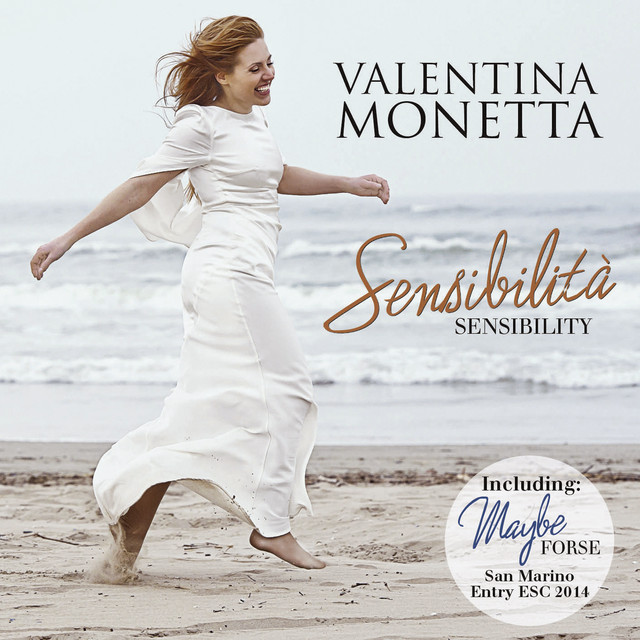
The genre as we know it today began taking shape in the postwar era, but its most recognizable form has emerged over the last few decades as San Marino integrated more deeply with continental European music scenes. Local ensembles, conservatory-trained musicians, and pop‑oriented artists began recording, touring, and collaborating across borders. A pivotal shift occurred with the Eurovision Song Contest, where San Marino repeatedly sent artists to present a polished, radio-friendly sound that retained a lyrical sensibility tied to the archipelago’s poetic sensibilities. This exposure helped define musica sammarinese for an international audience, marrying intimate vocal delivery with sophisticated production. The genre’s “ambassadors” in this period—artists who crystallized its public image—include Valentina Monetta, who represented San Marino in 2012, 2013, and 2014, and Serhat, who carried San Marino’s banner in 2016 and 2019. Their entries showcased a blend of melodic clarity, refined phrasing, and a penchant for storytelling through lyric and arrangement.
In terms of sound, musica sammarinese often centers on melodic, emotive vocal lines supported by lush, economical arrangements. Expect a mix of Italianate melodicism and contemporary pop textures: expressive piano or guitar figures, restrained string textures, tasteful electronic coloration, and chorus-oriented hooks that invite sing-alongs. Lyrically, the genre leans toward introspection, romance, memory, and personal reflection, frequently delivered in Italian or English, with occasional bilingual lines that reflect San Marino’s cross‑border sensibility. The aesthetic value placed on vocal nuance—tone, legato phrasing, and dramatic shading—echoes the region’s operatic and choral traditions while embracing the immediacy of modern pop storytelling.
Geographically, musica sammarinese is most strongly anchored in San Marino itself and in the neighboring Italian regions where audiences share cultural and linguistic affinities. Its reach extends across Europe primarily through Eurovision-affiliated fans and online streaming, where intimate ballads and refined pop cuts often find receptive audiences. Beyond festival stages and radio play, the genre thrives in music schools, cultural associations, and independent studios that emphasize craftsmanship, collaboration, and a balance between tradition and innovation.
Today, sostanza of musica sammarinese lies in its small‑but‑polished ecosystem: a national voice that speaks with clarity to a global audience. It remains defined less by a rigid canon than by a spirit of refined craftsmanship, European dialogue, and a quiet confidence in the melodic possibilities of San Marino. For enthusiasts, it offers a portrait of a tiny republic that contributes a distinctly human, richly musical perspective to the wider world of contemporary music.
The genre as we know it today began taking shape in the postwar era, but its most recognizable form has emerged over the last few decades as San Marino integrated more deeply with continental European music scenes. Local ensembles, conservatory-trained musicians, and pop‑oriented artists began recording, touring, and collaborating across borders. A pivotal shift occurred with the Eurovision Song Contest, where San Marino repeatedly sent artists to present a polished, radio-friendly sound that retained a lyrical sensibility tied to the archipelago’s poetic sensibilities. This exposure helped define musica sammarinese for an international audience, marrying intimate vocal delivery with sophisticated production. The genre’s “ambassadors” in this period—artists who crystallized its public image—include Valentina Monetta, who represented San Marino in 2012, 2013, and 2014, and Serhat, who carried San Marino’s banner in 2016 and 2019. Their entries showcased a blend of melodic clarity, refined phrasing, and a penchant for storytelling through lyric and arrangement.
In terms of sound, musica sammarinese often centers on melodic, emotive vocal lines supported by lush, economical arrangements. Expect a mix of Italianate melodicism and contemporary pop textures: expressive piano or guitar figures, restrained string textures, tasteful electronic coloration, and chorus-oriented hooks that invite sing-alongs. Lyrically, the genre leans toward introspection, romance, memory, and personal reflection, frequently delivered in Italian or English, with occasional bilingual lines that reflect San Marino’s cross‑border sensibility. The aesthetic value placed on vocal nuance—tone, legato phrasing, and dramatic shading—echoes the region’s operatic and choral traditions while embracing the immediacy of modern pop storytelling.
Geographically, musica sammarinese is most strongly anchored in San Marino itself and in the neighboring Italian regions where audiences share cultural and linguistic affinities. Its reach extends across Europe primarily through Eurovision-affiliated fans and online streaming, where intimate ballads and refined pop cuts often find receptive audiences. Beyond festival stages and radio play, the genre thrives in music schools, cultural associations, and independent studios that emphasize craftsmanship, collaboration, and a balance between tradition and innovation.
Today, sostanza of musica sammarinese lies in its small‑but‑polished ecosystem: a national voice that speaks with clarity to a global audience. It remains defined less by a rigid canon than by a spirit of refined craftsmanship, European dialogue, and a quiet confidence in the melodic possibilities of San Marino. For enthusiasts, it offers a portrait of a tiny republic that contributes a distinctly human, richly musical perspective to the wider world of contemporary music.