Genre
musica sinfonica
Top Musica sinfonica Artists
Showing 17 of 17 artists




About Musica sinfonica
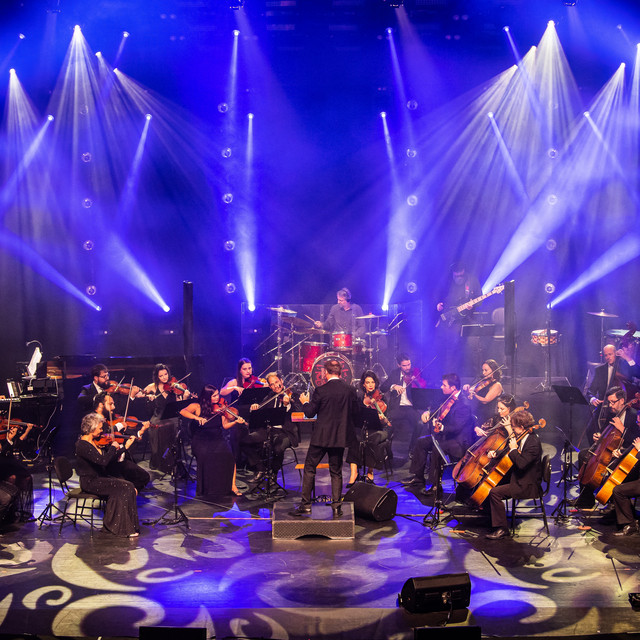
Musica sinfonica, or symphonic music, is the grand language of the orchestra—the art of shaping mood, drama, and color across movements to fuse melody, harmony, and form into a single listening arc. For enthusiasts, it is the living conversation between composer, conductor, and a full ensemble: a kaleidoscope of strings, winds, brass, and percussion that can soar from intimate lyricism to thunderous architects of sound.
The genre’s birth lies in the early 18th century, when the sinfonia evolved from opera overtures and instrumental entertainments into a stand‑alone vehicle for large-scale expression. Italian and German houses around Milan, Vienna, and Hanover incubated short, tutti‑oriented pieces that gradually grew in scale. By the time Haydn (the 1732–1809 “father of the symphony”) and his contemporaries forged a standardized four‑movement template—fast, slow, a dance-like movement, and a final Allegro or presto—the symphony had become a defining art form of the Classical era. Mozart refined the grammar with psychological depth and melodic invention; Beethoven, bridging the Classical and Romantic sensibilities, expanded forms, scales, and emotional range. His symphonies—especially the heroic Eroica, the tempestuous Fifth, and the pastoral Sixth—redefined what an orchestra could express.
In the Romantic century, musica sinfonica grew toward narrative breadth and programmatic imagination. Hector Berlioz advancing large orchestras and program music with Symphonie fantastique set a template for bold storytelling. Franz Schubert, Johannes Brahms, and Pyotr Ilyich Tchaikovsky deepened expressive ranges, while Jean Sibelius crafted dense, national‑sounding symphonies in Finland. The late‑Romantic giants—Gustav Mahler and, later, Gustav Holst in England, Jean Sibelius in the Nordic world—expanded orchestration into an existential panorama, sometimes blurring the line between symphony and a symphonic poem.
The 20th century brought monumental shifts. Stravinsky, Shostakovich, Prokofiev, and Mahler redefined orchestral color, rhythm, and structure, often under the pressures of modernism, war, or political ideology. Mahler’s symphonies, sprawling in scope and psychological depth, became milestones of late Romanticism; Shostakovich’s cycles captured the anxieties of 20th‑century Europe; Prokofiev’s brisk, accessible language contrasted with the introspection of his Symphonies. The form diversified into neoclassical, avant-garde, and cinematic idioms, yet the core impulse remained: a multi‑movement journey where themes grow, collide, and transform through the orchestra’s palette.
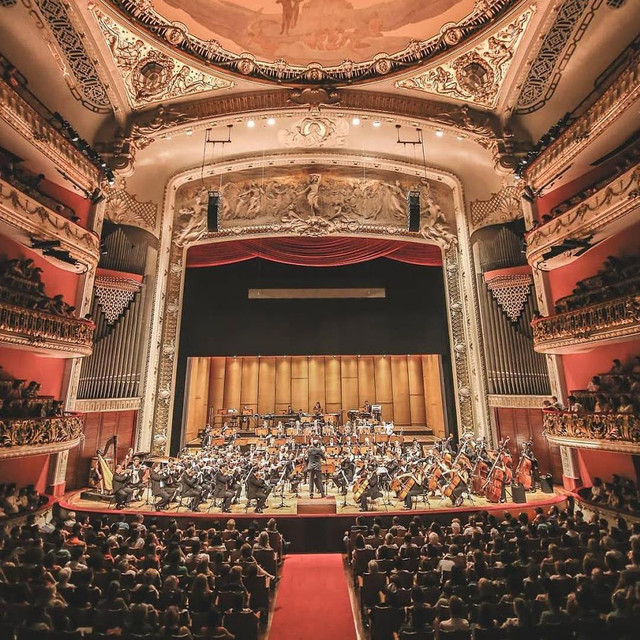
Ambassadors of musica sinfonica today include illustrious orchestras and conductors across the globe: from Vienna’s Philharmonic and the Berlin, London, and New York orchestras to concert halls in Tokyo, Moscow, and São Paulo. Countries with enduring popularity include Austria and Germany as cradlelands, Russia and the Nordic realms for their deep symphonic traditions, the United States for its prolific orchestral ecosystem, and Japan and other Asia‑Pacific scenes where audiences pack concert halls for symphonies and concertos alike. In Latin America and beyond, contemporary composers continually reimagine the form, keeping it vital and evolving.
For music enthusiasts, musica sinfonica is an accessible gateway to epic storytelling and intricate craft: an ever‑changing canvas where structure, mood, and orchestral color meet in a dialogue that spans centuries. Whether you relish Beethoven’s architectural daring, Berlioz’s orchestral fireworks, or Mahler’s metaphysical journeys, the symphony remains a living, global dialogue.
The genre’s birth lies in the early 18th century, when the sinfonia evolved from opera overtures and instrumental entertainments into a stand‑alone vehicle for large-scale expression. Italian and German houses around Milan, Vienna, and Hanover incubated short, tutti‑oriented pieces that gradually grew in scale. By the time Haydn (the 1732–1809 “father of the symphony”) and his contemporaries forged a standardized four‑movement template—fast, slow, a dance-like movement, and a final Allegro or presto—the symphony had become a defining art form of the Classical era. Mozart refined the grammar with psychological depth and melodic invention; Beethoven, bridging the Classical and Romantic sensibilities, expanded forms, scales, and emotional range. His symphonies—especially the heroic Eroica, the tempestuous Fifth, and the pastoral Sixth—redefined what an orchestra could express.
In the Romantic century, musica sinfonica grew toward narrative breadth and programmatic imagination. Hector Berlioz advancing large orchestras and program music with Symphonie fantastique set a template for bold storytelling. Franz Schubert, Johannes Brahms, and Pyotr Ilyich Tchaikovsky deepened expressive ranges, while Jean Sibelius crafted dense, national‑sounding symphonies in Finland. The late‑Romantic giants—Gustav Mahler and, later, Gustav Holst in England, Jean Sibelius in the Nordic world—expanded orchestration into an existential panorama, sometimes blurring the line between symphony and a symphonic poem.
The 20th century brought monumental shifts. Stravinsky, Shostakovich, Prokofiev, and Mahler redefined orchestral color, rhythm, and structure, often under the pressures of modernism, war, or political ideology. Mahler’s symphonies, sprawling in scope and psychological depth, became milestones of late Romanticism; Shostakovich’s cycles captured the anxieties of 20th‑century Europe; Prokofiev’s brisk, accessible language contrasted with the introspection of his Symphonies. The form diversified into neoclassical, avant-garde, and cinematic idioms, yet the core impulse remained: a multi‑movement journey where themes grow, collide, and transform through the orchestra’s palette.
Ambassadors of musica sinfonica today include illustrious orchestras and conductors across the globe: from Vienna’s Philharmonic and the Berlin, London, and New York orchestras to concert halls in Tokyo, Moscow, and São Paulo. Countries with enduring popularity include Austria and Germany as cradlelands, Russia and the Nordic realms for their deep symphonic traditions, the United States for its prolific orchestral ecosystem, and Japan and other Asia‑Pacific scenes where audiences pack concert halls for symphonies and concertos alike. In Latin America and beyond, contemporary composers continually reimagine the form, keeping it vital and evolving.
For music enthusiasts, musica sinfonica is an accessible gateway to epic storytelling and intricate craft: an ever‑changing canvas where structure, mood, and orchestral color meet in a dialogue that spans centuries. Whether you relish Beethoven’s architectural daring, Berlioz’s orchestral fireworks, or Mahler’s metaphysical journeys, the symphony remains a living, global dialogue.