Genre
musique ancienne
Top Musique ancienne Artists
Showing 24 of 24 artists




About Musique ancienne
Musique ancienne, literally “early music,” is the umbrella term used for Western art music from roughly the medieval era through the end of the Baroque, about 500 to 1750. It is not a single style but a continuum of repertoires—Gregorian chant, Ars Nova polyphony, Renaissance madrigals, Baroque concertos and operas—woven together by a common curiosity: how music sounded in its own time. The field is as much about approach as about repertoire. Today’s performances are often guided by historically informed practice (HIP): choices about tempo, dynamics, phrase shaping, tuning or temperament, ornamentation, and the use (or avoidance) of modern vs. period instruments. The objective is to illuminate the sound-world in which the works were created, while keeping performance fresh and communicative for contemporary listeners.
The revival begins in the late 19th century with Arnold Dolmetsch, a visionary instrument maker and musician who built replicas of medieval and Renaissance instruments and staged concerts of early music. Dolmetsch’s work helped convert scholarly interest into public appreciation, inspiring generations of players and audiences to seek out music beyond the later Romantic canon. His family’s workshops and concert programs fostered a practical, performative culture around medieval and Renaissance pieces that continued to evolve throughout the 20th century.
In the broader, modern era of musique ancienne, several currents converged. The historically informed performance movement gained momentum with figures like Nikolaus Harnoncourt and Gustav Leonhardt, who championed period instruments and new scholarly editions in the 1950s and beyond. Their work demonstrated that serious, emotionally compelling performances could be grounded in historical practice rather than modern interpretive norms. In the following decades, specialist ensembles and conductors multiplied: Ton Koopman with the Amsterdam Baroque Orchestra & Choir, Christophe Rousset (Les Talents Lyriques) and his continuo teams, and William Christie with Les Arts Florissants in France helped redefine Baroque opera, sacred music, and choral repertoire. Jordi Savall emerged as a powerful ambassador as well, founding Hespèrion XX/XXI and contributing widely performed recordings that cross borders with repertoire from Iberian, French, Italian, and Flemish sources. Researchers and performers alike continue to refine “HIP” through renewed musicology, instrument building, and performance practice.
Repertoire spans many cultures and languages—Latin motets, French chansons, Italian madrigals, German sacred vocal works, English consort music, and beyond—though the core sensibility tends toward clarity of line, expressive spontaneity, and a tactile sense of rhythm and articulation that modern orchestral norms don’t always capture. Geography matters: musique ancienne remains especially vibrant in Europe—France, the United Kingdom, the Netherlands, Germany, Italy, and Spain have long been centers of performance and study. It also maintains a strong presence in the United States and Canada, with festival circuits, conservatories, and recording projects, and has a growing footprint in Australia and Japan.
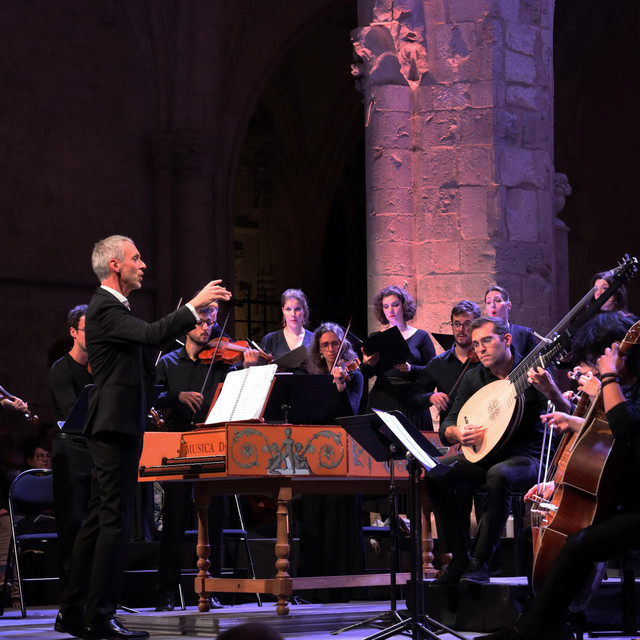
For enthusiasts, musique ancienne offers a living dialogue with the past—music that once traveled by manuscript, memory, and instrument, now revived with modern curiosity and reverence. It invites careful listening, but also joyful exploration: hearing the timbres of the viola da gamba, the theorbo, or a gut-string violin alongside the voices of a choir or a small ensemble can reveal a different, compelling sense of tempo, phrasing, and color.
The revival begins in the late 19th century with Arnold Dolmetsch, a visionary instrument maker and musician who built replicas of medieval and Renaissance instruments and staged concerts of early music. Dolmetsch’s work helped convert scholarly interest into public appreciation, inspiring generations of players and audiences to seek out music beyond the later Romantic canon. His family’s workshops and concert programs fostered a practical, performative culture around medieval and Renaissance pieces that continued to evolve throughout the 20th century.
In the broader, modern era of musique ancienne, several currents converged. The historically informed performance movement gained momentum with figures like Nikolaus Harnoncourt and Gustav Leonhardt, who championed period instruments and new scholarly editions in the 1950s and beyond. Their work demonstrated that serious, emotionally compelling performances could be grounded in historical practice rather than modern interpretive norms. In the following decades, specialist ensembles and conductors multiplied: Ton Koopman with the Amsterdam Baroque Orchestra & Choir, Christophe Rousset (Les Talents Lyriques) and his continuo teams, and William Christie with Les Arts Florissants in France helped redefine Baroque opera, sacred music, and choral repertoire. Jordi Savall emerged as a powerful ambassador as well, founding Hespèrion XX/XXI and contributing widely performed recordings that cross borders with repertoire from Iberian, French, Italian, and Flemish sources. Researchers and performers alike continue to refine “HIP” through renewed musicology, instrument building, and performance practice.
Repertoire spans many cultures and languages—Latin motets, French chansons, Italian madrigals, German sacred vocal works, English consort music, and beyond—though the core sensibility tends toward clarity of line, expressive spontaneity, and a tactile sense of rhythm and articulation that modern orchestral norms don’t always capture. Geography matters: musique ancienne remains especially vibrant in Europe—France, the United Kingdom, the Netherlands, Germany, Italy, and Spain have long been centers of performance and study. It also maintains a strong presence in the United States and Canada, with festival circuits, conservatories, and recording projects, and has a growing footprint in Australia and Japan.
For enthusiasts, musique ancienne offers a living dialogue with the past—music that once traveled by manuscript, memory, and instrument, now revived with modern curiosity and reverence. It invites careful listening, but also joyful exploration: hearing the timbres of the viola da gamba, the theorbo, or a gut-string violin alongside the voices of a choir or a small ensemble can reveal a different, compelling sense of tempo, phrasing, and color.