Genre
muzica moldoveneasca
Top Muzica moldoveneasca Artists
Showing 4 of 4 artists


About Muzica moldoveneasca
Muzica moldoveneasca is the living sound of the Republic of Moldova’s cultural heart, a folk-rooted idiom that has grown into a contemporary language without losing its village origins. It sits at a crossroads of Romanian, Balkan, and Slavic influences, and it preserves a melodic sensibility built around modal scales, lyrical storytelling, and communal dancing. For enthusiasts, Moldovan music invites close listening to minute ornamentations, nimble violin lines, and the plaintive wind of the pan flute (nai) against warm accordions, plucked strings, and percussion.
The genre as we know it today began to crystallize in the 19th and early 20th centuries, as rural repertoires were gathered, reformatted for urban stages, and broadcast by emerging radio and concert circuits in Chișinău and other towns. Doina, a traditionally improvised, emotionally charged vocal style, remains a core emotional thread—often sung solo and then echoed by ensembles. Hora, the circle dance song with its infectious rhythms, is another pivotal pillar, weaving voices and steps into a communal tapestry. Over time, the Moldovan scene absorbed and adapted neighboring influences, but the essential storytelling and dance-driven energy stayed unmistakably Moldovan.
Key forms you'll encounter include the doina’s introspective micro-melodies, the festive, call-and-response quality of hora, and various regional dances that swing between pastoral tenderness and bustling jubilation. Instrument-wise, the typical palette features violins, pan flutes (nai), accordions, double bass, and percussion, with lăutari (professional Romani musicians) often delivering dazzling improvisations and virtuosic solos. In many contemporary productions, traditional timbres mingle with electric guitars and electronics, producing a lively fusion that still feels rooted in Moldovan soil.
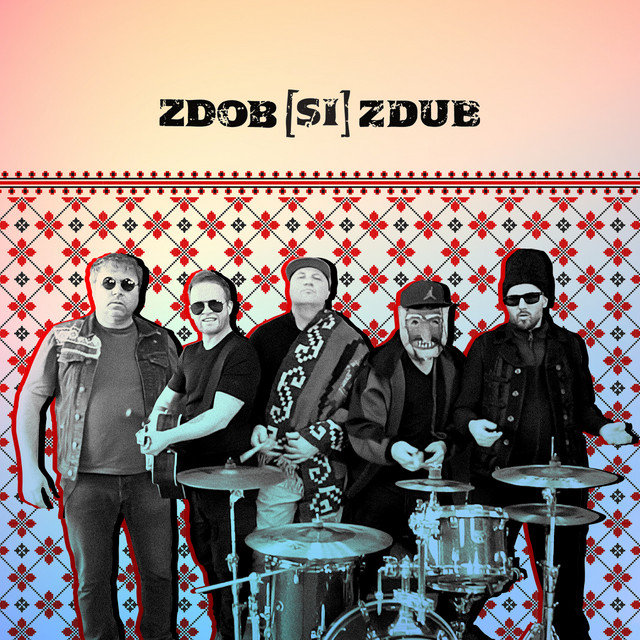
Among the genre’s most recognizable ambassadors is Zdob și Zdub, a Moldovan band formed in the 1990s that famously blends traditional Moldovan melodies with rock, funk, and hip-hop. They helped bring Moldovan folk-inflected music to European audiences and represented Moldova in the Eurovision Song Contest in 2005, signaling to a broad listening public that Moldovan music could be both folkloric and contemporary. Another important thread comes from the classic lăutari tradition, epitomized by ensembles led by figures such as Nicu Botgros and his Lăutari, who have long kept village wedding repertoires alive on European tours and in diaspora communities. These acts—one rooted in rustic ritual, the other in modern festival circuits—serve as two poles of the same genre, showing its breadth.
Muzica moldoveneasca is most popular in Moldova and neighboring Romanian-speaking regions, where the shared heritage makes the repertoire instantly recognizable. It has a substantial audience among the Moldovan diaspora across Europe and North America, including Italy, Spain, the United Kingdom, Canada, and the United States, where festivals, cultural centers, and community groups keep the sound vibrant. In all its forms, the genre rewards patient listening: it is a music of memory and dance, of laments and celebrations, continually renewing itself while honoring its roots. For enthusiasts, Moldovan music offers immediate drama, infectious rhythms, and a sense of belonging to a long, shared musical conversation.
The genre as we know it today began to crystallize in the 19th and early 20th centuries, as rural repertoires were gathered, reformatted for urban stages, and broadcast by emerging radio and concert circuits in Chișinău and other towns. Doina, a traditionally improvised, emotionally charged vocal style, remains a core emotional thread—often sung solo and then echoed by ensembles. Hora, the circle dance song with its infectious rhythms, is another pivotal pillar, weaving voices and steps into a communal tapestry. Over time, the Moldovan scene absorbed and adapted neighboring influences, but the essential storytelling and dance-driven energy stayed unmistakably Moldovan.
Key forms you'll encounter include the doina’s introspective micro-melodies, the festive, call-and-response quality of hora, and various regional dances that swing between pastoral tenderness and bustling jubilation. Instrument-wise, the typical palette features violins, pan flutes (nai), accordions, double bass, and percussion, with lăutari (professional Romani musicians) often delivering dazzling improvisations and virtuosic solos. In many contemporary productions, traditional timbres mingle with electric guitars and electronics, producing a lively fusion that still feels rooted in Moldovan soil.
Among the genre’s most recognizable ambassadors is Zdob și Zdub, a Moldovan band formed in the 1990s that famously blends traditional Moldovan melodies with rock, funk, and hip-hop. They helped bring Moldovan folk-inflected music to European audiences and represented Moldova in the Eurovision Song Contest in 2005, signaling to a broad listening public that Moldovan music could be both folkloric and contemporary. Another important thread comes from the classic lăutari tradition, epitomized by ensembles led by figures such as Nicu Botgros and his Lăutari, who have long kept village wedding repertoires alive on European tours and in diaspora communities. These acts—one rooted in rustic ritual, the other in modern festival circuits—serve as two poles of the same genre, showing its breadth.
Muzica moldoveneasca is most popular in Moldova and neighboring Romanian-speaking regions, where the shared heritage makes the repertoire instantly recognizable. It has a substantial audience among the Moldovan diaspora across Europe and North America, including Italy, Spain, the United Kingdom, Canada, and the United States, where festivals, cultural centers, and community groups keep the sound vibrant. In all its forms, the genre rewards patient listening: it is a music of memory and dance, of laments and celebrations, continually renewing itself while honoring its roots. For enthusiasts, Moldovan music offers immediate drama, infectious rhythms, and a sense of belonging to a long, shared musical conversation.